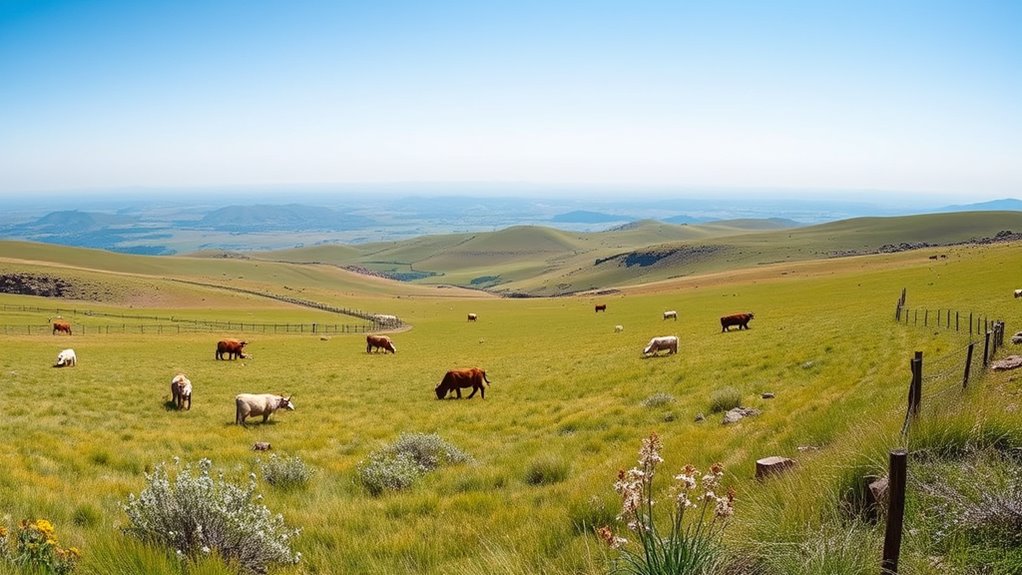

Grazing leases on public lands are managed through permits that set rules for how ranchers can use these areas. These leases help balance agriculture needs with environmental protection by limiting animal numbers, regulating grazing seasons, and requiring land restoration when needed. Agencies monitor the land to prevent overgrazing and ecosystem damage, adjusting rules as necessary. Understanding how these leases work can reveal ways land use remains sustainable for future generations—there’s much more to discover.
Key Takeaways
- Public land grazing leases are issued through permits that regulate livestock numbers and grazing periods.
- Proper lease management balances ranching needs, environmental conservation, and regulatory compliance.
- Monitoring and enforcement ensure grazing practices do not cause long-term ecological damage.
- Regulations include restrictions on grazing during sensitive seasons and measures to restore disturbed areas.
- Collaborative management among government, ranchers, and conservation groups promotes sustainable land use.
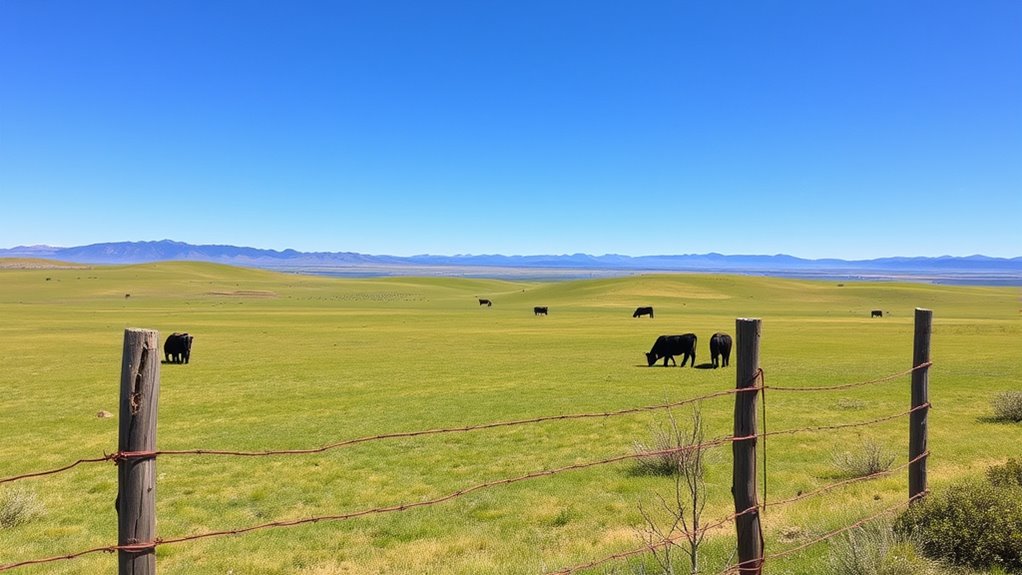
Have you ever wondered how public lands are managed for grazing purposes? It’s a complex process that balances the needs of ranchers, conservation efforts, and government regulations. At the heart of this management is lease management, which involves issuing permits that allow ranchers to graze their livestock on public lands for a set period. These leases are carefully regulated to guarantee sustainable use and to protect the environment. When you consider the environmental impact of grazing, it’s clear that responsible lease management plays a pivotal role in minimizing negative effects. Properly managed leases help prevent overgrazing, which can lead to soil erosion, loss of native plants, and habitat destruction. By setting limits on the number of animals and grazing duration, agencies aim to maintain ecological balance and promote healthy landscapes that support diverse wildlife.
Lease management isn’t just about limiting grazing; it also involves regular monitoring and enforcement. Land management agencies conduct assessments to evaluate the health of rangelands and ensure that grazing activities aren’t causing long-term damage. This oversight allows them to adjust lease terms, such as reducing herd sizes or implementing rotational grazing practices, which give the land time to recover. These measures are essential because unchecked grazing can quickly degrade ecosystems, leading to reduced water quality, increased invasive species, and loss of biodiversity. Effective lease management ensures that grazing remains sustainable over the long run, balancing economic benefits with environmental stewardship. Additionally, lease management includes establishing clear guidelines that ranchers must follow to mitigate environmental impacts. These might include restrictions on off-road vehicle use, requirements for restoring disturbed areas, or limits on grazing during sensitive seasons. By enforcing these rules, agencies endeavor to protect water sources, soil integrity, and plant communities. It’s a dynamic process that involves collaboration between government agencies, ranchers, conservation groups, and local communities. The goal is to create a system where grazing supports rural economies without compromising the health of public lands. In this way, responsible lease management becomes a fundamental tool for guaranteeing that public lands can be enjoyed by future generations while maintaining their ecological integrity. Proper management also often includes regulation of grazing intensity, which is essential for sustainable land use.
grazing management tools
As an affiliate, we earn on qualifying purchases.
As an affiliate, we earn on qualifying purchases.
Frequently Asked Questions
How Are Grazing Lease Prices Determined?
Grazing lease prices are determined by various lease pricing factors, including the size of the land, the type of grazing, and the lease duration. Market influences like supply and demand, local agricultural trends, and government policies also play a role. You’ll find that these factors combined help set fair, competitive rates, ensuring both landowners and graziers benefit from balanced, sustainable arrangements.
Can Leasing Terms Be Renegotiated?
Yes, leasing terms can be renegotiated. About 60% of lease renewals involve contract amendments to update terms or rates. When you approach a renewal, you can discuss changes with the land management agency. This process often includes negotiating new conditions or adjusting prices to reflect current circumstances. Keep in mind, proactive communication and understanding lease provisions can smooth the way for successful contract amendments or lease renewal negotiations.
What Are the Environmental Impact Requirements?
You must meet environmental impact requirements by considering wildlife corridors and water conservation efforts. This means implementing practices that protect animal migration routes and reduce water usage. You’ll need to follow regulations designed to minimize habitat disruption and promote sustainable land management. By actively incorporating these measures, you help preserve ecosystems while fulfilling legal obligations, ensuring that land use remains environmentally responsible and sustainable for future generations.
Who Enforces Lease Compliance?
You are responsible for guaranteeing lease compliance, but enforcement agencies oversee this process. If you commit a lease violation, these agencies, such as the Bureau of Land Management, step in to enforce the lease terms. They monitor land use, investigate violations, and take necessary actions like fines or lease termination. Staying informed about lease rules helps you avoid violations and ensures you’re compliant with the enforcement agencies’ requirements.
Are There Restrictions on Types of Livestock?
Yes, there are restrictions on types of livestock you can graze. Wildlife management and land conservation efforts often limit specific animals, like cattle or sheep, to protect native species and preserve ecosystems. These restrictions help maintain a balance between livestock grazing and natural habitat health. By following these guidelines, you support sustainable land use, prevent overgrazing, and contribute to the overall conservation of public lands.
rangeland monitoring equipment
As an affiliate, we earn on qualifying purchases.
As an affiliate, we earn on qualifying purchases.
Conclusion
As you navigate the world of grazing leases, remember that public land is like a delicate tapestry, woven from many threads of economic, environmental, and cultural values. Your responsible use helps conserve this intricate fabric for future generations. Think of each lease as a seed—you have the power to nurture or neglect it. By balancing your needs with respectful stewardship, you ensure that this shared landscape remains resilient and vibrant, like a garden in full bloom.

Varify 17in1 Complete Drinking Water Test Kit – 100 Strips + 2 Bacteria Tester Kits – Well, Tap, Home, City Water Testing Strip for Lead, Alkaline, Chlorine, Hardness, Iron, Fluoride, Copper & More
17 IMPORTANT PARAMETERS: The Varify Premium Drinking Water Test Kit offers an unrivaled, complete analysis of your drinking…
As an affiliate, we earn on qualifying purchases.
As an affiliate, we earn on qualifying purchases.

Grazeline 9-Strand Electric Fence Polywire 1640 ft, Tinned Copper & Stainless Steel, 0.3 Ohm Low Resistance Hot Wire for Rotational Grazing & Pasture Electric Fencing for Horses, Cattle & Livestock
Superior Conductivity for Long Fence Runs – Engineered with 9 mixed metal strands (3 tinned copper + 6…
As an affiliate, we earn on qualifying purchases.
As an affiliate, we earn on qualifying purchases.