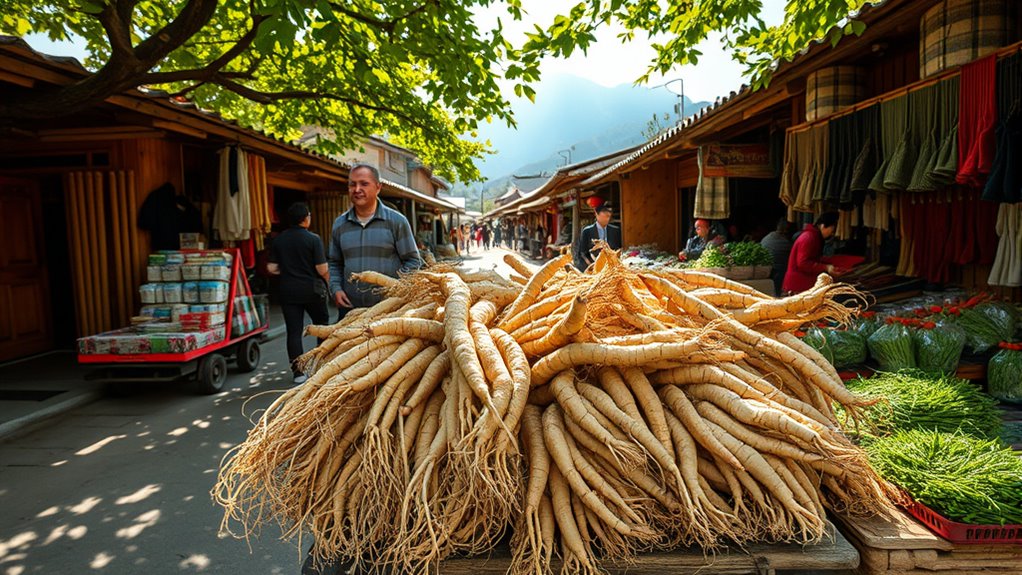
In mountain markets, wild ginseng roots are highly valued for their cultural and spiritual significance. You’ll notice vendors showcasing roots still covered in dirt, highlighting their connection to tradition. Harvesters follow sacred practices and seasonal timing, believing wild ginseng offers superior healing properties. These roots symbolize resilience and harmony with nature, playing an essential role in local identity. If you look further, you’ll uncover the rich stories and traditions that make wild ginseng so meaningful in these communities.
Key Takeaways
- Wild ginseng roots are highly valued in mountain markets for their perceived superior medicinal properties.
- Harvesting practices are traditional, respectful, and rooted in cultural rituals, often involving specific seasonal timings.
- Roots are considered sacred, embodying spiritual energy and symbolizing resilience and harmony with nature.
- Market stories highlight legendary harvesters and sacred sites, reinforcing community identity and cultural heritage.
- Freshly dug roots are typically sold covered in dirt, reflecting traditional harvesting methods and the roots’ natural state.
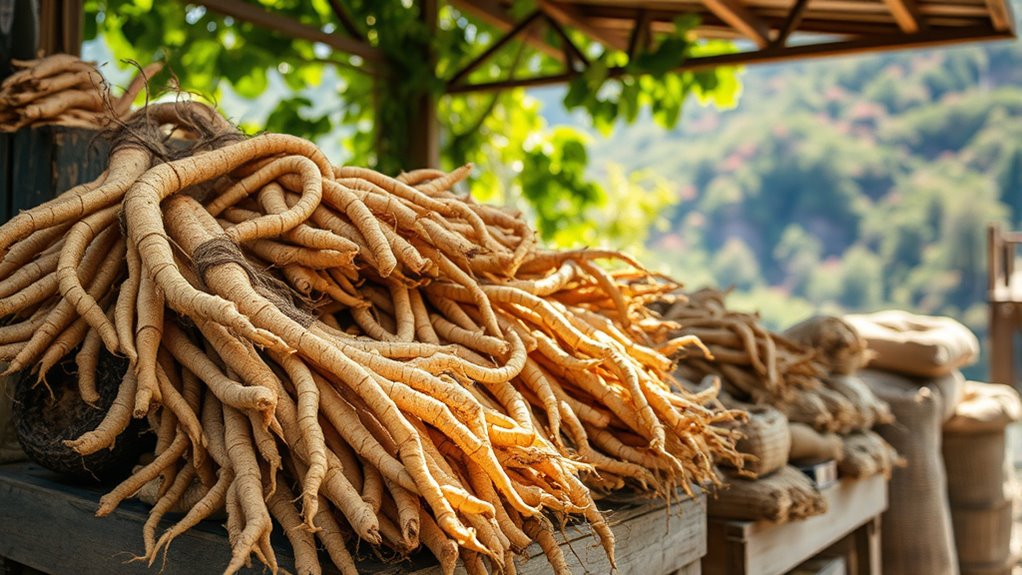
Nestled in the rugged mountain terrains, local markets thrive on the demand for ginseng roots, a prized ingredient in traditional medicine. As you explore these markets, you’ll notice that many vendors sell freshly dug ginseng, often still covered in dirt from the wild harvesting process. This method of gathering wild ginseng is deeply rooted in local traditions, passed down through generations. Wild harvesting isn’t just about collecting roots; it’s a practice woven into the cultural fabric of mountain communities. You might see older harvesters carefully digging in specific spots, respecting nature’s balance, and ensuring the sustainability of ginseng populations. This respect for the land underscores how essential wild harvesting is to the local way of life. It’s not simply about economic gain but about maintaining a connection with nature and preserving age-old customs. The act of gathering wild ginseng is often regarded with a sense of reverence, seen as a rite that honors ancestors’ practices. Many believe that wild ginseng, harvested from its natural habitat, possesses superior medicinal qualities compared to cultivated varieties. This belief fuels the cultural significance attached to wild harvesting, making it a revered tradition rather than just a commercial activity. When you witness these harvesters in action, you’ll sense the deep respect they hold for the plant and the land. They often follow specific seasonal timings, believing that the roots harvested at certain times carry more potent healing properties. Such practices highlight the spiritual and cultural importance of wild ginseng, transcending mere economic value. Locals often view wild ginseng as a symbol of resilience and harmony with nature, embodying centuries of cultural heritage. The roots themselves are considered sacred, believed to possess life-force energy that can promote health and longevity. This spiritual dimension elevates wild harvesting beyond simple collection—it becomes a cultural ritual that sustains traditions and strengthens community bonds. As you browse the markets, you’ll see that the story of wild ginseng is woven into the identity of the region. Sellers may share tales of legendary harvesters or describe the sacred sites where they find the best roots. This connection to history and spirituality makes wild ginseng more than just a commodity; it’s a living piece of cultural heritage. Engaging with local vendors, you’ll gain insight into a practice that marries nature, tradition, and respect. It’s a reminder that, in these mountain markets, ginseng roots symbolize much more than medicinal value—they embody a centuries-old cultural identity rooted in wild harvesting and reverence for the land.
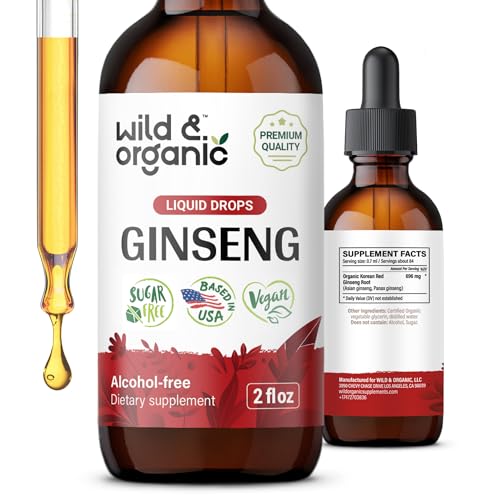
Wild & Organic Korean Red Ginseng Extract Drops – Panax Ginseng Supplement for Immune Support – Liquid Root Tincture for Overall Well-Being – Vegan, Sugar & Alcohol-Free – 2 fl oz
Overall Support: Each serving of Wild & Organic ginseng tincture contains 696 mg of Korean red ginseng root…
As an affiliate, we earn on qualifying purchases.
As an affiliate, we earn on qualifying purchases.
Frequently Asked Questions
How Is Ginseng Root Quality Assessed?
You assess ginseng root quality through ginseng root grading, which considers size, shape, and color. Look for roots that are firm, free of cracks or blemishes, and have a healthy, vibrant appearance. Proper ginseng harvesting techniques guarantee minimal damage, preserving quality. Higher-grade roots typically have a uniform shape and thicker, fleshy roots. By inspecting these factors, you can determine the root’s potency and overall quality effectively.
Are Mountain Markets Regulated for Authenticity?
Many mountain markets maintain meticulous monitoring to guarantee market authenticity through regulatory oversight. You’ll find that strict standards safeguard genuine ginseng, preventing counterfeit or inferior products from slipping through. This careful control helps you trust the authenticity of what you buy, giving you confidence in quality. While regulations vary, most reputable markets prioritize protection and transparency, so you can confidently purchase pure, authentic ginseng rooted in reliable regulation and rigorous review.
What Are the Health Benefits of Ginseng Roots?
You can gain numerous health benefits from ginseng roots, thanks to its rich compounds. Ginseng cultivation has a long history of traditional uses, including boosting energy, enhancing mental clarity, and strengthening the immune system. It also may help reduce fatigue, improve mood, and support overall vigor. By incorporating ginseng into your routine, you’re tapping into a natural remedy valued for centuries for its adaptogenic properties.
How Can I Identify Genuine Mountain-Grown Ginseng?
Sure, spot genuine mountain-grown ginseng? Just follow the wild harvesting trail—look for roots with natural scars and uneven shapes that no fancy cultivation techniques can fake. Real mountain ginseng often sports a rugged, wild look, unlike its farmed cousins. Trust your nose and eyes; if it’s too perfect, it’s probably cultivated. Authenticity isn’t just a claim, it’s a story written in every knot and scar.
What Is the Best Season to Buy Ginseng?
You should buy ginseng during the fall, especially in October or November, when seasonal harvesting peaks. This is when the roots are most mature, ensuring better quality. Keep in mind, pricing fluctuations are common during harvest time, so shop early for the best deals. Buying in the off-season may save you money, but the roots might not be as potent or fresh. Timing your purchase is key to getting top-quality ginseng.
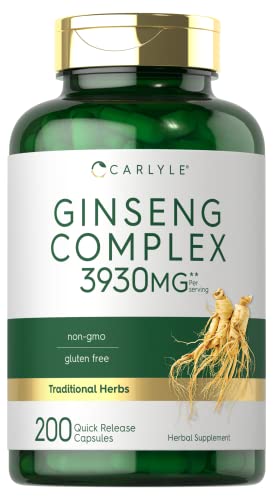
Carlyle Ginseng Complex Capsules | 200 Count | Non-GMO and Gluten Free Extract | Traditional Herbal Root Supplement
GINSENG COMPLEX: Potent blend of Asian herbs naturally containing Ginsenosides and Flavonoids
As an affiliate, we earn on qualifying purchases.
As an affiliate, we earn on qualifying purchases.
Conclusion
As you walk through the mountain markets, the vibrant stalls burst with fresh ginseng roots, their earthy aroma filling the air. Meanwhile, distant peaks stand silent and unmoving, guarding these precious treasures. You realize that just as the mountains hold centuries of history, the ginseng roots carry stories of tradition and healing. Together, they create a striking contrast — nature’s timeless strength paired with human resilience, reminding you of the deep roots that connect land, culture, and wellness.

Micro Ingredients Maximum Strength Organic Korean Ginseng Root 200:1 Powder, 4 Ounce, Red Panax Ginseng Powder, Active Ginsenosides, Vegan Friendly
Organic Panax Korean Red Ginseng Extract Powder 200:1 Concentration (with High Ginsenosides) from 6-Year-Old Ginseng, No GMOs and…
As an affiliate, we earn on qualifying purchases.
As an affiliate, we earn on qualifying purchases.
Micro Ingredients Maximum Strength Organic Korean Ginseng Root 200:1 Powder, 4 Ounce, Red Panax Ginseng Powder, Active Ginsenosides, Vegan Friendly
Organic Panax Korean Red Ginseng Extract Powder 200:1 Concentration (with High Ginsenosides) from 6-Year-Old Ginseng, No GMOs and…
As an affiliate, we earn on qualifying purchases.
As an affiliate, we earn on qualifying purchases.