

To help your chest freezer last longer, regularly clean the condenser coils with a vacuum or soft brush and wipe the interior with mild detergent. Avoid overloading it and organize contents to promote proper airflow. Check door seals for damage or dirt, and replace them if needed. Keep an eye on the compressor’s health and adjust the thermostat to maintain the ideal temperature around 0°F. Curious about more tips? Keep going to discover how to keep your freezer running efficiently for years to come.

Get furniture and decor delivered free with Prime
- Fast, free delivery on millions of items
- Prime Video, Amazon Music and more included
- Member-only deals all year
Key Takeaways
- Regularly clean condenser coils to improve energy efficiency and prevent overheating.
- Maintain a consistent temperature around 0°F (-18°C) to reduce compressor strain.
- Inspect and replace damaged door gaskets to prevent cold air loss.
- Avoid overloading the freezer to ensure proper airflow and even cooling.
- Conduct routine checks on the compressor and other components for early troubleshooting.
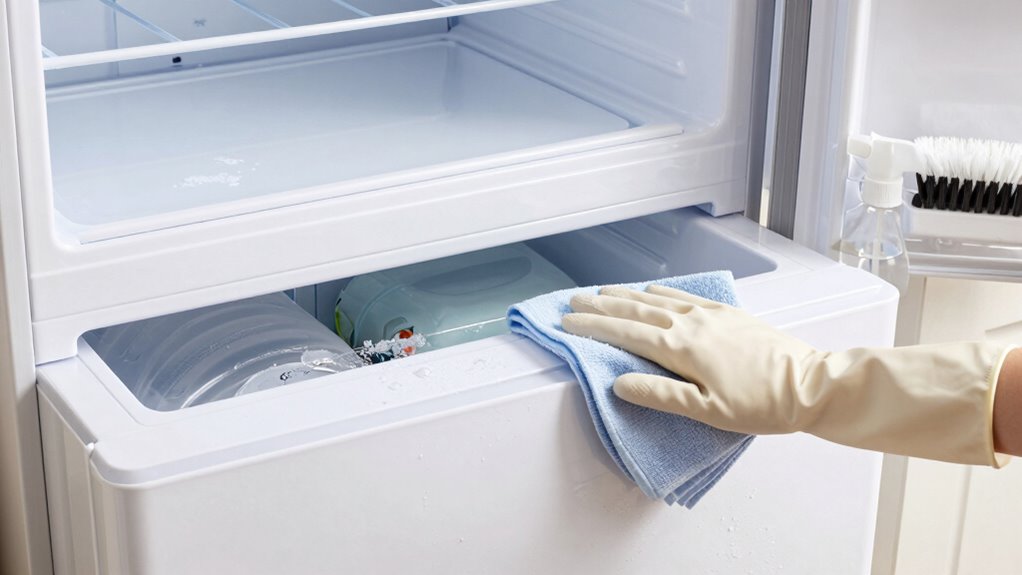
Maintaining a chest freezer is essential to guarantee it runs efficiently and keeps your food fresh. One of the key aspects of proper maintenance is ensuring the appliance remains energy efficient. When your freezer functions optimally, it uses less electricity, which saves you money over time. To achieve this, you need to pay close attention to temperature regulation. A consistent, properly set temperature keeps your food frozen solid and prevents the freezer from working harder than necessary. The ideal temperature for a chest freezer is around 0°F (-18°C). Regularly checking and adjusting the thermostat ensures it stays within this range, maintaining energy efficiency and preventing unnecessary strain on the compressor.
Frequent cleaning is another vital step. Dust and dirt tend to accumulate on the condenser coils, which are usually located at the back or underneath the unit. When these coils are dirty, the freezer has to work harder to dissipate heat, leading to higher energy consumption and potential wear and tear. You should clean the coils every six months using a vacuum or a soft brush. Additionally, wipe down the interior with a mild detergent and warm water to remove any spills or sticky residues. This not only helps maintain a hygienic environment but also prevents odors that can affect food quality. Proper coil maintenance can significantly improve the efficiency of your appliance. Keeping the condenser coils clean is similar to electric bike maintenance, where regular upkeep ensures optimal performance and longevity. Regular inspections of compressor health can help identify early signs of malfunction, preventing costly repairs later.
You also need to monitor and manage the contents inside your freezer. Overloading can restrict airflow, causing uneven temperatures and forcing the compressor to run more frequently, which reduces energy efficiency and accelerates component wear. Conversely, leaving the freezer too empty creates empty space that can lead to temperature fluctuations. Aim for a balanced load, filling gaps with bags of ice or other insulating materials if needed. Proper organization ensures cold air circulates evenly, which aids in consistent temperature regulation and prolongs the freezer’s lifespan. Additionally, understanding how dust in dust affects air quality can help you maintain a healthier environment around your appliance.
Lastly, keep an eye on the door seals. Damaged or dirty gaskets can cause cold air to escape, forcing the compressor to work harder to maintain the set temperature. Regularly inspect and clean the seals, and replace them if you notice cracks or tears. This simple step helps preserve your freezer’s efficiency, maintains proper temperature regulation, and minimizes energy waste. By sticking to these maintenance routines—focusing on optimal temperature, cleaning, proper loading, and seal care—you can significantly extend the life of your chest freezer, ensuring it remains reliable and energy-efficient for years to come.
condenser coil cleaner for chest freezer
As an affiliate, we earn on qualifying purchases.
As an affiliate, we earn on qualifying purchases.
Frequently Asked Questions
How Often Should I Defrost My Chest Freezer?
You should defrost your chest freezer when frost accumulation reaches about a quarter-inch thick. Regular freezer maintenance includes defrosting every 3 to 6 months to prevent ice buildup, which can reduce efficiency. Keep an eye on frost accumulation, and if you notice ice forming quickly, defrost sooner. Proper maintenance guarantees your freezer runs smoothly, saves energy, and extends its lifespan.
Can I Use Any Cleaning Products Inside the Freezer?
Can you safely use any cleaning products inside your freezer? It’s best to avoid harsh cleaning chemicals or regular household detergents, which can leave harmful residues and affect food safety. Instead, opt for freezer detergents specifically designed for cold environments, or use a mixture of mild soap and water. This keeps your freezer clean without risking damage or contamination, helping it stay fresh and functional longer.
What Is the Ideal Temperature Setting for a Chest Freezer?
Set your chest freezer to the ideal temperature of 0°F (-18°C) for maximum performance. Regular temperature calibration is crucial to guarantee it stays accurate, preventing energy waste and maintaining food safety. An accurately calibrated, properly set freezer operates more efficiently, reducing electricity bills and extending its lifespan. Check the temperature periodically with a reliable thermometer, and adjust as needed to keep it at the perfect setting for energy efficiency and food preservation.
How Do I Prevent Frost Buildup in My Chest Freezer?
To prevent frost buildup, you should regularly defrost your chest freezer and keep the lid tightly closed. Frost accumulation occurs when moisture enters, so guarantee the freezer is well-sealed to maintain proper freezer insulation. Avoid leaving the lid open for long periods, and check for any leaks or cracks. Keeping the temperature consistent and minimizing door openings also helps reduce frost buildup and maintains your freezer’s efficiency.
Is It Necessary to Keep the Freezer Plugged in All the Time?
Yes, you should keep your freezer plugged in continuously to maintain its temperature and prevent spoilage. This also helps optimize energy consumption since frequent unplugging can cause the compressor to work harder. During power outages, keep the freezer closed to preserve cold air longer. Regular maintenance, like defrosting and sealing gaps, guarantees efficient operation and prolongs your freezer’s lifespan, saving you money and energy in the long run.
Conclusion
By sticking to this maintenance routine, you can extend your chest freezer’s life considerably. Regular upkeep not only saves you money on repairs but also keeps your food fresh longer. Did you know that neglecting maintenance can reduce a freezer’s lifespan by up to 30%? Taking a few simple steps now ensures your appliance stays efficient and reliable for years to come, giving you peace of mind and better food storage.
Fall Picks
fall essentials
As an affiliate, we earn on qualifying purchases.