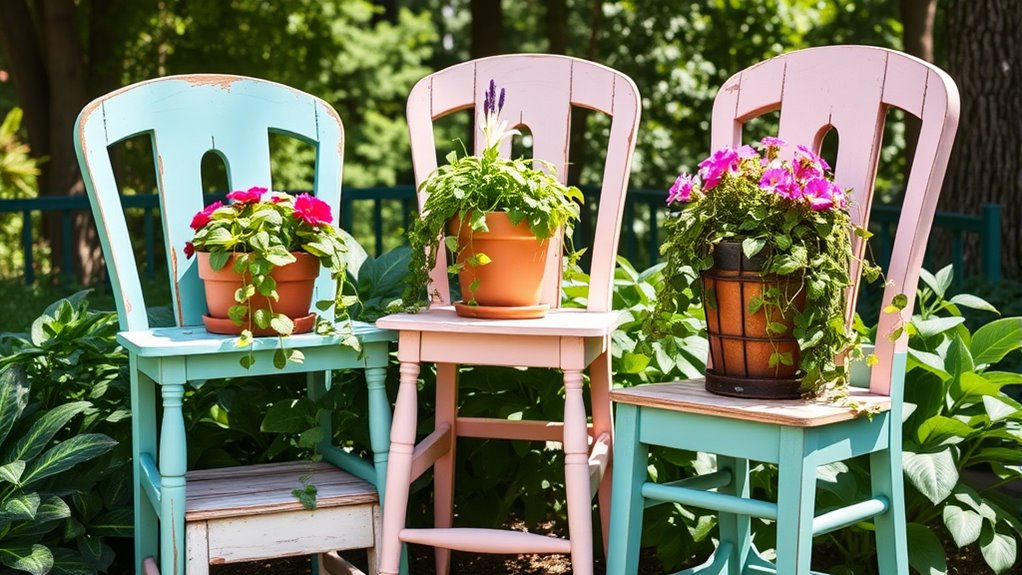

Transform your broken chair into a charming plant stand by repairing the damage with wood glue, reinforcing with screws, and smoothing rough edges through sanding. Then, customize it with paint or stain to match your decor—bright colors for vibrancy or rustic finishes for charm. Position it in your garden or inside to showcase your favorite plants. If you’re curious about simple techniques and creative ideas, keep going to discover how to turn your old furniture into a beautiful, eco-friendly decor piece.

Get furniture and decor delivered free with Prime
- Fast, free delivery on millions of items
- Prime Video, Amazon Music and more included
- Member-only deals all year
Key Takeaways
- Assess and repair the chair using glue, screws, and sanding to restore stability and prepare for upcycling.
- Remove damaged parts and clean the surface, then choose paint or stain to match your decor style.
- Transform the repaired chair into a plant stand by creating a flat surface for pots and adding decorative finishes.
- Use vibrant colors, rustic finishes, or natural wood to enhance visual appeal and complement your garden or indoor space.
- Position the upcycled plant stand in sunny or shaded areas, combining sustainability with a charming, handcrafted touch.
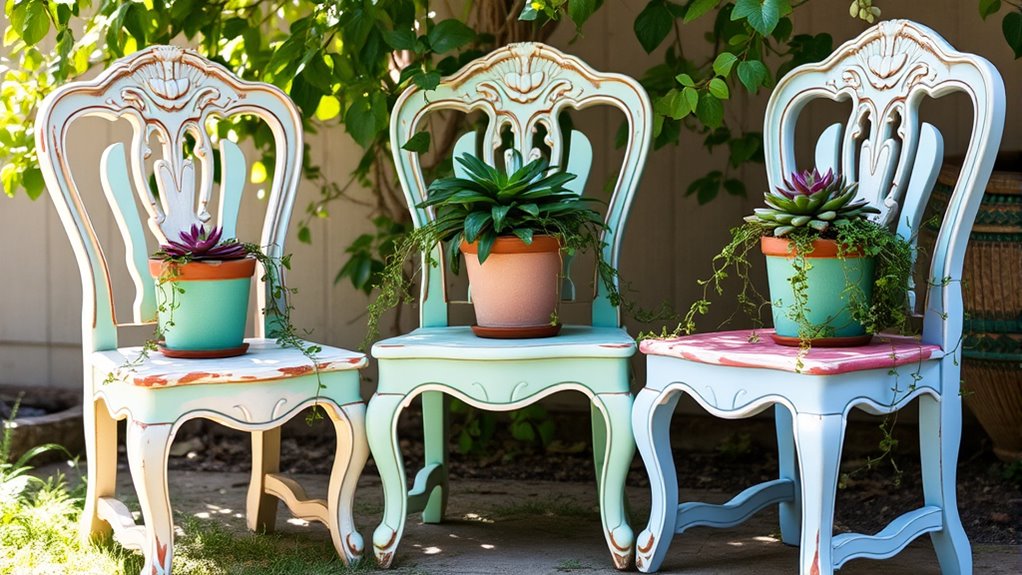
Ever thought about what to do with a broken chair sitting unused in your garage? Instead of letting it gather dust or tossing it out, consider transforming it into a charming plant stand through DIY restoration. This approach not only breathes new life into something that might seem beyond repair but also supports sustainable decor by giving the chair a second purpose. You’ll find that upcycling broken chairs is a creative way to add unique, handcrafted accents to your home or garden, all while reducing waste.
Start by evaluating the damage. Many broken chairs simply need a bit of glue, some reinforcements, or minor repairs to become functional again. If the seat or legs are splintered or cracked, you can often fix these with wood glue, clamps, or some screws for added stability. Sanding down rough edges and peeling off old paint or upholstery reveals a clean surface ready for customization. This DIY restoration process is straightforward and rewarding, especially when you see how your efforts transform a damaged piece into a stylish, practical item. Additionally, choosing the right upcycling technique can greatly enhance the durability and appearance of your finished plant stand.
Evaluate damage carefully; simple repairs like glue and sanding can restore functionality and prepare your chair for a creative new use.
Once you’ve repaired the chair’s structural issues, think about how you want to use it as a plant stand. If the seat is sturdy but the backrest is broken, you can remove the damaged parts and focus on making a flat surface for your plants. Painting or staining the chair in a color that complements your garden or interior decor adds a fresh, personalized touch. For a more rustic look, try a distressed finish or a natural wood stain. If you prefer a pop of color, bright hues can make your plant stand a vibrant focal point.
Using an upcycled chair as a plant stand is a simple way to incorporate sustainable decor into your space. It reduces waste by giving new life to old furniture instead of heading to the landfill. Plus, it’s a low-cost project that enhances your environment with handmade charm. Position your restored chair in a sunny corner or beside your porch, and arrange your favorite potted plants on it. The result is a unique piece that combines functionality with eco-friendly style, making your space feel more inviting and personalized.
In the end, upcycling broken chairs into plant stands is a win-win. You save money, reduce waste, and create something beautiful that reflects your creativity. With just a little effort and some basic tools, you turn a seemingly useless piece into a standout feature of your home or garden. It’s a perfect example of how DIY restoration can lead to sustainable decor that’s both practical and inspiring.
As an affiliate, we earn on qualifying purchases.
Frequently Asked Questions
Can Broken Chairs Be Safely Repurposed as Plant Stands?
You can definitely repurpose broken chairs as plant stands, but safety is key. First, check if the chair’s structure is stable enough to hold plants. If it’s damaged, consider recycling furniture by reinforcing or repairing it. Using broken chairs as garden decor adds charm and personality to your space. Just make certain the chair’s parts are secure and won’t pose risks to your plants or visitors, making your upcycling project both safe and stylish.
What Types of Plants Are Best Suited for These Upcycled Stands?
Imagine pairing delicate orchids with sturdy, rustic charm; your plant selection should match container compatibility for stability. Opt for lightweight plants like succulents or small ferns that won’t overload the stand. Consider the size and weight of your upcycled chair to guarantee proper support. By choosing plants suited to your container, you create a balanced, attractive display that highlights both your greenery and the chair’s vintage appeal.
How Do I Ensure Stability When Converting a Broken Chair?
To guarantee stability, start with thorough chair repair by fixing any broken parts first. Then, add structural reinforcement by reinforcing weak joints with wood glue, screws, or brackets. Sand rough edges for safety and consider adding a wider base or extra supports if needed. Test the stand carefully before placing your plants. These steps will help you create a sturdy, reliable plant stand from a damaged chair.
Are There Eco-Friendly Paints or Finishes Recommended for This Project?
When choosing paints or finishes, you want eco friendly paints and natural finishes that are safe for the environment. Look for products labeled as non-toxic, water-based, or biodegradable. These options reduce harmful emissions and chemical runoff. Apply them in well-ventilated areas, and consider using natural oils or beeswax for finishes. This way, you protect the environment while giving your upcycled plant stand a beautiful, sustainable finish.
What Tools Are Essential for Upcycling Broken Chairs Into Stands?
You’ll find that essential tools for this project often align with those used in chair upholstery and woodworking safety. You’ll need a saw, screwdriver, and sandpaper to dismantle and smooth surfaces. A staple remover helps with upholstery, while safety goggles and gloves protect you during woodworking. Remarkably, these tools not only make your project easier but also ensure safety, making the transformation of broken chairs into charming plant stands both fun and safe.
Conclusion
Just like a phoenix rising from ashes, your broken chair transforms into a charming plant stand, breathing new life into your space. Each splinter and crack becomes part of a story—proof that even in breakage, there’s beauty and potential. With a little creativity, you turn what’s fallen apart into a welcoming oasis, a demonstration of resilience. Keep crafting, keep dreaming—your upcycled creations are the seeds of a vibrant, blossoming home.
Fall Picks
fall essentials
As an affiliate, we earn on qualifying purchases.