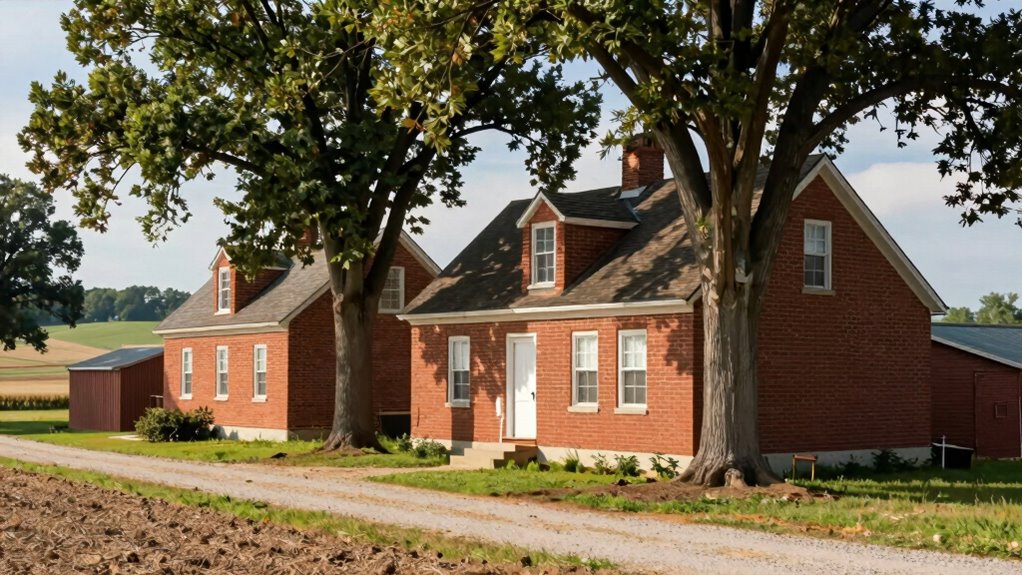

You’ll find brick farmhouses common in the Lower Midwest because they’re built to last and withstand harsh weather conditions. The region’s abundant clay supplies made bricks affordable and easy to produce locally, reducing costs. Thick walls provide excellent insulation, helping you stay comfortable year-round. Skilled regional builders developed techniques that created sturdy, attractive homes. If you want to learn more about how these homes reflect local resourcefulness and craftsmanship, keep exploring this fascinating history.

Get furniture and decor delivered free with Prime
- Fast, free delivery on millions of items
- Prime Video, Amazon Music and more included
- Member-only deals all year
Key Takeaways
- Abundant regional clay deposits made brick production economical and accessible for local builders.
- Brick farmhouses’ durability suited the harsh weather conditions of the Lower Midwest.
- Superior insulation provided energy efficiency and comfort during seasonal temperature extremes.
- Local craftsmanship and building techniques developed unique regional styles and traditions.
- The widespread use of brick reflected settlers’ resourcefulness and commitment to long-lasting structures.

Brick farmhouses in the Lower Midwest stand as enduring symbols of early rural architecture, reflecting both practicality and regional craftsmanship. You’ll notice their sturdy, timeless appearance and often find that these structures have withstood the proof of time. The reason behind their popularity isn’t just stylistic; it’s rooted in the qualities of the materials and the needs of early settlers. Brick was chosen because of its exceptional architectural durability—once built, these homes could resist the elements far better than wooden structures. Heavy rains, harsh winters, and seasonal temperature swings wouldn’t easily weaken or damage brick walls, making them an ideal choice for long-lasting farmhouses.
Brick farmhouses in the Lower Midwest are timeless, durable structures built to withstand harsh weather and last generations.
One of the main factors influencing this choice is regional material availability. In the Lower Midwest, clay deposits are plentiful, making brick production both accessible and economical. Early settlers and local artisans took advantage of this natural resource, establishing brick kilns that supplied the growing demand for durable building materials. This regional material availability meant you could build a sturdy, fireproof home without relying on imported or costly materials. Because brick was readily produced nearby, it reduced transportation costs and construction time, making it a practical option for early farmers and settlers looking to establish permanent homes.
Another reason brick became common is that it offered better insulation than wood, helping regulate indoor temperatures during hot summers and cold winters. As you explore these farmhouses, you’ll notice their thick walls, which not only provide strength but also contribute to energy efficiency—a significant benefit for rural families living in regions with extreme seasonal changes. Plus, brick homes require less maintenance over time since they resist pests, rot, and fire better than wooden counterparts. These qualities meant that once built, brick farmhouses could serve generations of families with minimal repairs, securing their place as practical and reliable dwellings.
The regional craftsmanship also played a role in the popularity of brick farmhouses. Local builders developed skills specific to working with clay and brick, refining techniques that enhanced both structural stability and aesthetic appeal. This craftsmanship fostered a sense of regional identity, with brick farmhouses often reflecting local styles and building traditions. Over time, the widespread use of brick in rural architecture became a monument to the resourcefulness of early Midwest settlers and their ability to adapt available materials to meet their needs. Additionally, the unique local building techniques contributed to the distinctive appearance and durability of these homes.
In essence, the prevalence of brick farmhouses in the Lower Midwest results from a combination of their superior architectural durability, regional material availability, and local craftsmanship. These homes stand today as a monument to early settlers’ ingenuity, built to last and deeply rooted in the regional landscape.
As an affiliate, we earn on qualifying purchases.
Frequently Asked Questions
Were Brick Farmhouses More Expensive Than Wood Alternatives?
Yes, brick farmhouses were generally more expensive than wood alternatives. The cost comparison shows that brick required more materials and skilled labor, making construction less affordable initially. However, brick offered better durability, fire resistance, and low maintenance, which could save you money over time. So, while the upfront costs were higher, many owners found brick more cost-effective in the long run because of its longevity and resilience.
How Did Local Clay Influence Brick Quality in the Region?
Your local clay greatly influences brick quality by affecting the clay composition, which in turn impacts brick durability. In the Lower Midwest, regions with clay rich in natural minerals produce stronger, more durable bricks. Conversely, areas with inconsistent clay composition may lead to weaker bricks that crack or deteriorate faster. So, the local clay’s quality directly determines how long your brick farmhouse will withstand weather and time.
Did Brick Farmhouses Have Any Specific Architectural Styles?
You’ll notice that brick farmhouses often showcase regional design influences, with architectural ornamentation like arches, cornices, and decorative brickwork enhancing their charm. These styles, rooted in local traditions, give each home a unique character, blending practicality with aesthetic appeal. Think of them as a canvas where regional influences and craftsmanship come together, creating structures that are both sturdy and beautifully detailed, reflecting the area’s cultural identity.
Were Brick Farmhouses More Resistant to Weather Damage?
Yes, brick farmhouses are more resistant to weather damage thanks to their construction durability. You’ll find that brick buildings withstand harsh weather conditions, like heavy rain, snow, and wind, better than wood structures. The thick brick walls help insulate and protect the interior, reducing wear over time. This weather resistance makes brick farmhouses a practical choice in areas prone to severe weather, ensuring longevity and lower maintenance costs.
How Did Brick Farmhouses Impact Local Community Development?
You see, brick farmhouses strengthened community identity by showcasing regional building styles and resilience. Their durability encouraged historical preservation, helping communities maintain their heritage. As these sturdy structures endured over time, they fostered a sense of pride and continuity. By preserving brick farmhouses, you support local history and create a tangible link to the past, inspiring future generations to appreciate the architectural and cultural significance of your community.
Conclusion
You’ve seen how brick farmhouses became a staple in the lower Midwest, blending durability with regional style. Notably, over 60% of historic farmhouses in these areas are built from brick, showcasing their lasting appeal. This statistic highlights just how valued sturdy, long-lasting materials are in rural architecture. So, next time you pass by these homes, remember—they stand as a proof to practical design that’s stood the test of time.
Halloween Picks
halloween
As an affiliate, we earn on qualifying purchases.