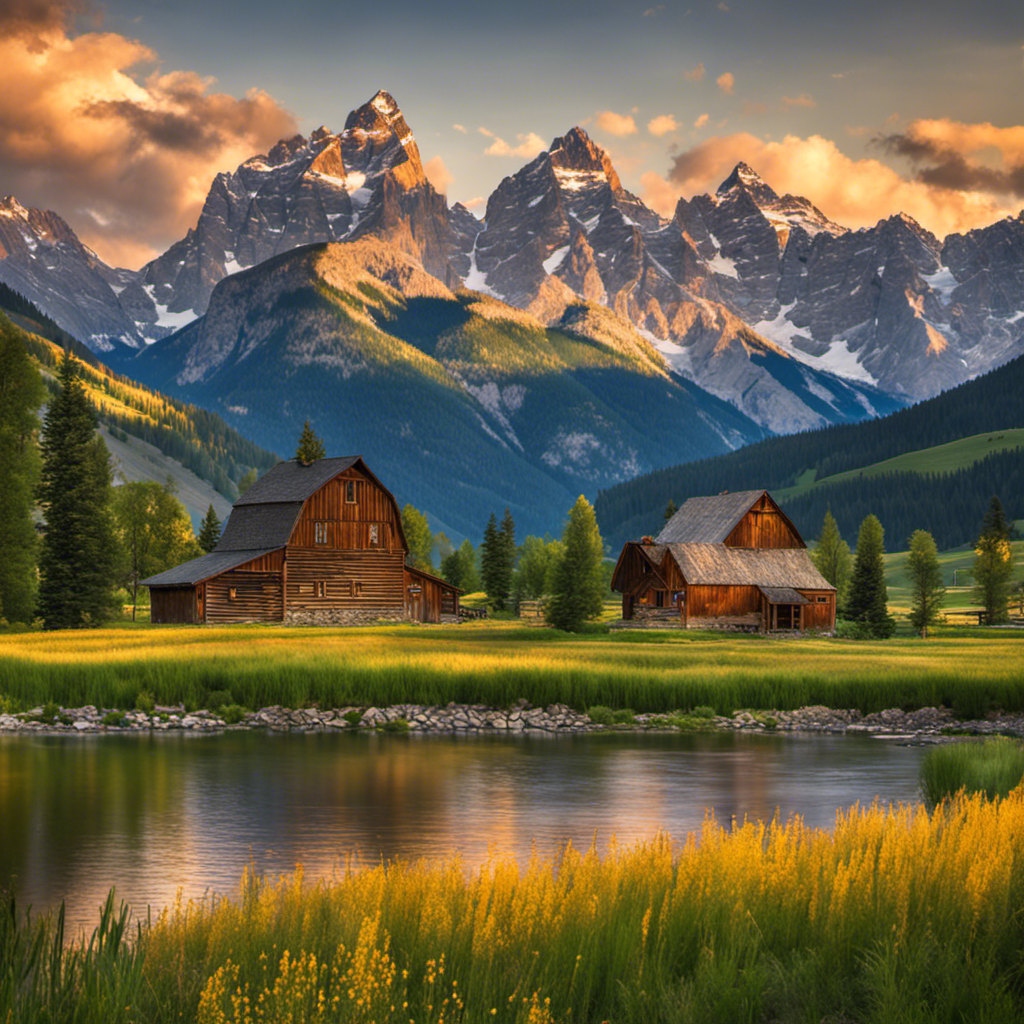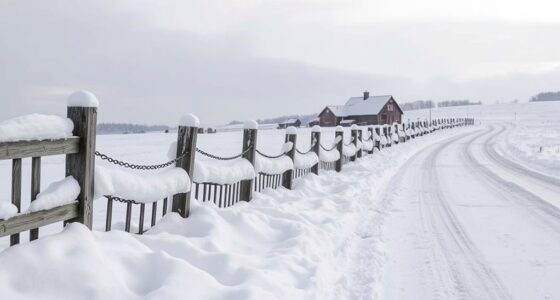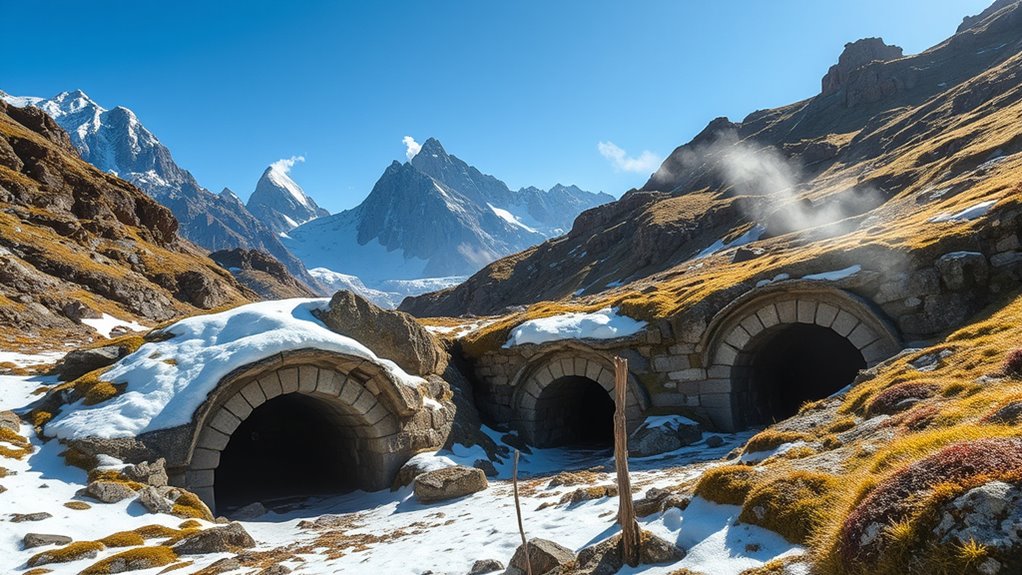

Alpine root cellars and ice houses are traditional structures used by mountain communities to naturally preserve produce and ice year-round. Built underground or into shaded slopes, they benefit from the cool, humid conditions of mountain soil and natural insulation. These energy-efficient storage methods help maintain consistent temperatures, reducing food waste and supporting local sustainability. If you want to understand how these unique systems work and their cultural significance, you’ll find more fascinating details ahead.
Key Takeaways
- Alpine root cellars and ice houses utilize underground conditions for natural, energy-efficient food preservation in mountain communities.
- These structures leverage soil insulation, cool temperatures, and ventilation to extend produce shelf life year-round.
- Located on shaded slopes and built with stone and dirt floors, they maintain stable, humid environments ideal for storing perishables.
- They reduce reliance on modern refrigeration, promoting sustainable, traditional preservation methods aligned with mountain landscapes.
- These facilities are cultural heritage symbols, reflecting ingenuity and resilience in alpine agricultural practices.
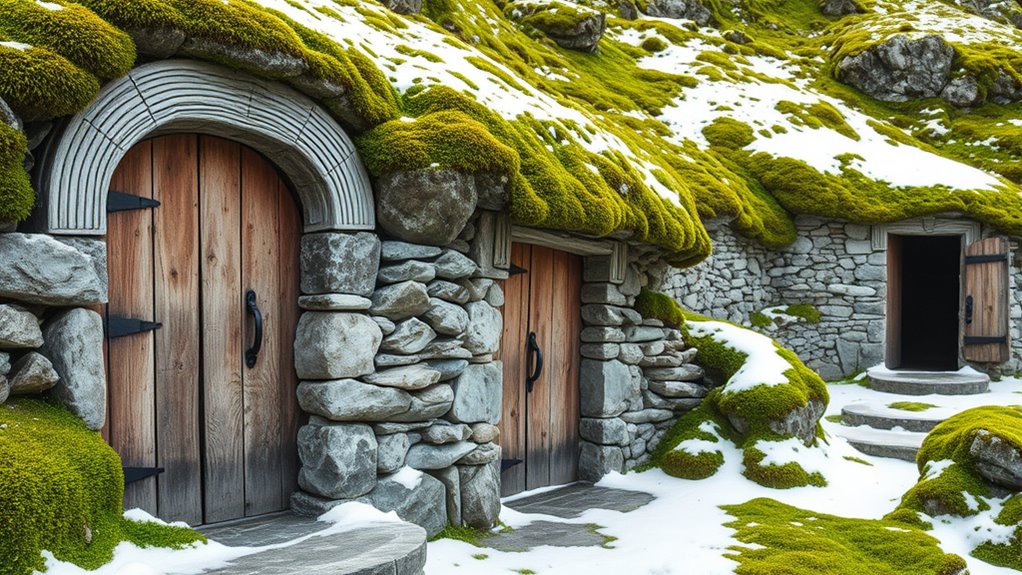
Nestled in the rugged mountains, Alpine Root Cellars offer a reliable way to store and preserve fresh produce throughout the year. These underground preservation systems are a testament to how mountain communities have adapted to their environment, making use of natural resources to sustain themselves. When you choose an Alpine Root Cellar, you’re tapping into a centuries-old tradition rooted in mountain agriculture—an understanding that cold, stable temperatures underground can extend the shelf life of fruits, vegetables, and other perishables without relying on modern refrigeration.
By digging into the earth, you create a naturally cool, humid environment ideal for preservation. The mountain soil acts as an insulator, maintaining a consistent temperature that fluctuates far less than surface conditions. This makes underground preservation highly energy-efficient and dependable, especially in remote or off-grid areas. When storing produce in your Alpine Root Cellar, you benefit from the natural climate regulation that mountain geography provides. This means your stored crops stay fresh longer, reducing waste and ensuring a steady food supply through winter months or lean seasons.
The design of these root cellars leverages the terrain’s natural features. You might find that constructing them on shaded, north-facing slopes enhances their effectiveness, as these locations tend to stay cooler and retain moisture better. Additionally, features like stone walls and dirt floors are common, helping to maintain humidity levels that prevent produce from drying out or rotting. You’ll want to pay attention to ventilation—small vents or air holes allow for air circulation, which is essential for preventing mold and spoilage. These elements work together to optimize underground preservation, making your mountain agriculture practices more sustainable and resilient.
As you embrace the use of Alpine Root Cellars, you tap into a tradition that’s adapted over generations to the unique challenges of mountain living. This method of preservation is not only practical but also environmentally friendly, reducing reliance on electricity and other modern resources. It’s a way to honor the land and work in harmony with nature’s natural refrigeration. Whether you’re storing root vegetables, apples, or dairy products, your underground cellar provides a stable environment that preserves flavors, nutrients, and freshness without the need for complex technology.
In essence, Alpine Root Cellars are more than just storage spaces; they’re a essential part of mountain agriculture’s heritage. They demonstrate how ingenuity and understanding of local geography can create simple yet effective solutions for food preservation. By utilizing underground preservation techniques, you not only prolong the life of your harvest but also uphold a sustainable way of living that respects and works with the natural landscape.

Root Pods Starter Kit (Grey)
As an affiliate, we earn on qualifying purchases.
As an affiliate, we earn on qualifying purchases.
Frequently Asked Questions
How Do Alpine Root Cellars Maintain Consistent Temperature?
You can keep a root cellar’s temperature steady by using thermal insulation, which minimizes heat transfer, and natural ventilation, allowing air to circulate and prevent humidity build-up. These techniques help maintain a cool, consistent environment without relying on electricity. By sealing gaps and ensuring good airflow, you create a stable space that preserves your stored produce effectively, regardless of outside temperature fluctuations.
What Materials Are Best for Constructing an Ice House?
You should use materials like thick wood, stone, or brick for constructing an ice house, as they provide excellent insulation and structural durability. Notably, wood has natural insulating properties, keeping ice frozen longer. These materials resist weather damage, ensuring longevity. Focus on tight seals and proper ventilation, which also help maintain low temperatures. Selecting durable, insulating materials ensures your ice house stays effective for preserving ice through warm seasons.
How Long Can Stored Produce Last in an Alpine Root Cellar?
You can expect stored produce to last several months in an alpine root cellar, depending on factors like seasonal crop preservation and temperature fluctuation. Maintaining a cool, stable environment with minimal temperature swings helps extend freshness. Proper ventilation and insulation also play key roles. By keeping conditions consistent, you’ll maximize the storage life of your vegetables and roots, ensuring they stay edible well into the off-season.
Are There Specific Locations Ideal for Building an Ice House?
You should choose cool, high-altitude locations for building an ice house, as altitude advantages provide naturally colder conditions. Look for sites with natural insulation, like shaded slopes or areas with thick soil or snow cover, which help keep ice intact longer. Such spots maximize preservation, minimize energy needs, and guarantee your ice stays frozen through warmer seasons. Prioritize natural protection and elevation to optimize your ice house’s efficiency and effectiveness.
What Historical Methods Were Used to Keep Ice Preserved Year-Round?
You would have used traditional ice harvesting methods, where you cut ice from frozen lakes during winter. To preserve ice year-round, you’d employ ice storage techniques like insulating the ice with straw, sawdust, or hay, and storing it in underground cellars or insulated structures. These methods slowed melting, allowing you to keep ice fresh for months, which was essential before refrigeration technology.
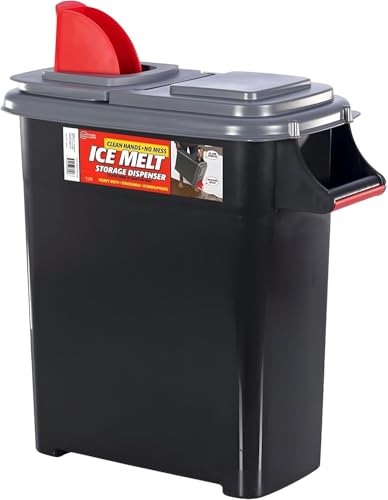
Buddeez Ice Melt Dispenser with Dual Action Lid – Durable Storage Container with Built in Scoop and Pour Spout
HEAVY DUTY – Crafted in the USA using up to 75% recycled plastic, this container is tough, durable,…
As an affiliate, we earn on qualifying purchases.
As an affiliate, we earn on qualifying purchases.
Conclusion
Imagine yourself in an alpine village, where a well-maintained root cellar keeps vegetables fresh all winter. Just like the Schmidts, who stored their potatoes and carrots in their ice house, you can preserve your harvest naturally. These structures aren’t just historical; they’re practical, eco-friendly solutions. By embracing alpine root cellars and ice houses, you guarantee food stays fresh longer, reduce energy use, and connect with traditional ways of living sustainably—making your home both functional and environmentally conscious.

Root Cellaring: Natural Cold Storage of Fruits & Vegetables
Keep your produce "harvest-fresh" in your own basement, porch, garage, or closet hideaway!
As an affiliate, we earn on qualifying purchases.
As an affiliate, we earn on qualifying purchases.

20 basics of self-sufficiency [Self-sufficiency; Food; Planning is the key to food self-sufficiency; Keeping things humming in the root cellar; Chickens for meat; Free food from the forest; Energy; How to use the sun around the home; Wind power; Transportation; How to get your workout by getting to work; A ten-step bicycling safety checkup; Shelter; Four basic approaches to meeting your housing needs; The good feeling of living in the earth; Improving the energy efficiency of your fireplace; Hea
As an affiliate, we earn on qualifying purchases.
As an affiliate, we earn on qualifying purchases.