
Idaho canal companies played a crucial role in turning dry land into fertile farmland and shaping settlement growth. They managed water rights, built irrigation systems, and maintained channels, allowing settlers to farm and develop communities confidently. Their efforts boosted land value and created thriving towns along water routes. If you want to discover more about how these companies transformed Idaho’s landscape and helped settlers succeed, there’s much more to explore.
Key Takeaways
- Canal companies facilitated land development by negotiating water rights and constructing irrigation infrastructure.
- Water rights secured by canal companies enabled settlers to cultivate semi-arid land confidently.
- Irrigation networks built by canal companies transformed dry land into fertile farmland supporting settlement growth.
- Canal companies managed water distribution, fostering community cooperation and development of towns along water channels.
- Their efforts accelerated agricultural expansion, increased land value, and attracted settlers to Idaho’s settlements.

Idaho’s history is closely tied to its canal companies and settlements, which played a essential role in transforming the land for agriculture and development. When you explore how these canal systems came into being, you’ll see that securing water rights was fundamental to the process. Water rights determined who could use the water, when, and how much, shaping the very foundation of land development in the region. Early settlers recognized that controlling water access was necessary for cultivating crops and establishing thriving communities. As canal companies formed, they negotiated and acquired water rights, often through legal agreements or government grants, to guarantee a steady flow of water to their land holdings. This legal framework allowed settlers to develop their land confidently, knowing they had reliable water sources, which was essential in Idaho’s semi-arid climate.
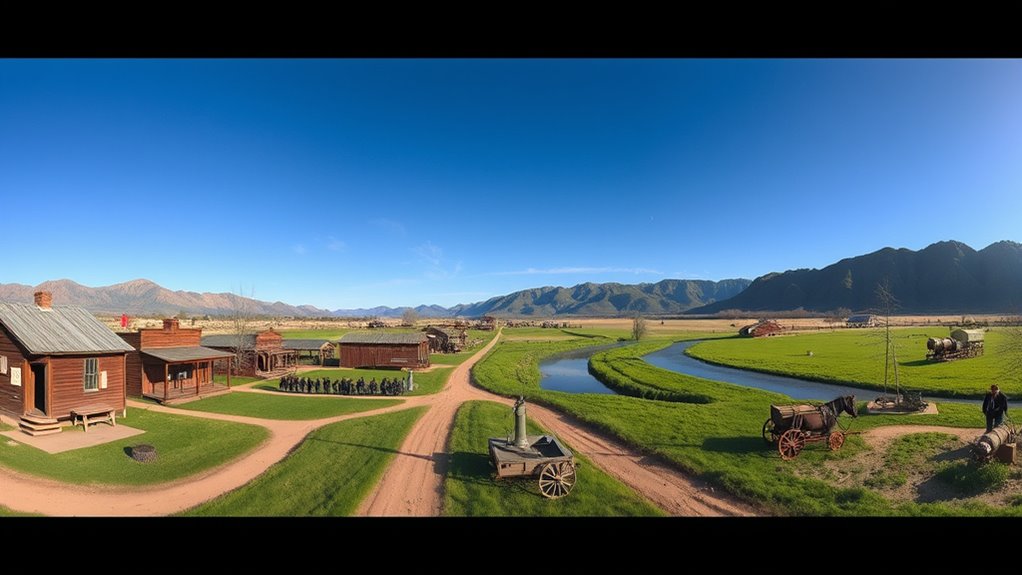
With water rights secured, land development accelerated. You might imagine early settlers digging ditches, building levees, and constructing irrigation systems that transformed dry, unproductive land into fertile farmland. These efforts weren’t just about watering crops; they fundamentally altered the landscape, creating a network of irrigated fields that supported a growing agricultural economy. Canal companies often became central figures in these communities, providing the infrastructure and resources necessary for settlers to thrive. As more land was cultivated, settlements expanded, and towns sprouted along these water channels, reinforcing the importance of water rights in shaping Idaho’s settlement patterns.
The development of these canal systems also influenced land ownership and use. Land that was once considered marginal or unsuitable for farming suddenly became valuable because of reliable irrigation. This increased land development, attracting new settlers eager to participate in Idaho’s agricultural boom. The canal companies, in turn, played a critical role in managing these water rights and maintaining the infrastructure. They often operated as both service providers and regulators, ensuring water was distributed fairly and efficiently. Through these efforts, they helped foster a sense of community and cooperation among settlers, who relied on these systems to sustain their farms and livelihoods.
As an affiliate, we earn on qualifying purchases.
Frequently Asked Questions
What Are the Current Challenges Faced by Idaho Canal Companies?
You face challenges like securing water rights, which are essential for your operations, especially during droughts. Maintaining aging infrastructure also proves difficult, as it requires constant repairs and upgrades to guarantee reliable water delivery. Balancing these issues with regulatory compliance and environmental concerns adds complexity. Staying proactive in managing water rights disputes and investing in infrastructure maintenance helps you keep your canal systems functional and efficient.
How Do Idaho Canal Companies Impact Local Ecosystems?
You might notice that Idaho canal companies influence local ecosystems by affecting ecological balance and water quality. These companies can cause changes through water diversions and sediment shifts, disrupting habitats and threatening native species. While they support agriculture and local economies, their activities can lead to waterway woes, risking the health of aquatic environments. It’s essential to evaluate how managing water wisely can balance economic needs with ecological health.
What Historical Events Shaped Idaho Settlements Along Canals?
You should know that historical land grants and water rights disputes shaped Idaho settlements along canals. Land grants encouraged settlers to develop the area, while disputes over water rights often led to conflicts and negotiations. These events prompted communities to organize around water management, creating settlements that relied heavily on canal systems for irrigation and sustenance. Understanding these factors helps explain how and why Idaho’s canal settlements developed as they did.
Are There Any Modern Innovations in Idaho Canal Management?
Like a well-oiled machine, Idaho’s canal management has embraced modern innovations. You’ll see advances like canal automation, which helps control water flow precisely, reducing waste. These systems promote water conservation, ensuring farmers get what they need without excess. By integrating smart technology, Idaho improves efficiency and sustainability, making sure water resources are used wisely for agriculture and communities alike.
How Do Idaho Settlements Along Canals Influence Regional Agriculture?
You see, settlements along Idaho canals play a vital role in regional agriculture by securing water rights, which guarantees reliable water access. This stability allows you to improve irrigation efficiency, leading to healthier crops and higher yields. When water rights are well-managed, it minimizes waste and maximizes resource use. As a result, these settlements support sustainable farming practices, boosting local economies and maintaining the area’s agricultural productivity over time.
Conclusion
Understanding Idaho canal companies and settlements helps you see the bigger picture of land development and water management. These efforts shaped the state’s growth and prosperity, revealing how teamwork and planning can turn challenges into opportunities. Remember, the early settlers knew that every cloud has a silver lining—sometimes, you just have to look a little harder. By appreciating their work, you can better value the roots of Idaho’s thriving communities today.