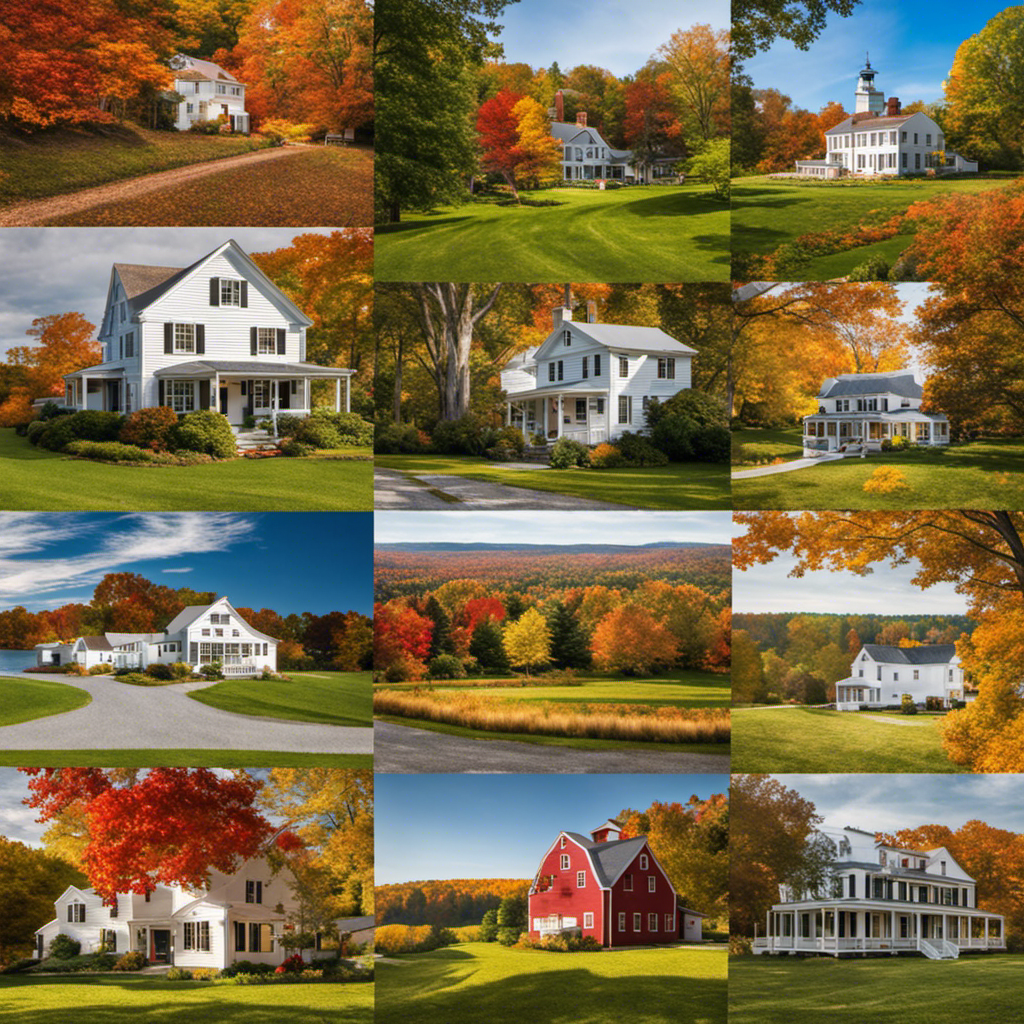
You’ll find that New England farmhouses loved ell additions and connected barns because they offered practicality and regional charm. These structures made farm chores easier by creating sheltered spaces for work, storage, and animal tending, all while reflecting local materials and craftsmanship. They helped adapt to the climate and fostered close family and community connections. If you want to discover how these features symbolize regional ingenuity and continue to influence modern farms, keep exploring.
Key Takeaways
- Ell additions and connected barns improved farm efficiency by allowing chores and animal care to be performed without exposure to harsh weather.
- They maximized space while maintaining regional architectural styles using locally sourced materials and traditional craftsmanship.
- These structures fostered close-knit farm communities by simplifying farm management and strengthening social bonds.
- Their design adapted to regional climate and environmental conditions, enhancing durability and longevity.
- Preserving and renovating these features honors regional heritage while accommodating modern needs.
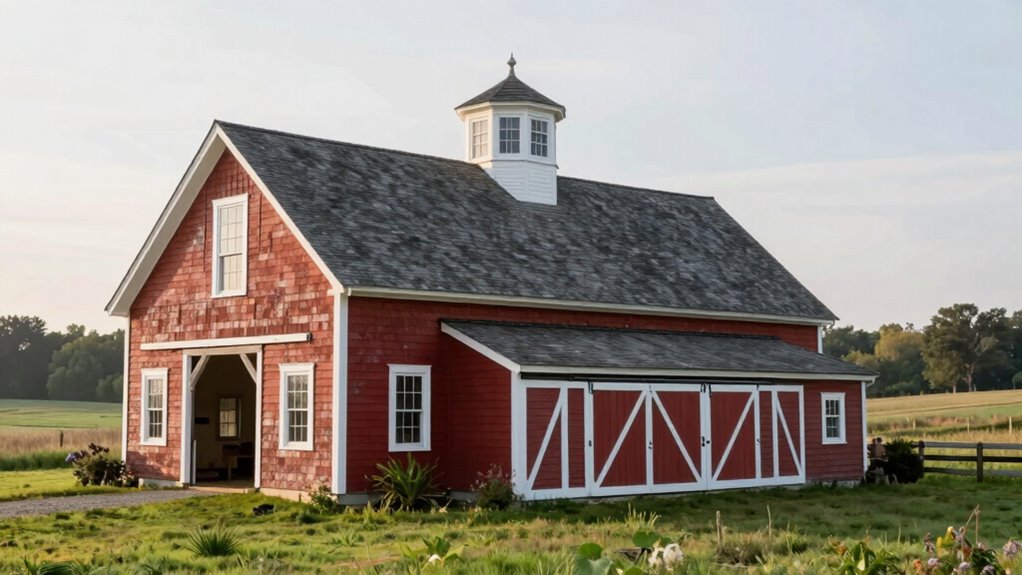
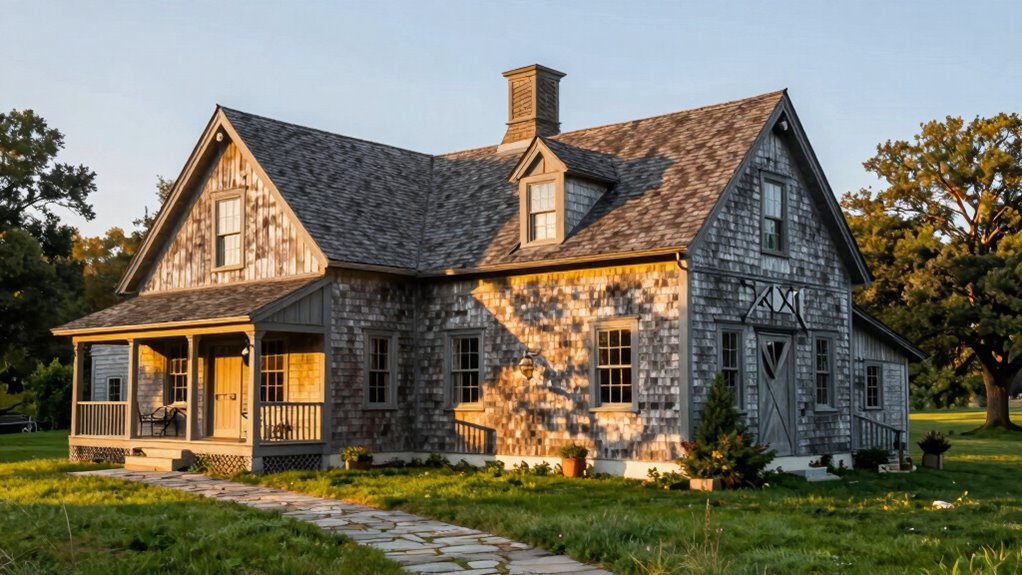
Many New England farmhouses feature ell additions and connected barns that reflect both practicality and regional charm. These architectural features weren’t just about aesthetics; they served real purposes that made daily farm life more efficient. When you look at these structures, you see a careful balance between historic preservation and modern renovations. The ell, typically a one or two-story wing extending from the main house, often housed kitchens, storage, or workspaces. Connecting barns to the main farmhouse wasn’t just a matter of convenience; it was a smart response to harsh weather conditions and the need for streamlined farm operations. This interconnected design allowed you to tend to animals, store crops, and manage chores without braving the elements. Additionally, the building techniques used in these structures contributed to their durability and regional character. These techniques often incorporated locally sourced materials that enhanced the building’s resilience and regional aesthetics. The use of traditional craftsmanship in these buildings also helped preserve regional architectural styles over generations. The integration of these structures often reflected regional climatic adaptations, ensuring longevity and suitability for New England’s weather.
In preserving these historic farmhouses, owners often face the challenge of maintaining the original character while adapting the buildings for contemporary use. The connected barn and ell additions are key to this effort. They retain the regional charm that makes New England architecture distinctive, but they also offer opportunities for modern renovations. You might update the interiors with energy-efficient windows, insulated walls, or modern heating systems, all while respecting the historic integrity of the original structures. These renovations help you keep the farmhouses functional and energy-efficient without sacrificing their timeless appeal. Proper restoration techniques, such as restoring original woodwork, are essential in preserving the authentic look and feel of these historic structures.
The practicality of ell additions and connected barns also influences rural community life. You can imagine how these layouts fostered close connections between farm families, simplifying chores and strengthening bonds. Today, these structures continue to serve as a testament to regional ingenuity. When you undertake modern renovations, you’re not just updating a building—you’re preserving a piece of history that reflects generations of farming life. Many restorations focus on restoring original woodwork, stone foundations, and traditional craftsmanship, ensuring that the historic essence remains intact even as you incorporate modern comforts. These efforts highlight the importance of historic preservation in maintaining the cultural landscape of New England. Ensuring these structures are preserved requires a combination of skilled craftsmanship and a respect for their historical significance.
Ultimately, why New England farmhouses loved ell additions and connected barns comes down to their practicality and regional identity. They’re a visual expression of how farm life adapted to the environment and community needs. When you combine historic preservation with thoughtful modern renovations, you respect that legacy while ensuring the structures remain useful and beautiful today. These farmhouses stand as enduring symbols of regional ingenuity, blending the old with the new in a way that celebrates practicality, history, and ongoing innovation.
As an affiliate, we earn on qualifying purchases.
Frequently Asked Questions
How Do Ell Additions Impact Farmhouse Energy Efficiency?
Ell additions boost your farmhouse’s energy efficiency by providing extra space for insulation upgrades, helping maintain indoor temperatures more effectively. They also make it easier to integrate solar panels, reducing your reliance on traditional energy sources. By sealing gaps and improving insulation, these extensions minimize heat loss, lowering energy bills. With solar integration, you further enhance efficiency, making your farmhouse more sustainable and comfortable year-round.
Are Connected Barns Cost-Effective for Small Farms?
Think of connected barns as a sturdy bridge linking your farm’s heart, making it cost-effective for small farms. While they enhance the farmhouse aesthetic, construction challenges can arise, but the benefits outweigh them. By reducing travel time and energy costs, you streamline operations, keeping expenses in check. So, connecting your barn isn’t just charming—it’s a smart investment that boosts efficiency and preserves your farm’s rustic appeal.
What Are Common Materials Used for Constructing Ell Additions?
You’ll find that common materials used for constructing ell additions in agricultural architecture include wood, which offers versatility and a traditional look, and stone for durability. Sometimes, you’ll see brick or concrete blocks, especially for structural support. These building materials are chosen for their availability, cost-effectiveness, and ability to blend seamlessly with existing farm structures, ensuring the ell additions are functional, durable, and aesthetically consistent with classic farmhouses.
How Do These Structures Influence Farmhouse Historical Preservation?
Like a keepsake that preserves memories, these structures boost farmhouse historical preservation by maintaining architectural authenticity and cultural significance. They serve as tangible links to the past, blending old-world craftsmanship with modern needs. By preserving these additions, you honor tradition, ensuring that future generations appreciate the historical charm and significance of New England farmhouses, making them living museums of local history and architectural evolution.
Can Ell Additions Be Easily Modified or Expanded Later?
Yes, ell additions can be easily modified or expanded later, thanks to their flexible interior layout and structural design. You can reconfigure rooms or add new sections with minimal disruption because these structures often have a simple, adaptable framework. Their inherent structural flexibility makes it straightforward for you to update or extend your farmhouse over time, ensuring it continues to meet your needs without extensive reconstruction.
Conclusion
In embracing the charm of ell additions and connected barns, you truly capture New England’s timeless spirit. These architectural features blend practicality with aesthetic grace, creating a seamless harmony between past and present—much like a well-curated playlist that spans generations. So, as you walk through these historic farmhouses, remember that their enduring appeal isn’t just about nostalgia; it’s about shaping a future rooted in tradition, proving that some designs are forever “in the cloud.”