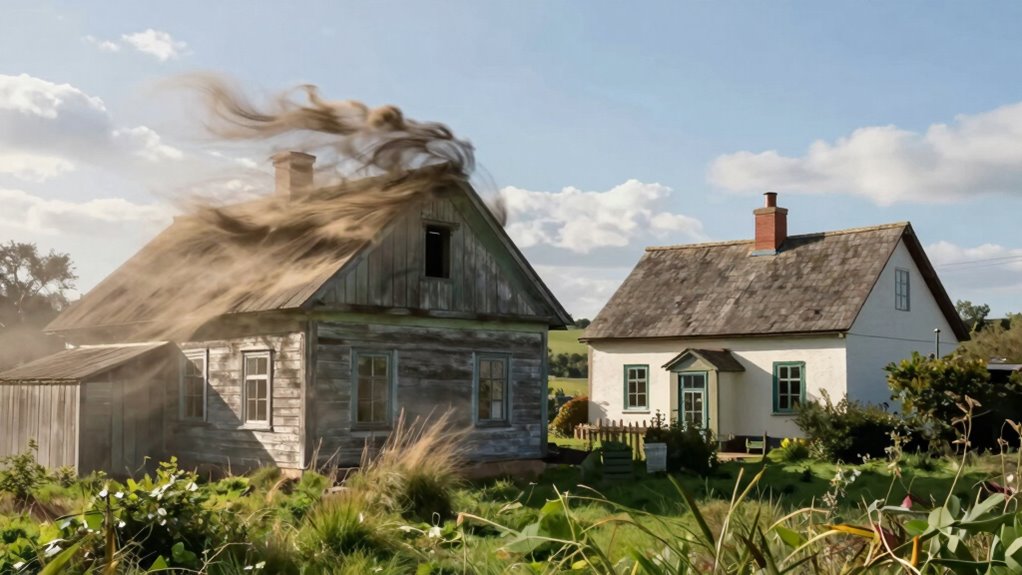

You notice that windward areas face frequent rain, storms, and erosion, so you plan outdoor work around calmer days and reinforce coastal defenses. Conversely, leeward sides are calmer and more stable, making them ideal for building homes and farming. These environmental differences shape your routines—adjusting activities, protecting property, and managing land use accordingly. Understanding how wind patterns influence these conditions helps you make smarter decisions about land and safety—keep exploring to learn more.
Key Takeaways
- Windward areas experience frequent storms and erosion, requiring routines focused on shoreline protection and weather monitoring.
- Leeward zones have calmer conditions, allowing for stable outdoor work and long-term homestead development.
- Wind patterns influence outdoor activity scheduling, with windward conditions prompting postponements or adjustments.
- Coastal erosion on windward sides necessitates routine reinforcement and land use planning to prevent damage.
- Knowledge of wind cues helps homesteaders adapt daily routines for safety, crop management, and infrastructure preservation.
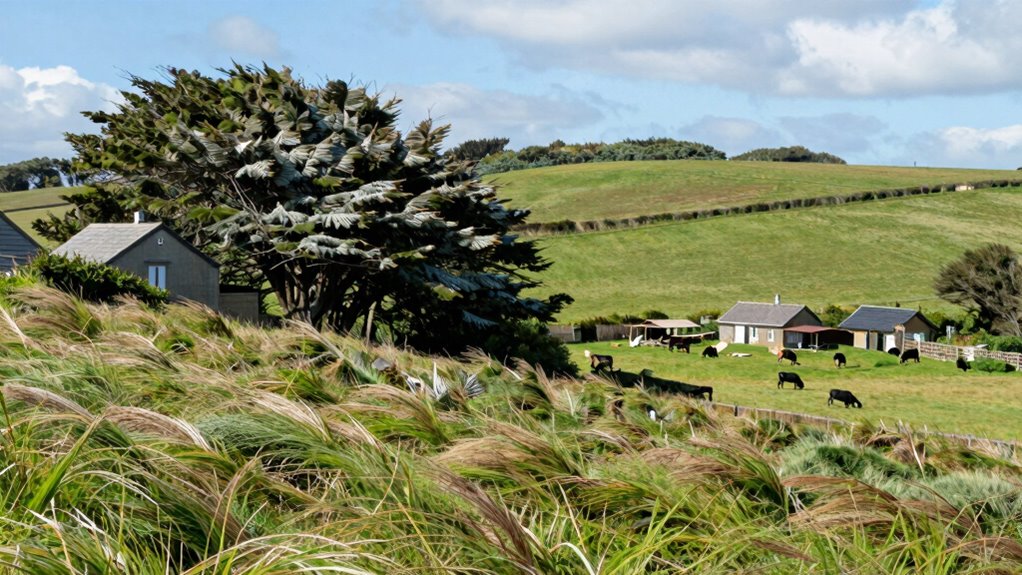
Have you ever wondered how the prevailing wind directions influence daily routines on a homestead? It’s a question that touches on how you plan your activities, protect your land, and navigate your surroundings. Wind patterns, especially windward and leeward conditions, shape more than just the weather—they dictate how you approach tasks like marine navigation and managing coastal erosion. These conditions create a natural rhythm that influences where you build, how you move around, and even when you work outside.
Wind directions shape daily routines, guiding how we build, work outside, and navigate our surroundings with nature’s subtle rhythm.
On the windward side of your homestead, you’ll notice the wind hits the land directly, carrying moisture and often causing more frequent rain and wind storms. This constant exposure can make outdoor work more challenging, so you adapt your routines accordingly. You might schedule tasks for calmer days or focus on activities that don’t require prolonged exposure to the elements. When it comes to marine navigation, windward conditions influence how you steer your boat, as the wind’s strength and direction determine your ease in reaching nearby waters. You learn to read the wind carefully, adjusting your sails and routes to stay safe. If you ignore these cues, you risk getting caught in rough seas or pushed off course.
Coastal erosion also plays a significant role in shaping your daily routines. On the windward side, the relentless pounding of waves driven by prevailing winds gradually wears away the shoreline. That erosion can threaten structures, gardens, and access points, forcing you to reinforce sea defenses or alter land use plans. Your routines include regularly monitoring the coastline and reinforcing vulnerable areas, especially if storms are frequent. Conversely, on the leeward side, where the wind is blocked and calmer, the land remains more stable. You might choose to build your home and farm structures here, knowing the risk of erosion is lower.
The influence of wind patterns extends into how you manage your homestead’s safety and productivity. You learn to interpret the subtle signs of changing wind conditions, which can signal approaching storms or shifts in weather. This knowledge helps you prepare your crops, secure loose items, and plan outdoor activities. Additionally, understanding windward and leeward conditions can help you better anticipate coastal erosion and adapt your land use accordingly. Essentially, your routines become a dance with nature’s invisible yet powerful forces—adapting daily tasks to wind direction, weather patterns, and coastal dynamics. By understanding and respecting these wind-driven influences, you make smarter decisions that protect your homestead and ensure your routines remain efficient, safe, and sustainable.

10 oz Turf Reinforcement Mat for Erosion Control – TRM for Slopes & Channels | USA Made – Sandbaggy (15, 8 ft x 112.5 ft Roll)
- Erosion Control Duration: Provides over 36 months of protection
- Seed & Growth Protection: Shields seeds and new vegetation
- Heavy-Duty Reinforcement: Strengthens slopes and riverbanks
As an affiliate, we earn on qualifying purchases.
As an affiliate, we earn on qualifying purchases.
Frequently Asked Questions
How Do Windward and Leeward Conditions Affect Daily Household Chores?
Windward and leeward conditions influence your daily chores by shaping your environmental adaptation and architectural design choices. On the windward side, you might focus on better ventilation and shade to combat moisture and wind, making chores like laundry and cleaning easier. Leeward homes often require less wind protection, so your routines adapt accordingly. These environmental factors drive the design of your home, impacting how you manage chores efficiently in different weather conditions.
What Specific Routines Are Influenced by Windward Versus Leeward Environments?
You adapt routines based on microclimate variations; on windward sides, you prioritize chores like watering gardens early to combat excess moisture and wind damage. On leeward sides, you focus on shelter adaptations, such as reinforcing structures against dry, hot conditions. These differences influence your daily schedule, ensuring your homestead stays resilient to the unique windward or leeward environment.
Do These Conditions Impact Social Interactions Within Homesteads?
Yes, windward and leeward conditions impact your social interactions within homesteads. In windward areas, stronger winds and open spaces encourage more privacy and personal boundaries, affecting privacy dynamics. Conversely, leeward zones promote social cohesion through closer proximity and shared spaces. These environmental factors shape how you connect with neighbors, influencing both your level of privacy and the amount of social interaction you experience daily.
How Do Windward and Leeward Conditions Influence Crop Choices?
Ever wondered how windward and leeward conditions shape your crop choices? These microclimate effects influence what plants thrive where, requiring crop adaptation. Windward areas often face more moisture and wind, so you might select hardy, wind-resistant crops. Leeward zones, being drier, call for drought-tolerant varieties. By understanding these microclimate effects, you can optimize your homestead’s productivity and choose crops best suited for each microenvironment.
Are There Health Implications Linked to Windward or Leeward Living?
Living windward or leeward can impact your health, especially regarding air quality and respiratory health. Windward areas often have cleaner, fresher air, reducing your risk of respiratory issues. Conversely, leeward zones might trap pollutants and allergens, worsening breathing problems. If you have allergies or asthma, choosing a windward location can support better respiratory health, while leeward living might require additional precautions to maintain good air quality.
Conclusion
Understanding how windward and leeward conditions shape homestead routines helps you adapt better to your environment. By recognizing these influences, you can optimize your daily activities and improve your comfort. Have you ever noticed how your routines change with the wind? Embracing these natural patterns allows you to work with nature rather than against it. So, are you ready to adjust your homestead practices to better suit the winds that surround you?