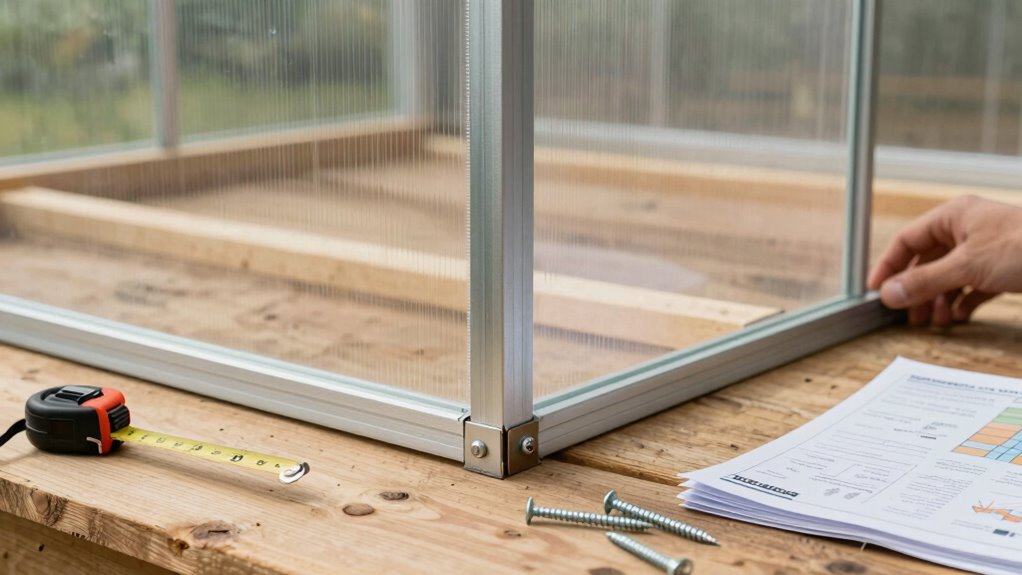

Before buying a greenhouse kit, consider your plants’ specific needs for humidity, temperature, and space. Think about your budget, including ongoing costs like heating and lighting. Measure your available area carefully to choose a size that fits without crowding or being underused. Also, look for models that are easy to assemble and made of durable materials. Ensuring proper environmental controls and adaptability helps your garden thrive. Keep exploring to discover more tips for making the right choice.
Key Takeaways
- Assess your available space and choose a size that fits without overcrowding or underutilizing your area.
- Determine your plant needs to select a greenhouse with appropriate environmental controls.
- Set a realistic budget considering both initial costs and ongoing expenses like heating and maintenance.
- Opt for durable, high-quality materials for longevity and ease of assembly.
- Ensure the greenhouse offers flexibility for environmental adjustments to accommodate diverse plant requirements.
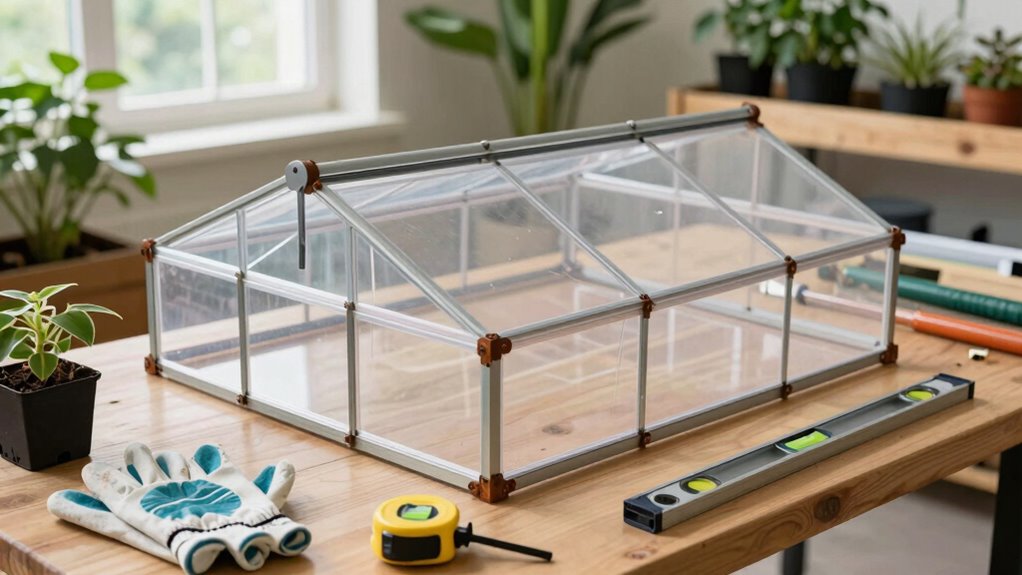
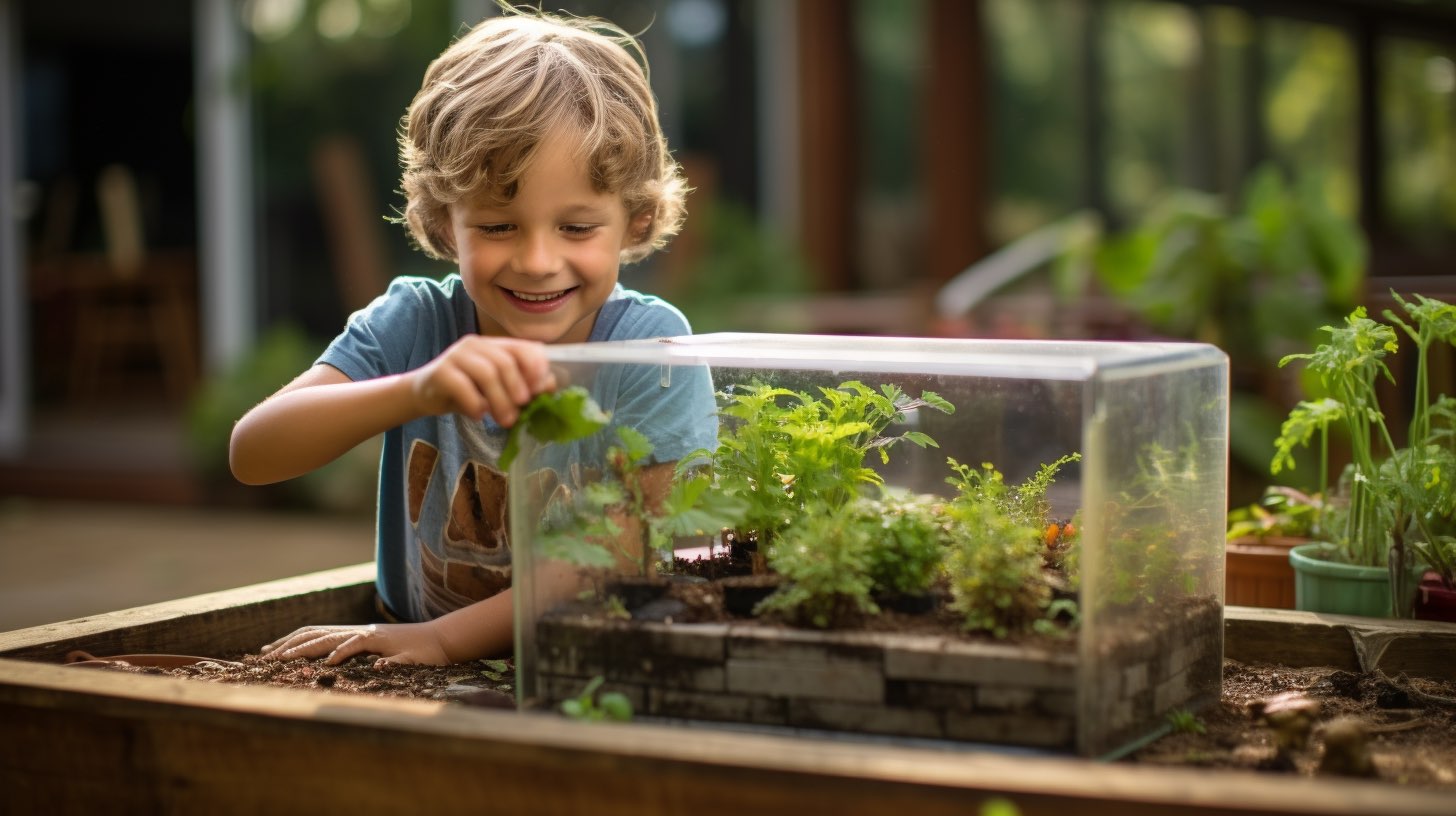
Buying a greenhouse kit is an exciting step toward growing your own plants, but before you make a purchase, it’s vital to take into account what truly matters. One of the most important factors is plant compatibility. Different plants have unique needs, so you need to think about what types you want to grow. For instance, if you’re aiming to cultivate tropical plants, you’ll require a greenhouse with specific humidity and temperature controls. Conversely, if your focus is on hardy vegetables or herbs, a simpler, more insulated design might suffice. Understanding the plants you wish to grow will help you choose a kit that provides the right environment, guaranteeing your efforts lead to thriving plants rather than frustration. Additionally, considering content formats that allow for flexible adjustments can make your greenhouse more adaptable to changing conditions or new plant interests.
Choosing the right greenhouse depends on your plants’ specific needs and growing conditions.
Alongside plant compatibility, your budget considerations play a significant role. Greenhouse kits come in a wide range of prices, from basic models that are budget-friendly to elaborate setups that can be quite costly. It’s tempting to go for the most impressive, but it’s wise to stay within your financial limits. Think about not just the initial purchase price but also ongoing costs like heating, lighting, and maintenance. A more affordable kit might be perfect if you’re just starting out or working with limited funds, while a higher-end model could be worth the investment if you’re committed to serious gardening. Setting a clear budget upfront helps prevent overspending and guarantees you select a greenhouse kit that fits your financial situation.
Size is another key aspect to think about, especially in relation to your available space. A greenhouse that’s too large might be overwhelming and underutilized, leading to wasted resources. Conversely, a too-small setup might restrict your plant choices or limit your gardening ambitions. Measure your available area carefully and choose a kit that fits comfortably without crowding your space or blocking natural light. Keep in mind that larger greenhouses often require more maintenance and can increase energy costs, so size should align with both your gardening goals and practical constraints.
Finally, ease of assembly and durability should influence your decision. A greenhouse kit that’s straightforward to put together saves you time and frustration, especially if you’re new to gardening. Look for sturdy materials like galvanized steel or high-quality plastics, which can withstand weather and last for years. Investing in a durable, easy-to-assemble kit ensures your gardening efforts are sustainable and enjoyable, giving you peace of mind that your setup will serve you well for seasons to come.

DIY Kit Company, LLC Greenhouse. Build Your Own DIY Greenhouse Bracket Kit. Includes Brackets and Complete Set of Plans. Expandable. Made in The USA. No Angled Cuts
- DIY Greenhouse Kit: Build your own greenhouse
- Complete Hardware Set: Includes brackets, base plates, and plans
- Expandable Design: Customize size with additional kits
As an affiliate, we earn on qualifying purchases.
As an affiliate, we earn on qualifying purchases.
Frequently Asked Questions
How Long Does a Typical Greenhouse Kit Last?
A typical greenhouse kit lasts around 10 to 20 years, depending on durability factors like material longevity and maintenance. If you choose high-quality materials such as polycarbonate or aluminum, your greenhouse will likely withstand weather and time better. Regular upkeep, like cleaning and repairing minor damages, also extends its lifespan. Ultimately, investing in durable materials and proper care guarantees your greenhouse remains functional and attractive for many years.
Are Greenhouse Kits Environmentally Friendly or Sustainable?
Greenhouse kits can be eco-friendly and sustainable if you choose ones made from eco-friendly materials like recycled or sustainably sourced wood and glass. You can also enhance sustainability by using renewable energy sources, such as solar panels, to power heating and lighting. By selecting environmentally conscious options and integrating renewable energy, you minimize your ecological footprint, making your greenhouse a responsible choice for both your gardening needs and the planet.
Can I Customize a Greenhouse Kit After Purchase?
Yes, you can customize a greenhouse kit after purchase. Think of it as a blank canvas waiting for your personal touch—adding DIY modifications and aesthetic enhancements becomes an exciting project. You might install extra shelving, upgrade the ventilation, or paint the frame. These tweaks let you tailor your greenhouse to fit your gardening needs and style, transforming it into a unique oasis that reflects your vision and passion.
What Maintenance Is Required for a Greenhouse Kit?
You need to regularly inspect your greenhouse kit for plant ventilation and pest control. Make sure vents and fans are working to promote airflow and prevent mold or disease. Clean the structure to remove debris, and check for pests like insects or rodents, taking prompt action if needed. Keep the glass or panels clean for maximum light, and monitor temperature and humidity levels to keep your plants healthy and thriving.
Do Greenhouse Kits Come With a Warranty?
Greenhouse kits often come with warranty coverage that varies by manufacturer, so you should check the specifics before buying. Typically, warranties cover product durability issues like frame defects or material failures within a certain period. This coverage helps protect your investment and guarantees you get a durable, high-quality greenhouse. Always read the warranty details carefully to understand what’s included, and choose a kit from a reputable brand that offers extensive support.
Conclusion
Before you buy a greenhouse kit, remember that it’s more than just assembling pieces — it’s about creating your personal oasis of growth and abundance. Choosing the right materials, size, and features guarantees your garden thrives beyond your wildest dreams. Don’t settle for anything less than perfect — your green thumb deserves a sanctuary that transforms your gardening dreams into reality. Get it right, and watch your garden flourish like a botanical wonderland!