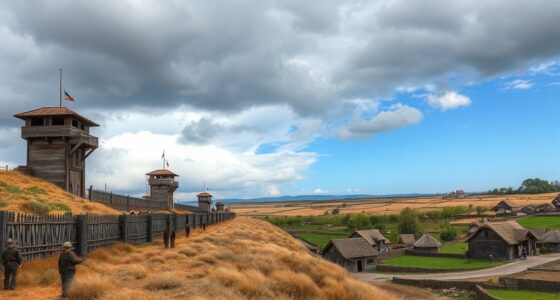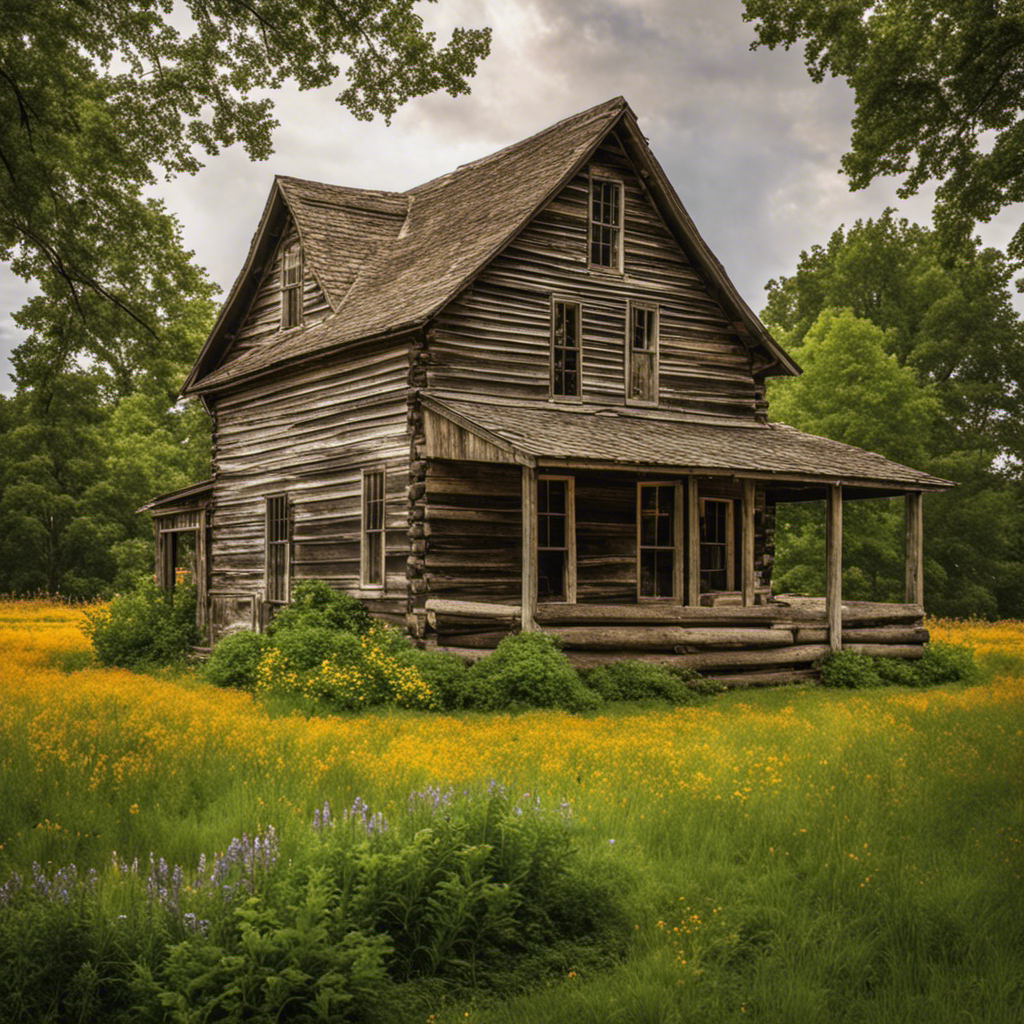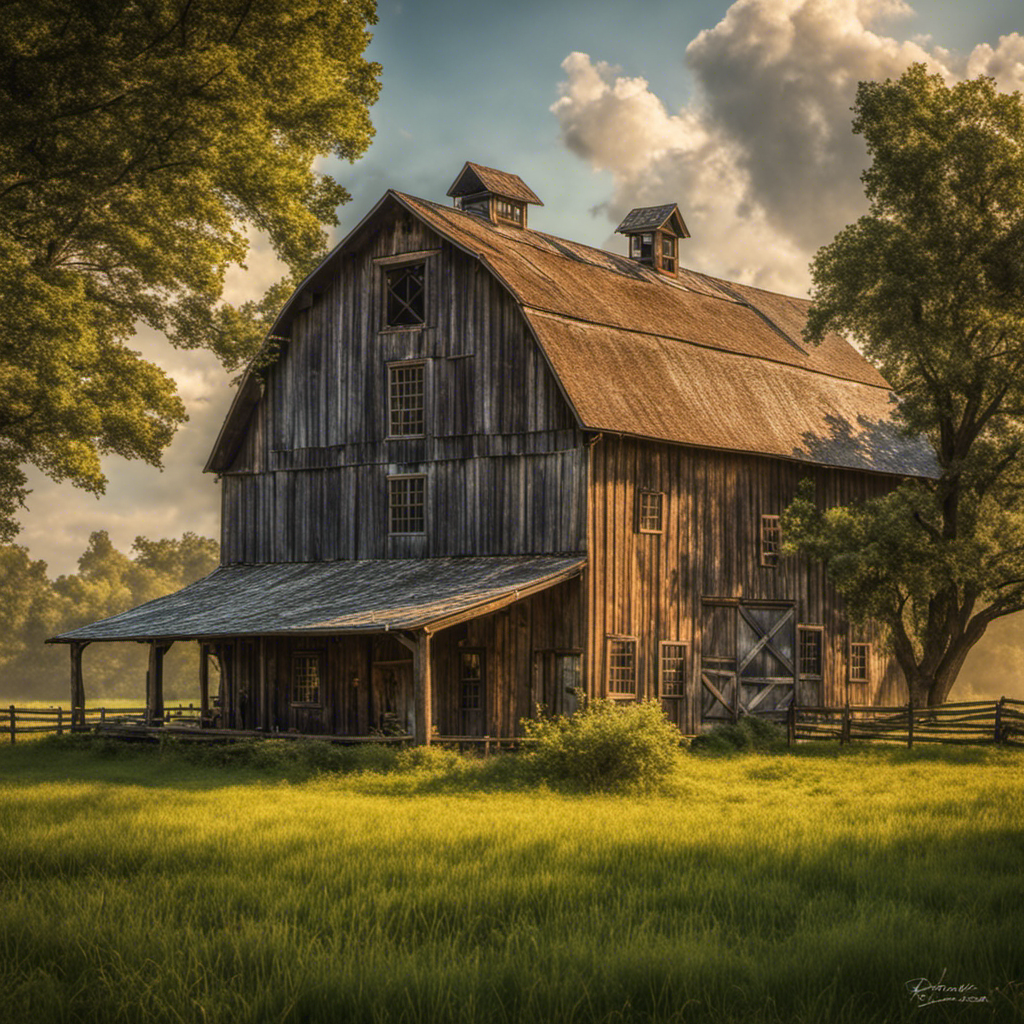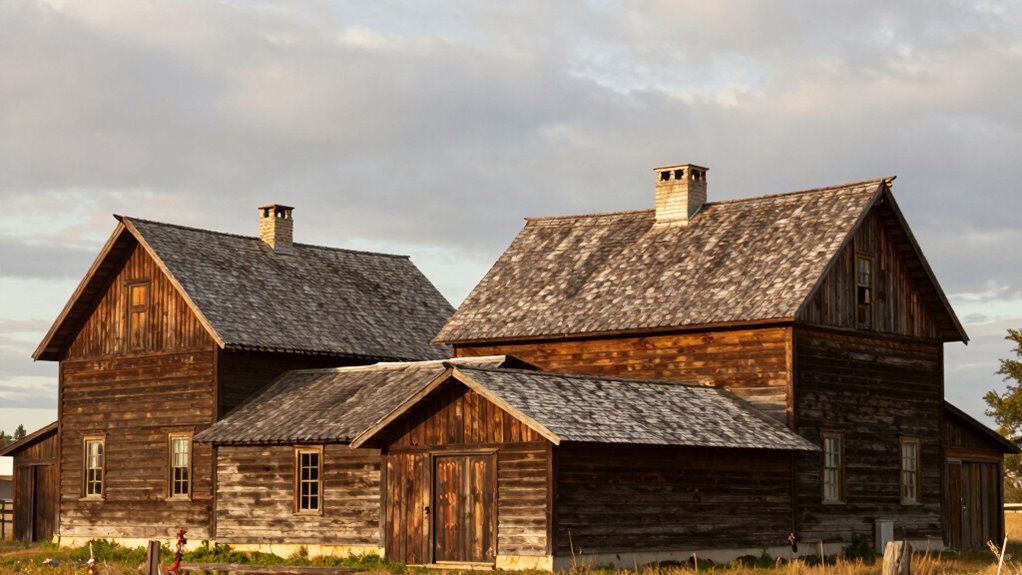
Farmhouse rooflines show how communities adapt to their climate and reflect local culture. Steep roofs shed snow in cold regions, while wider eaves offer shade and rain protection in warmer areas. Styles like gambrel roofs maximize space, highlighting craftsmanship and tradition. These designs reveal regional values, resourcefulness, and environmental responses. If you keep exploring, you’ll discover even more ways rooflines tell stories about climate, culture, and history across different areas.

Get furniture and decor delivered free with Prime
- Fast, free delivery on millions of items
- Prime Video, Amazon Music and more included
- Member-only deals all year
Key Takeaways
- Roof shapes are designed to adapt to local climate conditions, such as steep pitches for snow shedding or wide eaves for rain protection.
- Regional materials and craftsmanship create distinctive roofline styles that reflect local resources and building traditions.
- Decorative elements and gable designs symbolize cultural pride and community identity within rural regions.
- Variations in roofline design demonstrate historical responses to environmental challenges and weather resilience.
- Architectural techniques and innovations reveal cultural priorities, craftsmanship, and adaptation over generations.
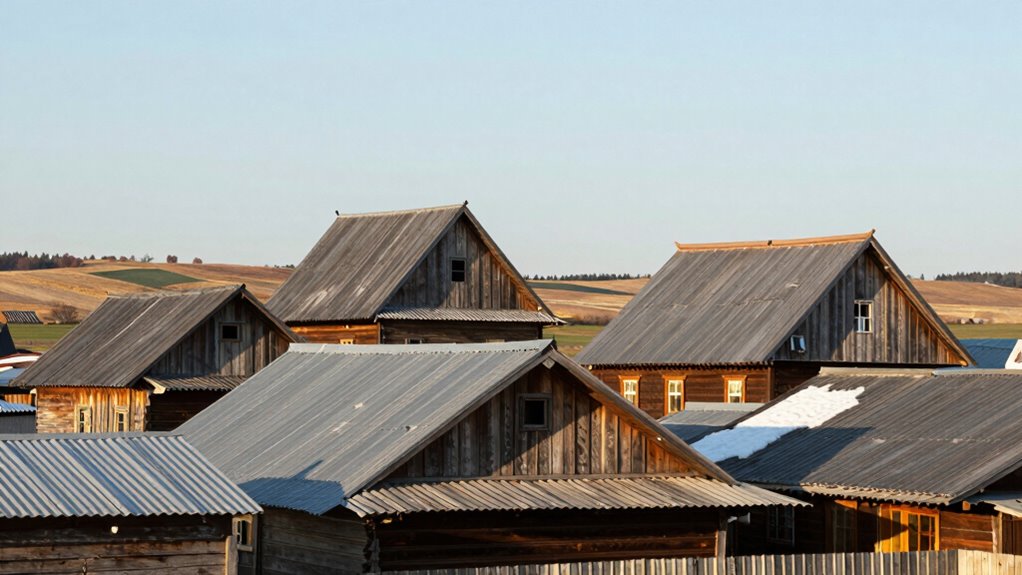
Have you ever noticed how farmhouse rooflines add charm and character to rural homes? These distinctive shapes aren’t just about aesthetics; they tell stories about the history, climate, and culture of the communities that built them. When you examine farmhouse rooflines, you’re observing the remnants of historical architecture that have evolved over centuries to suit practical needs and local traditions. Each curve, pitch, and overhang reflects more than style—it reveals how people adapted their homes to their environment and cultural values.
Farmhouse rooflines reveal stories of climate, culture, and history through their unique shapes and practical designs.
In many rural areas, roofline symbolism plays a vital role in understanding regional identity. For example, steeply pitched roofs often appear in colder climates, like the northeastern United States or northern Europe, where heavy snowfall requires roofs that shed snow quickly. These sharp angles are a practical response but also serve as a visual marker of local ingenuity. Conversely, in warmer, wetter regions, you might notice wider eaves and lower pitches designed to provide shade and protect walls from rain. These variations highlight how climate influences the architectural vocabulary of rural homes.
Historical architecture in farmhouse design isn’t just about function; it’s a reflection of cultural priorities passed down through generations. In some areas, the use of local materials and simple construction techniques created recognizable roofline styles that became cultural symbols. For instance, the iconic gambrel roof, often associated with barns, originated in European designs and became popular in America’s rural landscape as a means to maximize storage space while maintaining a sturdy structure. Such choices weren’t arbitrary—they embodied a community’s resourcefulness and adaptation to their environment. Additionally, building techniques played a crucial role in shaping these distinctive rooflines, demonstrating how craftsmanship influenced architectural styles. These techniques often involved local craftsmanship, which contributed to the unique appearance of regional roof designs. Moreover, the evolution of these techniques reflects architectural innovation, showcasing how rural builders adapted traditional methods to new challenges.
The shapes of farmhouse rooflines also reveal cultural influences and societal values. In certain regions, elaborate rooflines with decorative trim or layered gables symbolize pride and craftsmanship, showcasing a community’s investment in aesthetic appeal despite utilitarian needs. Meanwhile, more straightforward, functional rooflines suggest a focus on practicality and durability, often reflecting a community’s modesty or frugality.
Additionally, the evolution of roofline styles demonstrates how climate adaptation has been central to architectural development, ensuring homes remain resilient in changing weather conditions. When you observe farmhouse rooflines, you’re witnessing a visual dialogue between climate, culture, and history. These structures serve as living archives, showing how rural communities responded to their environment and expressed their identities through architecture. Each roofline pattern is a tribute to resilience, ingenuity, and tradition—an enduring symbol of how history and climate shape the homes we live in. By appreciating these details, you gain insight into the lives and values of those who built and cherished these rural landmarks.
farmhouse roofline architectural model
As an affiliate, we earn on qualifying purchases.
As an affiliate, we earn on qualifying purchases.
Frequently Asked Questions
How Do Rooflines Influence Interior Insulation?
Your rooflines influence interior insulation by shaping ventilation strategies and insulation integration. Steeper roof lines promote better airflow, helping to reduce heat buildup and moisture, which supports more effective insulation. Gable or shed roofs allow easier installation of insulation layers and ventilation systems, minimizing gaps and thermal bridging. Properly designed rooflines optimize insulation performance, keeping your home warmer in winter and cooler in summer, while also preventing issues like condensation.
Are Certain Roof Styles More Energy-Efficient?
Certain roof styles, like gable and shed roofs, are more energy-efficient because they support better insulation and ventilation, which helps reduce energy costs. If you incorporate solar integration, these rooflines make it easier to install panels without sacrificing aesthetic versatility. Choosing an energy-efficient roof style not only boosts your home’s performance but also enhances its appearance, giving you a balance of functionality and visual appeal.
How Do Rooflines Adapt to Extreme Weather?
When it comes to adapting rooflines to extreme weather, you know what they say—necessity is the mother of invention. You can install solar panels on sloped roofs for better wind resistance and snow runoff, while decorative accents like dormers can add structural stability. These design features help your home withstand harsh conditions, ensuring durability and energy efficiency without sacrificing style. Your roof becomes both a shield and a statement of resilience.
What Materials Are Best for Traditional Farmhouse Rooflines?
You should choose materials like cedar shingles or metal for traditional farmhouse rooflines, as they offer excellent roof durability. Cedar provides a classic, rustic look that enhances material aesthetics, blending seamlessly with farmhouse charm. Metal roofing, on the other hand, is highly durable and weather-resistant, perfect for extreme climates. Both options balance style with function, ensuring your roof maintains its beauty and strength over time.
How Do Roof Designs Reflect Regional Cultural Influences?
Ever wondered how roof designs embody regional cultural influences? You see, regional architectural symbolism often shapes the silhouette of farmhouse roofs—steep pitches in snowy climates for snow runoff, wide eaves in wetter areas for rain protection. These styles also preserve cultural heritage, reflecting local traditions and craftsmanship. By studying these designs, you connect with the history and environment of a place, making each farmhouse a unique story of its region.
Conclusion
Just like a fingerprint uniquely identifies a person, farmhouse rooflines reveal the story of a region’s climate and culture. By paying attention to these architectural details, you can uncover stories of adaptation, craftsmanship, and tradition woven into every ridge and pitch. So next time you see a farmhouse, remember it’s not just a building—it’s a visual history book, waiting for you to read its pages as easily as you’d flip through a favorite story.
Halloween Picks
halloween
As an affiliate, we earn on qualifying purchases.