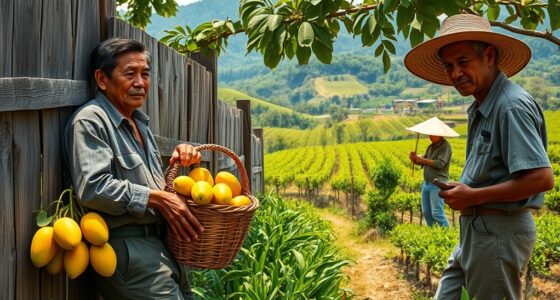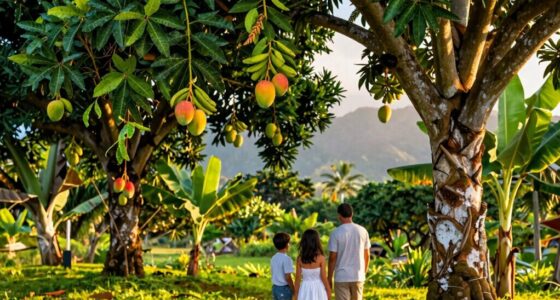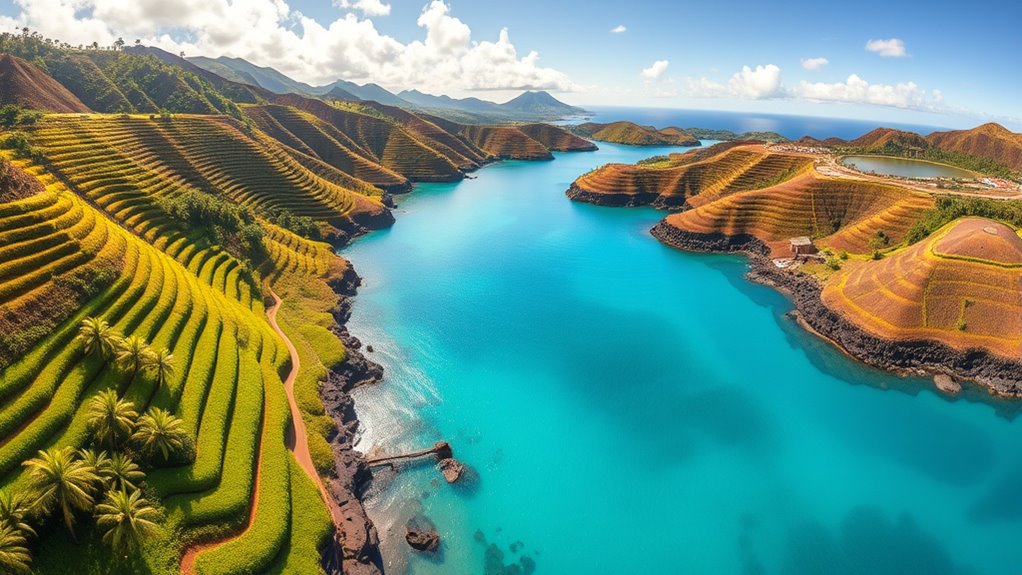

Hawaiian ahupua‘a showcases an advanced system where land and water are carefully managed to support communities sustainably. You’ll see how each division extends from mountain peaks to the ocean, integrating fishing, agriculture, and water flow to balance resources and protect ecosystems. This holistic approach guarantees community needs are met while preserving nature’s harmony. Continuing to explore this system reveals valuable lessons on balanced resource use that still hold relevance today.
Play games included with Prime
Start a Prime free trial and play with Amazon Luna on your devices.
As an affiliate, we earn on qualifying purchases.
Key Takeaways
- Ahupua‘a are land divisions from mountain peaks to the ocean, designed for resource sustainability.
- They integrate land and water management, supporting agriculture and fishing within interconnected ecosystems.
- Traditional practices include terraced farming and coastal fishing, ensuring ecological balance and food security.
- Ahupua‘a emphasize careful resource stewardship, using features like stone walls and fishponds to sustain communities.
- The system offers lessons in holistic, sustainable resource management and cultural preservation.
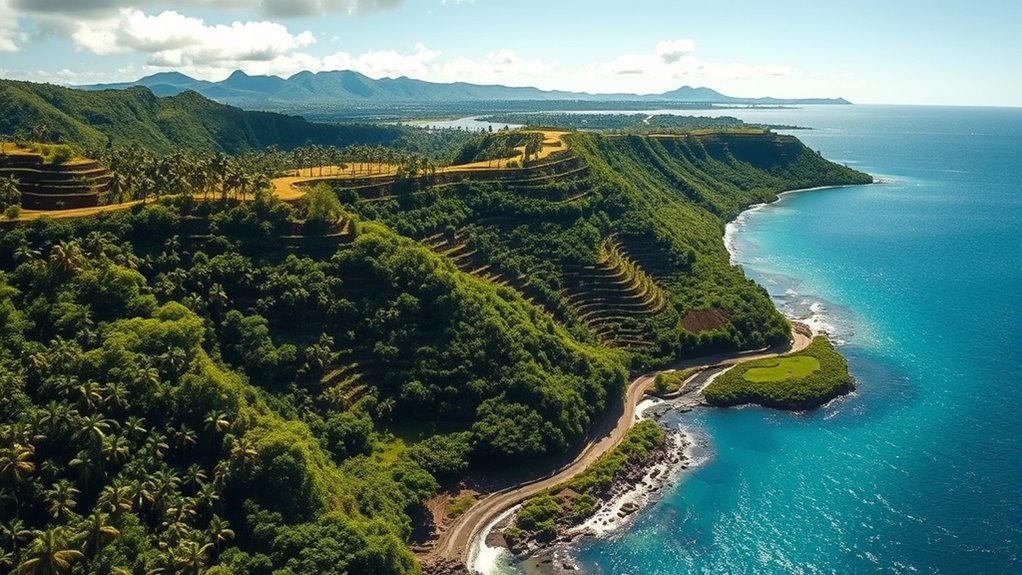
Have you ever wondered how ancient Hawaiians organized their land? It’s a fascinating system that balanced the needs of people, nature, and resources. The ahupua‘a, the traditional land division, stretches from mountain peaks down to the ocean, creating a manageable segment that includes all the elements necessary for sustaining life. This system wasn’t random; it was carefully planned to maximize resource use and guarantee sustainability. As you explore these divisions, you’ll see how land and water management were intricately connected, allowing communities to thrive in harmony with their environment.
Within an ahupua‘a, traditional fishing played a essential role. You’d find designated areas near the coast where Hawaiians developed sophisticated methods for catching fish, like setting traps or using nets to harvest seafood sustainably. These methods ensured a steady food supply without depleting fish populations, demonstrating a deep understanding of ecological balance. The ocean provided more than just food; it was also a source of spiritual connection and cultural identity. By managing fishing activities carefully, they maintained a reliable resource for generations, showing an advanced approach to resource stewardship.
On land, terraced agriculture was a critical part of the system. You’d see carefully constructed terraces along the slopes of mountains and valleys, designed to prevent erosion and maximize arable land. These terraces allowed Hawaiians to grow taro, sweet potatoes, and other crops efficiently on steep terrain. The system of terraced agriculture also helped control water flow, directing rainfall to crops and reducing runoff. The creation of these terraces was a labor-intensive process, but it paid off by increasing food security and supporting larger populations. You can imagine the skill and knowledge needed to build and maintain these terraces, reflecting a sophisticated understanding of land management.
The integration of traditional fishing and terraced agriculture within each ahupua‘a showcases the Hawaiians’ holistic approach to resource management. They viewed land, water, and sea as interconnected, creating an ecosystem that could sustain their communities for centuries. When you walk through these ancient divisions today, you see evidence of their ingenuity—stone walls, terraced fields, and fishponds—that tell stories of a way of life deeply rooted in respect for nature. This system reminds us of the importance of balance and foresight in managing natural resources, lessons that remain relevant even now.
As an affiliate, we earn on qualifying purchases.
Frequently Asked Questions
How Did Ancient Hawaiians Determine the Boundaries of Each Ahupua‘A?
You can see that ancient Hawaiians determined the boundaries of each ahupua‘a using traditional boundary markers like large stones, trees, or natural features such as ridges and streams. These markers held cultural significance, symbolizing sacred sites or community identity. They carefully chose these landmarks to guarantee clear, respected boundaries that connected the land and water management practices, helping maintain harmony and sustainability within their society.
What Modern Practices Are Used to Preserve Ahupua‘A Systems Today?
You can see modern practices like cultural revitalization and eco-tourism development working together to preserve ahupua‘a systems. By promoting traditional land management, community-led conservation, and sustainable tourism, these efforts protect water sources and restore cultural practices. This approach guarantees the ahupua‘a’s legacy endures, making it an invaluable treasure for future generations—more essential than the most precious jewel in the world.
How Do Ahupua‘A Boundaries Influence Contemporary Land Use Policies?
You see that ahupua‘a boundaries shape land use policies by emphasizing their cultural significance and promoting sustainable practices. These boundaries help preserve traditional knowledge, which influences zoning and resource management. They also guide tourism impact strategies, ensuring visitors respect cultural sites and natural resources. As a result, policies protect both the environment and cultural heritage, fostering a balanced approach that honors the traditional land division while adapting to modern needs.
Are There Specific Native Plants Associated With Traditional Ahupua‘A Ecosystems?
Imagine walking through a Hawaiian valley where native plantings whisper stories of old. You’ll find plants like ti leaves, kalo (taro), and ‘uala (sweet potato) that are deeply connected to the land’s heart. These native plants serve as ecological indicators, revealing the health of the ecosystem. Their presence and abundance help you understand the vibrancy of the traditional ahupua’a, guiding sustainable practices and honoring ancient land stewardship.
How Do Water Rights Within Ahupua‘A Compare to Modern Water Laws?
You’ll find that water rights within ahupua‘a differ from modern laws by emphasizing water allocation based on traditional practices and community needs. The legal frameworks in place now often prioritize individual rights, but in ahupua‘a, water was shared communally, managed sustainably. This system guaranteed equitable access, blending spiritual and practical considerations, contrasting with modern laws that tend to focus on ownership and regulation.
Conclusion
You now hold the secret to Hawaii’s ancient wisdom—an entire world of land and water perfectly balanced within each ahupua‘a. Imagine harnessing this harmony today, transforming our environment and lives forever. By embracing these timeless practices, you could revolutionize sustainability and make history. Don’t just learn about it—live it! Because, honestly, if the Hawaiians could master this perfect system, there’s no reason you can’t change the world too.
NFL season / tailgating Picks
team gear
As an affiliate, we earn on qualifying purchases.