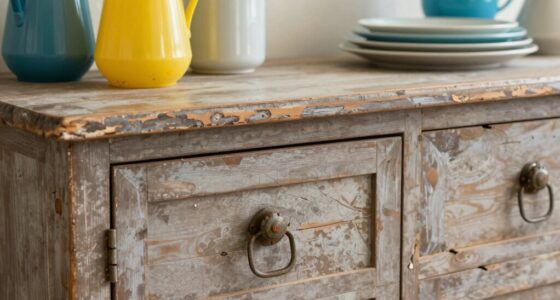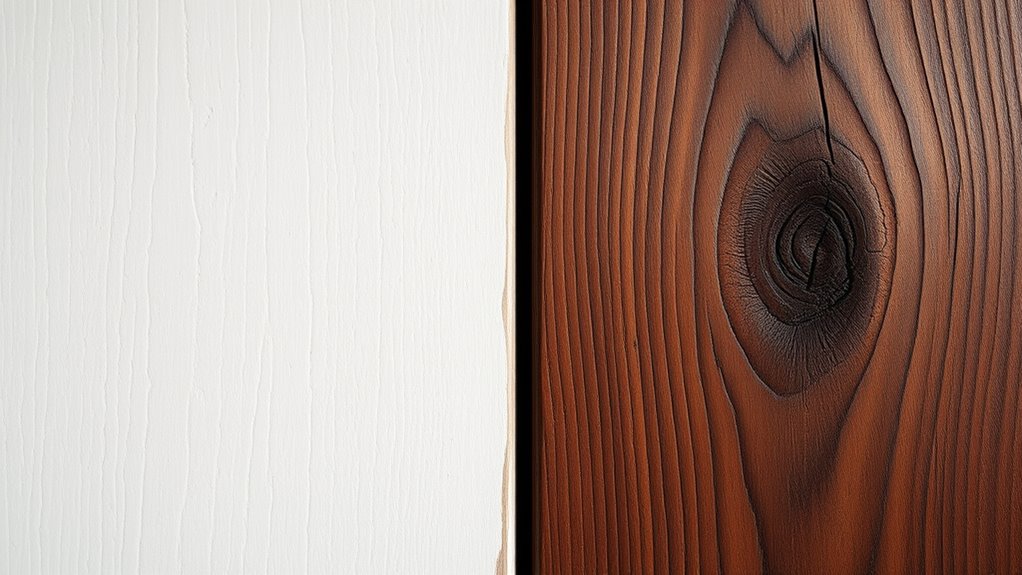

Choosing between paint and stain for a farmhouse finish depends on your style goals. If you want bold, consistent color that hides imperfections, paint is your best option. But if you prefer to highlight natural grain and texture, stain enhances the wood’s charm. Both require proper prep and application techniques to look great. Want to discover how each option can perfectly match your farmhouse vision? Keep exploring to find the right choice for your project.
Key Takeaways
- Paint provides a uniform, opaque color that completely covers wood, ideal for bold farmhouse decor statements.
- Stain enhances natural grain and texture, creating warmth and authenticity in farmhouse finishes.
- Proper surface prep and application techniques are essential for achieving consistent and desired results with both paint and stain.
- Paint conceals imperfections and underlying wood tones, while stain highlights natural imperfections and texture.
- The choice between paint and stain depends on whether a vibrant, uniform color or natural wood charm aligns with the farmhouse aesthetic.

When deciding between painted and stained finishes for your wood surfaces, understanding their differences is essential. Each option offers a distinct look and feel, and your choice can considerably influence the overall farmhouse aesthetic you’re aiming to achieve. Paint provides a solid, opaque color that can completely change the appearance of your wood, creating bold statements or subtle backgrounds. Stain, on the other hand, enhances the natural grain and texture, giving your wood a warm, authentic charm. Knowing how each interacts with your surface helps you make an informed decision.
Color consistency is a key factor when choosing between the two. With paint, achieving a uniform, vibrant hue is straightforward because it covers imperfections and underlying wood tones completely. You can select from countless colors and expect a consistent finish, especially if you use high-quality paint and proper application techniques. Stains tend to be more transparent, which means the final color is influenced by the wood’s original tone and grain pattern. This transparency can lead to variations in color, especially if you don’t apply the stain evenly or if the wood has inconsistent porosity. To maintain color consistency with stain, it’s essential to follow precise application techniques—using the right tools, applying multiple coats if necessary, and ensuring thorough coverage. Proper surface preparation also plays a critical role, as any roughness or unevenness can cause uneven stain absorption.
Achieving consistent stain color requires precise application and thorough surface preparation.
When applying paint, you’ll benefit from techniques that ensure smooth, even coverage. Using quality brushes or rollers, applying multiple thin coats, and allowing adequate drying time between layers help prevent streaks or drips. For stained finishes, your application techniques need to focus on even distribution. Using a brush, cloth, or sprayer, you should work in manageable sections, wiping away excess stain to avoid blotches or streaks. Prepping the wood by sanding it smooth and removing dust enhances the stain’s adhesion and ensures a more uniform appearance. Also, keep in mind that staining often requires quick, confident strokes to prevent laps or overlaps from becoming noticeable.
In essence, both painted and stained finishes demand attention to detail and proper application techniques to achieve the desired look. If you want a bold, consistent color with minimal grain showing, painting might be your best choice. But if you prefer to highlight the wood’s natural beauty and texture, staining offers a warm, authentic charm—just remember that careful application is fundamental to maintain the desired color consistency. Whichever route you choose, understanding these core differences will help you craft a farmhouse finish that matches your vision perfectly.
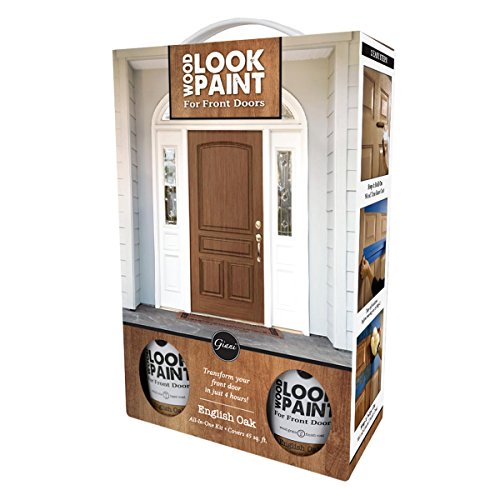
Giani Wood Look Paint Kit for Front & Interior Doors (English Oak)
- Quick Home Curb Appeal: Enhance your home in 4 hours
- Versatile Door Use: Suitable for interior and exterior doors
- Compatible Materials: Works on steel, aluminum, and wood
As an affiliate, we earn on qualifying purchases.
As an affiliate, we earn on qualifying purchases.
Frequently Asked Questions
How Does Humidity Affect Painted and Stained Farmhouse Finishes?
Humidity effects can critically impact your painted and stained farmhouse finishes. High humidity causes moisture to seep into the wood or paint, leading to longer drying times and potential bubbling or peeling. Low humidity might cause finishes to crack or chip as the surface dries too quickly. To guarantee your finish’s durability, control humidity levels during application and drying, and choose products suited for your environment.
Can Painted Finishes Be Easily Removed or Changed Later?
Painted finishes can be removed or changed more easily than stained finishes, thanks to their removability of paint. If you decide to update your look, you can strip or repaint the surface without much hassle. However, keep in mind that the stain color options are more permanent, making it harder to change the look later. So, if flexibility matters, painted finishes give you more options for future updates.
Which Finish Is More Resistant to Scratches and Dents?
Stained finishes are generally more resistant to scratches and dents than painted ones, thanks to their durability comparison and surface protection qualities. You’ll find that stains penetrate the wood, offering a tougher barrier against everyday wear. While painted surfaces can chip or scratch more easily, stains tend to hide minor imperfections better, making them ideal if you want long-lasting durability and a resilient farmhouse finish.
How Do Painted and Stained Finishes Impact Indoor Air Quality?
You might think painted finishes are harmless, but they can release VOC emissions that fill your space like a toxic fog, impacting indoor air quality dramatically. Stains generally emit fewer VOCs, reducing chemical leaching risks that could harm your health over time. Choosing stained finishes means you’re less likely to expose yourself to harmful fumes, making your home safer and breathing easier, unlike the potentially hazardous environment painted finishes can create.
Are There Eco-Friendly Options for Painting or Staining Farmhouse Furniture?
Yes, you can choose eco-friendly options for painting or staining farmhouse furniture. Look for natural finishes made from water-based or plant-based products, which emit fewer volatile organic compounds (VOCs). Brands now offer eco-friendly options that are non-toxic and biodegradable. These natural finishes not only protect your furniture but also promote a healthier indoor environment, making them a smart choice for sustainable, stylish farmhouse decor.
Conclusion
Ultimately, whether you choose painted or stained finishes, it’s about embracing the unique charm each brings. Sometimes, the subtle differences whisper more than words, hinting at your personal style and the stories your home wants to tell. Trust your instincts and remember, the best choice is the one that feels right for your space. After all, it’s the quiet touches that often leave the most lasting impression.