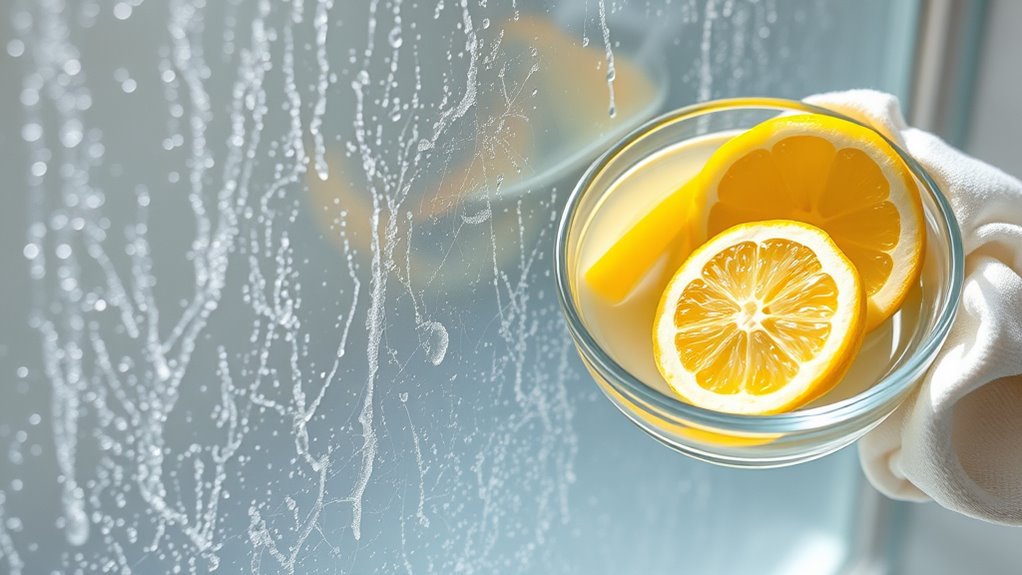

To remove hard water stains naturally, start by applying white vinegar directly to the affected area or soaking cloths in vinegar. You can also make a paste with baking soda and vinegar for more stubborn stains, or mix equal parts vinegar and borax for tough rings. Let the solutions sit to dissolve mineral deposits, then scrub gently with a brush or sponge before rinsing thoroughly. Keep exploring for more helpful tips on maintaining a spotless home environment.
Key Takeaways
- Apply white vinegar directly to affected areas or soak cloths in vinegar for targeted stain removal.
- Use a baking soda and vinegar paste to fizz and lift mineral deposits from surfaces.
- Soak fixtures like showerheads or faucets in vinegar using plastic bags secured with rubber bands overnight.
- Mix equal parts vinegar and borax to create a paste for removing stubborn water rings in toilets and sinks.
- Rinse thoroughly with water after treatment to enhance cleaning results and prevent future buildup.

Hard water stains can be stubborn and unsightly, but with the right approach, you can remove them effectively. When tackling these mineral deposits, eco friendly cleaning methods are a smart choice—not only for the environment but also for your home’s surfaces. DIY stain removal is a practical, cost-effective way to restore your fixtures and glassware without harsh chemicals. Starting with natural ingredients, you can create powerful solutions that cut through limescale and mineral buildup while keeping your space safe and healthy.
One of the simplest DIY stain removal techniques involves using white vinegar, which is renowned for its acidity and ability to dissolve calcium and magnesium deposits. To begin, pour white vinegar directly onto the affected area or soak a cloth in vinegar and apply it to the stain. Let it sit for at least 15 minutes to loosen the mineral buildup. If you’re cleaning a showerhead or faucet, you can fill a plastic bag with vinegar, secure it around the fixture with a rubber band, and let it soak overnight. When you’re ready to scrub, use a soft brush or sponge to gently remove the softened stains. Rinse thoroughly with water, and you’ll notice the mineral deposits diminish notably.
For more stubborn stains, combining vinegar with baking soda creates a fizzy, abrasive paste that enhances cleaning power without resorting to harsh chemicals. Apply the baking soda directly on the stain, then spray or pour vinegar over it. The resulting fizz helps lift the deposits from surfaces like tiles, glass, or ceramic fixtures. After the bubbling subsides, scrub lightly with a brush or cloth, then rinse with warm water. This DIY stain removal method is not only effective but also aligns with eco friendly cleaning principles, making it safe for your family and the environment.
If you’re dealing with hard water rings in toilets or sinks, a mixture of vinegar and borax can work wonders. Mix equal parts vinegar and borax to form a paste. Apply it generously to the stained area and let it sit for about 20 minutes. Use a brush or sponge to scrub away the stains, then rinse thoroughly. This DIY approach avoids toxic cleaners while providing a deep clean that restores shine and clarity.
Incorporating these natural, eco friendly cleaning techniques into your routine not only saves you money but also reduces your exposure to harmful chemicals. Regular maintenance with these DIY stain removal methods prevents mineral buildup from becoming a major headache. Additionally, understanding Textile Line and its protective benefits can help you choose better cleaning practices for your home. With patience and a little elbow grease, you can keep your home sparkling clean and free of hard water stains—naturally.

FadimiKoo Flush Mount Ceiling Light Fixtures for Kitchen Hallway, 4-Light Close to Ceiling Lighting, Industrial Farmhouse Square Cage Ceiling Lamp for Dining Room, Living Room, Bulb Not Included
【INDUSTRIAL & FARMHOUSE STYLE DESIGN】This 4 lights farmhouse semi flush mount light fixture features a solid wood frame...
As an affiliate, we earn on qualifying purchases.
Frequently Asked Questions
Can Hard Water Stains Cause Long-Term Damage to Surfaces?
Hard water stains can cause long-term damage to surfaces if left untreated. They lead to surface deterioration and may promote long-term corrosion, especially on metal fixtures and porous materials. Over time, mineral buildup weakens surfaces, making them more vulnerable to cracks and decay. To prevent this, it’s essential to remove stains promptly and take preventative measures, like sealing surfaces and regularly cleaning, to protect your surfaces from lasting damage.
Are Natural Remedies Safe for All Types of Household Fixtures?
Hold on to your bonnet—natural remedies can be safe for most household fixtures if you consider chemical safety and fixture compatibility. You’ll want to test on a small, hidden area first, especially with delicate surfaces. While natural solutions avoid harsh chemicals, some materials may react differently. Always research your fixture type and follow proper application methods to guarantee safe, effective cleaning without causing damage or wear over time.
How Often Should I Treat Surfaces to Prevent Stain Buildup?
You should treat surfaces for stain prevention and surface maintenance at least once a month. Regular cleaning helps prevent hard water stains from building up and becoming more difficult to remove. If you notice signs of mineral deposits, increase the frequency. Consistent care keeps your fixtures looking their best and reduces the need for harsher cleaning methods later. Staying proactive guarantees your surfaces stay clean, shiny, and free from stubborn stains.
Do Natural Solutions Work on Mineral Deposits From Well Water?
Yes, natural solutions can effectively remove mineral buildup caused by well water. You can use vinegar or lemon juice to break down mineral deposits on surfaces. Simply apply the solution, let it sit for a while, then scrub gently. These natural remedies are eco-friendly and safe for most surfaces, making them a great choice for tackling mineral buildup from well water without harsh chemicals.
Are There Environmentally Friendly Commercial Products for Hard Water Stains?
Are there eco-friendly cleaners that tackle hard water stains? Absolutely! Many commercial options now focus on being environmentally friendly, helping you clean without harming the planet. Think of these products as your green allies—powerful yet gentle. You can find eco-friendly cleaners designed specifically for mineral deposits, making your cleaning routine effective and sustainable. So, next time you face stubborn stains, reach for these greener solutions and feel good about your impact.

Black Farmhouse Chandelier, 6 Light Geometric Dining Room Light Fixture, Modern Industrial Metal Ceiling Light Rustic Hanging Pendant Lights with E12 base for Kitchen Island Entryway Foyer, Indoor
Style & Design: This black chandelier features 6 geometric square metal frames, each equipped with a lampholder. When...
As an affiliate, we earn on qualifying purchases.
Conclusion
Now that you’ve learned these natural tricks, tackling hard water stains becomes a breeze, like sweeping away stubborn clouds from your windows. With a little elbow grease and some simple ingredients, you’ll restore your surfaces to their sparkling glory. Think of it as giving your home a revitalizing makeover, revealing the shining jewel beneath. So go ahead—grab your supplies and turn those stubborn stains into distant memories, leaving your space gleaming with pure, natural brilliance.

Kondras 2-Light Industrial Square Flush Mount Ceiling Light, Farmhouse Ceiling Light Fixture for Kitchen, Modern Black Close to Ceiling Light for Hallway Bedroom Balcony Porch Stairway, E26, 2-Pack
Industrial Square Design: Kondras 2-light flush mount ceiling light featuring a square shape and a matte black coating...
As an affiliate, we earn on qualifying purchases.

4 Light Chandelier, Industrial Ceiling Light Black Lantern Light Fixtures with Farmhouse Metal Cage Adjustable Height Rustic Geometric Hanging Light E12 Base for Kitchen Island, Entryway, Indoor
Rustic and Exquisite Appearance: Featured with black center candlestick and geometric outward appearance, the geometric lantern chandelier is...
As an affiliate, we earn on qualifying purchases.