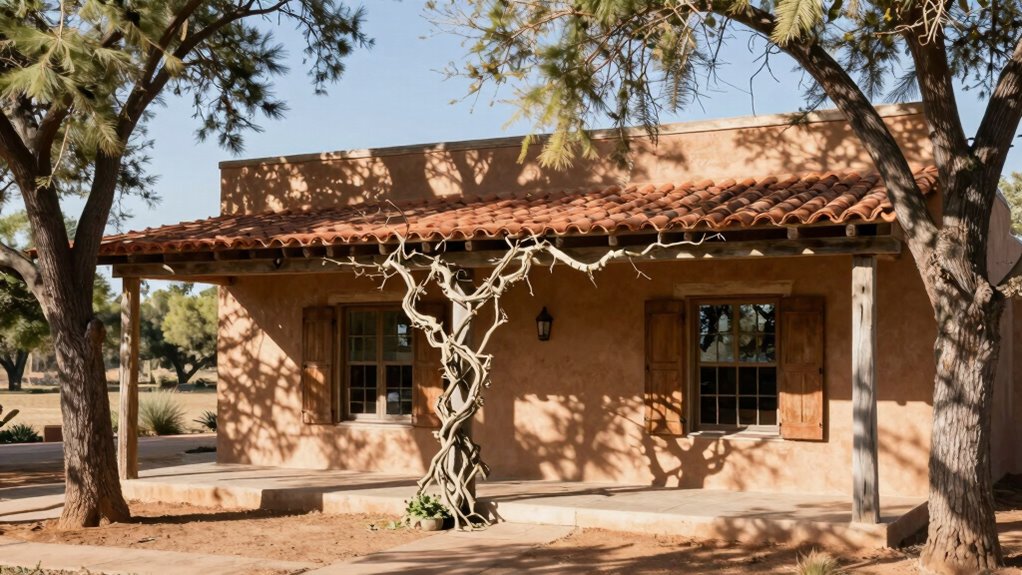

To keep southwestern farmhouses livable, you can strategically use native trees like mesquite or palo verde for natural shade, especially on western and southern sides. Add shade structures like overhangs, awnings, or pergolas covered with climbing plants, and select reflective or insulating materials to reduce heat transfer. Combining these elements with well-placed shrubs and ground covers creates microclimates that enhance outdoor comfort. Continue exploring to discover how these techniques work together for a cool, inviting space.

Get furniture and decor delivered free — and shop member deals
- Fast, free delivery on millions of items
- Access to Prime Big Deal Days deals on October 6–7
- Prime Video, Amazon Music and more included
Key Takeaways
- Native trees like mesquite and palo verde provide natural, sustainable shade that cools outdoor spaces and supports local ecosystems.
- Light-colored or reflective roofing and shade materials reduce heat absorption and indoor cooling loads.
- Strategic placement of taller deciduous trees on western and southern sides maximizes seasonal shade benefits.
- Overhangs, awnings, and pergolas with climbing plants extend shade coverage and protect windows from direct sun.
- Combining landscaping with structural elements creates comfortable, energy-efficient outdoor environments with southwestern charm.
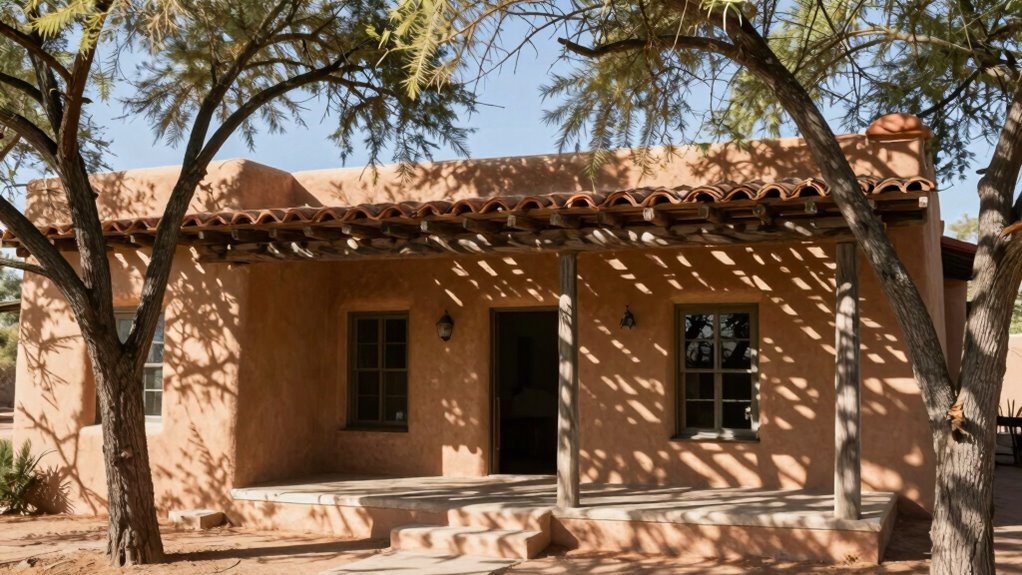
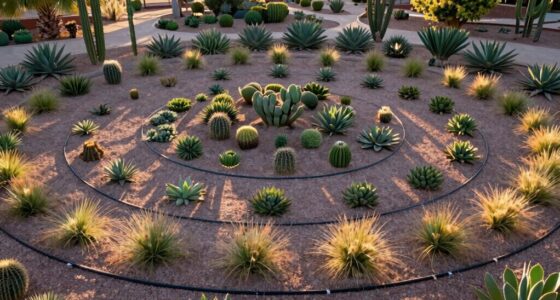
Southwestern farmhouses face intense sun exposure, making effective shade strategies vital for comfort and energy efficiency. When designing your outdoor spaces, you need to think carefully about landscaping techniques that naturally provide relief from the harsh desert sun. Planting native trees like mesquite or palo verde can create cool, shaded areas without requiring constant maintenance. These trees not only block direct sunlight but also thrive in arid conditions, making them a sustainable choice. Incorporating shrubs and ground covers strategically can further reduce heat buildup around your farmhouse, creating microclimates that make outdoor living more comfortable. Using landscaping techniques that incorporate native plants can significantly enhance shade and cooling effects while supporting the local ecosystem. Additionally, selecting plants with a high water-use efficiency can help conserve resources while maintaining effective shade. Expert-approved shade strategies emphasize the importance of selecting plants that are both drought-tolerant and capable of providing ample shade during the hottest months.
Native trees and strategic plants create natural shade and microclimates for cozy, energy-efficient outdoor living.
Material selection plays a key role in establishing effective shade and minimizing heat transfer. For structures like porches, patios, or pergolas, choosing the right materials can markedly impact how much heat is absorbed and retained. For instance, using light-colored or reflective roofing materials on awnings and shade structures helps bounce sunlight away rather than absorb it, keeping spaces cooler. Additionally, selecting durable, natural materials such as Adobe or stucco for walls can help regulate indoor temperatures by absorbing heat during the day and releasing it at night. For covering surfaces, lightweight, permeable fabrics like outdoor canvas or shade cloths allow air to circulate while blocking a considerable portion of sunlight, reducing indoor and outdoor temperatures. Incorporating appropriate shading materials can further improve the effectiveness of your shade solutions.
In landscaping, you want to position your planting beds and trees thoughtfully. Placing taller trees on the western and southern sides of your property offers the most shade during the hottest parts of the day. Using deciduous trees allows you to enjoy shade in summer while letting sunlight warm your home during winter. Creating shaded pathways with pergolas or arbors covered in climbing plants like grapevines or wisteria provides relief from direct sun while adding aesthetic appeal. These shaded walkways also help prevent heat from radiating onto walkways and outdoor seating areas. Incorporating native plants in these shaded areas can further enhance cooling and create a harmonious landscape that thrives in the desert climate.
Beyond plants and materials, you can enhance shade effectiveness through strategic structural elements. Overhangs and awnings made from reflective or insulating materials extend the shade coverage and protect windows from direct sunlight, reducing indoor cooling loads. When choosing these elements, consider their size and placement to maximize shade during peak sunlight hours. Combining landscaping techniques with smart material selection not only keeps your farmhouse cooler but also enhances its aesthetic appeal, blending practicality with southwestern charm. With intentional planning, you turn your outdoor space into a comfortable retreat that withstands the desert heat while maintaining the rustic beauty of your southwestern farmhouse.
outdoor shade structures for farmhouse
As an affiliate, we earn on qualifying purchases.
As an affiliate, we earn on qualifying purchases.
Frequently Asked Questions
How Do Shade Strategies Affect Energy Costs in Southwestern Farmhouses?
Shade strategies considerably lower your energy costs by reducing indoor temperatures, so you use less air conditioning. Landscaping techniques like planting shade trees and using awnings block direct sunlight, keeping your home cooler naturally. These methods also promote water conservation since they lessen the need for frequent watering of lawns and plants. By implementing these strategies, you create a more comfortable living space while saving money and conserving resources.
What Materials Are Best for Durable Shade Structures in the Desert Climate?
Choosing durable materials for desert shade structures is like selecting armor for a battle—strength matters. You’ll want materials like metal, such as corrugated steel, or treated wood for structural design, as they resist heat and weather. Shade fabrics like UV-resistant canvas or woven polymer provide excellent sun protection while being lightweight. Proper materials selection guarantees your structure withstands harsh conditions, offering lasting comfort and energy efficiency in the desert’s relentless climate.
Can Traditional Shading Techniques Be Combined With Modern Technology?
Yes, you can definitely combine traditional shading techniques with modern technology. Historical adaptations like thick adobe walls and pueblo-style overhangs blend well with energy-efficient solutions such as automated venting or smart shading devices. Cultural influences emphasize harmony with the environment, so integrating solar-powered screens or reflective materials enhances comfort while respecting historic design. This fusion creates sustainable, visually authentic spaces that honor tradition while benefiting from innovation.
How Do Shade Strategies Influence Indoor Air Quality and Ventilation?
Shade strategies improve indoor air quality and ventilation by encouraging airflow and reducing heat buildup. Plant integration naturally cools and filters the air, while wind deflection methods direct breezes into your space. These techniques lower indoor temperatures, decrease reliance on cooling systems, and promote fresh air circulation. By combining plant placement and wind deflection, you create a more comfortable, healthier indoor environment that stays cool and well-ventilated.
Are There Any Aesthetic Considerations When Implementing Shade Solutions?
Think of shade solutions as a canvas for your home’s personality. You’ll want to contemplate color palettes that complement your overall aesthetic, creating harmony and visual appeal. Decorative elements, like ornate brackets or patterned screens, add charm and character. These choices aren’t just functional—they evoke warmth and style, making your space inviting. When thoughtfully integrated, shade strategies become both a practical and beautiful extension of your home’s unique identity.
Conclusion
By incorporating these shade strategies, you transform your southwestern farmhouse into a cool, inviting sanctuary—like a shady oasis in the desert. From pergolas to overhangs, each element works together to block harsh sun and keep your home comfortable. Embrace these design tricks, and you’ll enjoy a livable space that feels as invigorating as a gentle breeze on a hot day. With the right shade solutions, your farmhouse becomes a true haven amid the heat.
Halloween Picks
halloween
As an affiliate, we earn on qualifying purchases.