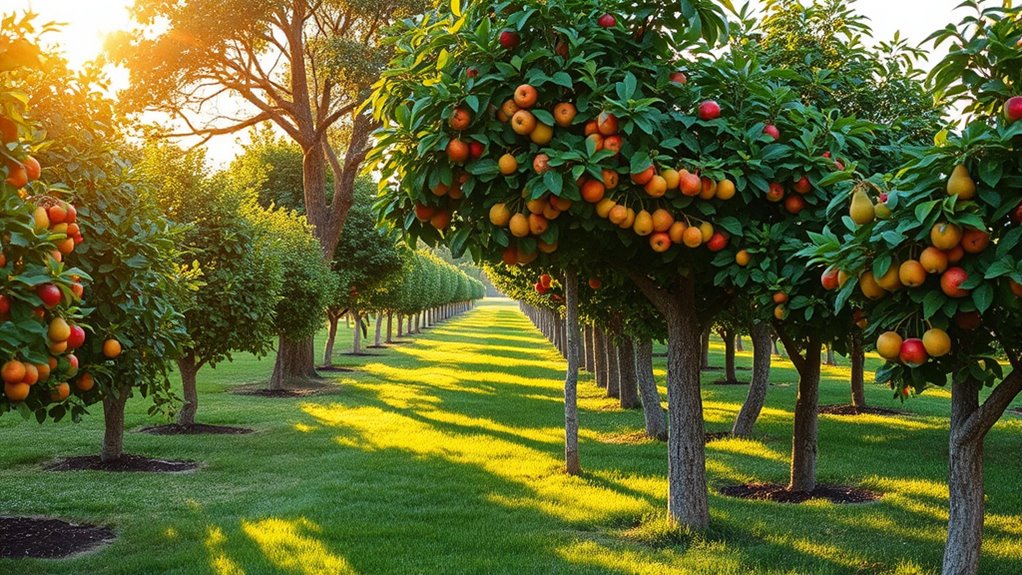

Creating a rootstock and heirloom orchard at home gives you the chance to grow unique, flavorful fruits that suit your local climate and soil. By choosing healthy rootstocks, you can improve disease resistance and make certain your trees thrive long-term. Grafting heirloom varieties onto these rootstocks helps you produce consistent, resilient trees with rich flavors. If you want to learn how to select the best rootstocks and craft a productive orchard, keep exploring the options available to you.
Key Takeaways
- Selecting suitable rootstocks enhances disease resistance and adaptability for thriving home heirloom orchards.
- Grafting heirloom varieties onto hardy rootstocks ensures consistent quality and long-term productivity.
- Proper grafting techniques help home growers propagate diverse, resilient, and flavorful fruit trees.
- Using rootstocks suited to local soil and climate improves orchard sustainability and tree longevity.
- Combining heirlooms with appropriate rootstocks allows customization for taste, size, and environmental resilience at home.
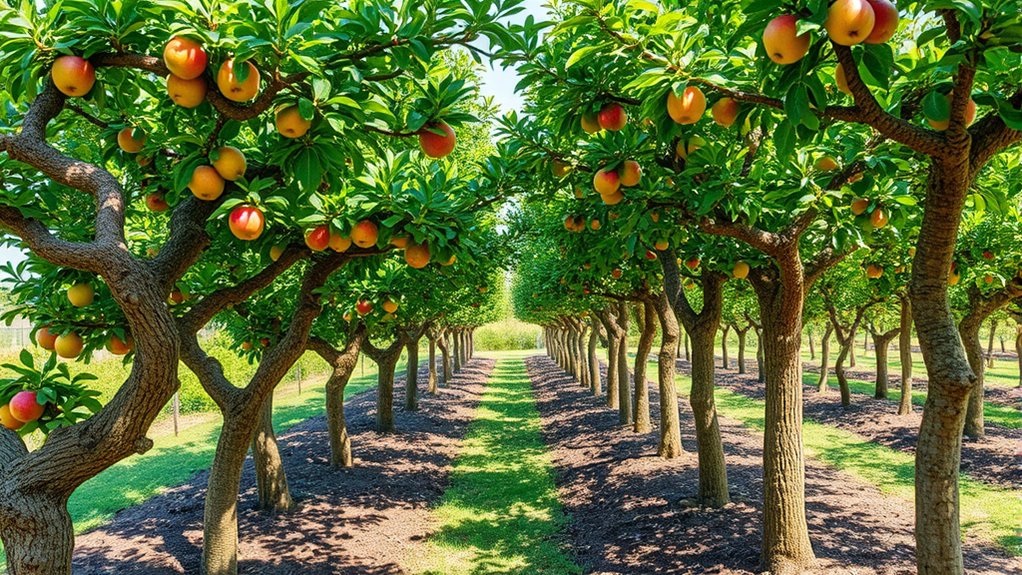
Growing your own orchard at home becomes more rewarding when you understand the importance of rootstocks and heirloom varieties. These elements are central to creating a healthy, productive, and resilient garden. Rootstocks serve as the foundation for your fruit trees, offering more than just physical support. They influence disease resistance, drought tolerance, and overall vigor. Selecting the right rootstock means you’ll have a better chance of avoiding common issues like soil-borne diseases and pests, which can devastate an unprotected tree. Heirloom varieties, on the other hand, bring unique flavors, colors, and histories to your orchard. They often have better flavor profiles and adapt well to local climates, making your harvest more rewarding. Combining the right heirloom fruit with a compatible rootstock allows you to craft a personalized orchard that’s both sustainable and delicious.
Grafting techniques are essential skills to master when working with rootstocks and heirloom varieties. Grafting involves joining a scion—the heirloom fruit branch—to the rootstock, creating a single tree that benefits from both parts. This method ensures that you can propagate your favorite heirloom varieties with consistency and vigor. Proper grafting not only helps you reproduce heirlooms accurately but also enhances disease resistance. For example, grafting a disease-prone heirloom onto a hardy, disease-resistant rootstock can substantially increase the longevity and productivity of your trees. Techniques like cleft grafting, whip-and-tongue, or side-veneer grafting are straightforward once you get the hang of them. Using sharp, clean tools and making precise cuts are pivotal for successful grafts. You’ll also want to match the cambium layers of the scion and rootstock to maximize cambial contact, which is essential for the graft to take.
Taking the time to learn these grafting techniques pays off in the long run. It allows you to experiment with different heirloom varieties and rootstocks, adjusting to changing conditions or personal taste preferences. Plus, grafting can help you create a diverse orchard that’s more resistant to pests and diseases, reducing the need for chemical interventions. When done correctly, grafting ensures your orchard remains productive for years to come. You’ll find that understanding the relationship between rootstocks and heirloom varieties empowers you to grow healthier trees with fewer problems. This knowledge also opens the door to hybridizing and selecting the best combinations for your specific environment. In the end, mastering these techniques results in a more resilient, flavorful, and sustainable orchard—bringing the joy of homegrown fruit closer to your table.
fruit tree rootstocks for home orchard
As an affiliate, we earn on qualifying purchases.
As an affiliate, we earn on qualifying purchases.
Frequently Asked Questions
Can I Graft Multiple Fruit Varieties on One Rootstock?
Yes, you can graft multiple fruit varieties on one rootstock using grafting techniques designed for fruit tree combinations. This method, called “espalier” or “multi-variety grafting,” allows you to grow several types of fruit on a single tree. Just guarantee the varieties are compatible, and use proper grafting techniques like whip-and-tongue or cleft grafts to successfully join the scions to the rootstock.
How Do I Select the Best Rootstock for My Climate?
Choosing the best rootstock begins with careful climate consideration. You should start with soil testing to understand your soil’s specific needs, then match your climate zone to recommended rootstocks. Look for varieties that thrive in your temperature, rainfall, and soil type. By selecting a resilient rootstock suited to your local conditions, you’ll foster a fruitful, flourishing orchard that’s built to withstand your environment’s unique challenges.
Are Heirloom Trees More Resistant to Pests Than Modern Varieties?
Heirloom trees generally aren’t more resistant to pests than modern varieties; their pest resistance mainly depends on their specific traits. While heirloom durability varies, they often lack the pest-resistant breeding of modern cultivars. You might find some heirlooms more vulnerable, but others could be quite resilient. To improve pest resistance, choose heirloom varieties known for their natural defenses, and implement integrated pest management practices in your orchard.
What Are the Common Challenges of Maintaining Home Orchards?
Tending your home orchard is like juggling fire; pests and soil health challenge your balance. You’ll need vigilant pest management to keep bugs from devouring your fruits. Maintaining soil fertility is equally essential, nourishing roots to grow strong and resilient. Weather fluctuations and disease risks add more sparks to the dance. Staying attentive, applying organic treatments, and enriching your soil help you keep this fiery juggling act under control.
How Often Should I Prune My Heirloom Trees for Optimal Growth?
You should prune your heirloom trees annually during late winter or early spring, establishing a consistent pruning schedule. This promotes healthy growth and encourages fruit production. Regular pruning removes dead or crossing branches, improves air circulation, and shapes the tree for better sunlight exposure. For ideal growth, aim for a balanced approach—prune enough to stimulate new growth without overdoing it, ensuring your heirloom trees thrive year after year.
Conclusion
By choosing rootstock and heirloom varieties for your home orchard, you craft a living legacy that whispers stories through every fruit. Like a tapestry woven with history and innovation, your trees become more than plants—they’re symbols of resilience and tradition. Embrace the journey, nurture your orchard, and let each harvest remind you that, in cultivating these trees, you’re also cultivating a connection to nature’s timeless rhythm. After all, isn’t that what truly makes a garden flourish?