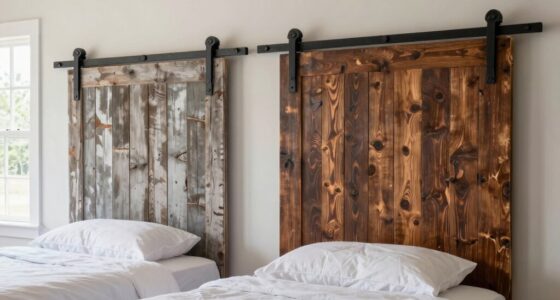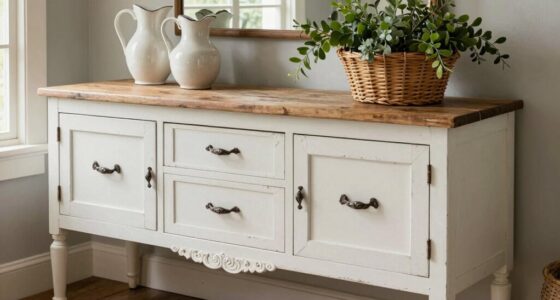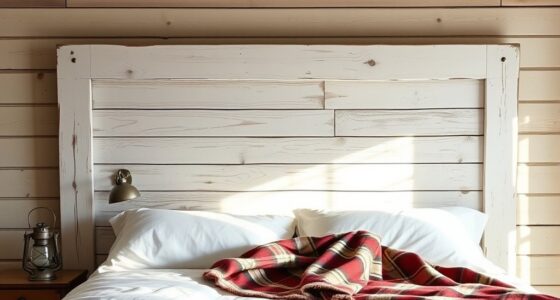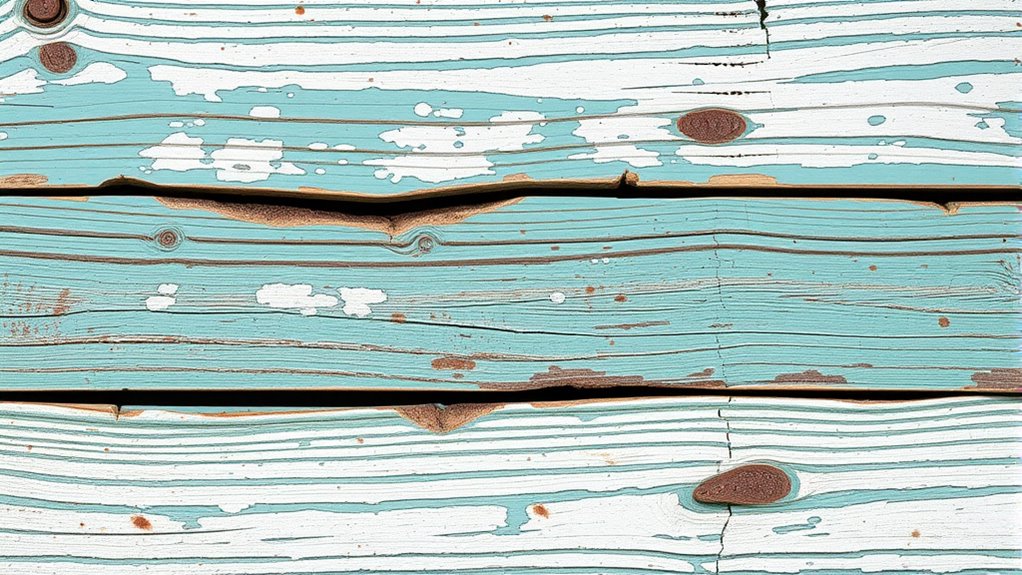

To achieve authentic, non–factory-looking distressing, focus on subtle techniques that mimic natural wear. Use gentle sanding or scraping at edges and corners, and create chips or uneven paint layers that resemble years of use. Incorporate staining or glazing to add depth, and avoid overly uniform finishes. Pay close attention to small details and work patiently, blending techniques seamlessly for a genuine aged look. Continue exploring, and you’ll discover how to master surface aging that feels truly real.
Key Takeaways
- Focus on subtle imperfections like scratches, chips, and uneven paint to mimic natural aging.
- Prioritize distressing edges and corners where wear naturally accumulates.
- Use tools such as steel wool, wire brushes, or heat to create irregular, authentic textures.
- Layer different techniques—like sanding and glazing—to add depth and realism.
- Study aged surfaces to replicate genuine wear patterns, avoiding uniform or overly perfect finishes.
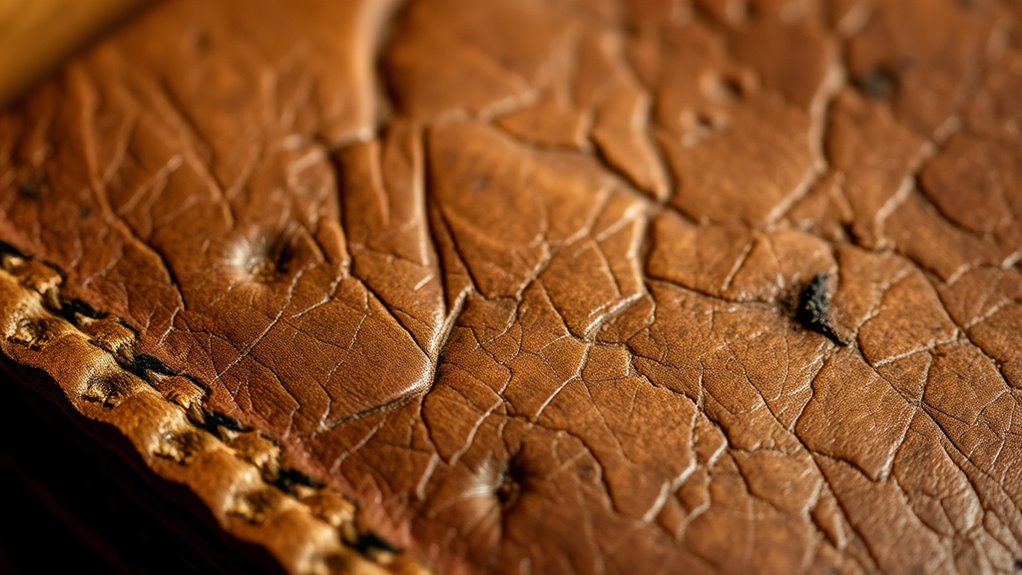
Distressing techniques are methods used to create an aged, worn, or vintage appearance on various materials, often for artistic or decorative purposes. When you want your furniture, artwork, or surfaces to evoke a sense of history and character, these techniques help achieve that authentic look. They’re not about making things look perfect or brand new; instead, they emphasize imperfections and signs of wear that tell a story. The goal is to produce a vintage appeal that feels genuine, not artificially manufactured. To do this effectively, you need to understand surface aging—how natural wear occurs over time—and replicate those subtle details by hand or with specific tools.
One of the key aspects of surface aging is understanding how materials naturally deteriorate. Wood, for example, develops dents, scratches, and a patina that deepens with age. When you distress wood or painted surfaces, you aim to mimic these characteristics. Sanding down edges or scraping paint creates a chipped, uneven look that resembles years of use. Using tools like steel wool, wire brushes, or even a heat gun can help you add those tiny imperfections that make the surface look genuinely aged, rather than deliberately distressed. The trick is to avoid overdoing it; authenticity comes from subtlety. You want the distressing to look like it’s been naturally accumulated over decades, not slapped on in a hurry.
Incorporating a vintage appeal into your project means paying attention to how different areas of the surface wear unevenly. Usually, edges and corners are the most vulnerable to surface aging, so focusing your efforts there can give a piece a more realistic look. For example, gently sanding or chipping away paint on edges and corners reveals underlying layers or wood, mimicking years of handling and friction. You can also use staining or glazing techniques to add depth and richness, further enhancing the vintage feel. The goal is to create a layered, nuanced appearance that reflects real aging, rather than a uniform finish that looks too perfect or manufactured.
Ultimately, successful surface aging and vintage appeal come down to patience and observation. Study how naturally aged surfaces look—notice the variation in color, texture, and wear—and replicate those details carefully. When you combine different distressing techniques with an eye for authenticity, your project will radiate a timeless charm that’s hard to achieve with factory-made finishes. The result will be a piece that feels truly lived-in, with a story told through every chip, scratch, and worn edge.
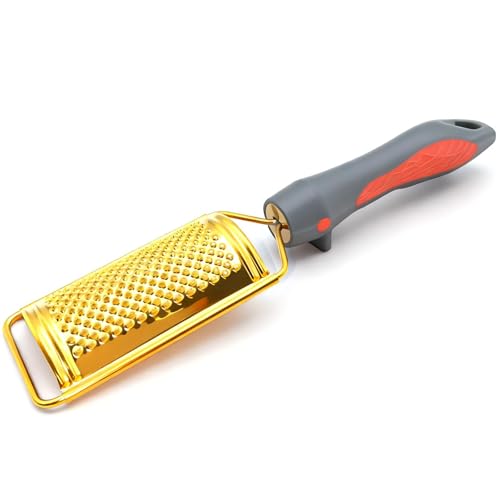
Hxszk Advanced Professional Distressing Tool for Clothes, Jeans & Denim Fabric Distressing Tool with Brass Spray Finish, Gold 304 Stainless Steel Leathercraft Tool, 1-Pack
- Achieve Professional Distressing: Create realistic vintage effects easily
- Ergonomic and User-Friendly: Smooth polishing and edge smoothing
- Premium Brass Finish: Corrosion-resistant and elegant appearance
As an affiliate, we earn on qualifying purchases.
As an affiliate, we earn on qualifying purchases.
Frequently Asked Questions
Can Distressing Techniques Be Customized for Different Materials?
You can definitely customize distressing techniques for different materials. With the right approach, you tailor the customization options to suit each material’s unique properties. For example, leather might need gentle scratching, while denim can handle more aggressive fading. By understanding material-specific distressing, you guarantee your results look authentic and natural. So, yes, you can adapt techniques to fit various materials, making your distressed projects truly personalized and realistic.
How Long Does a Distressed Look Typically Last?
The distressed look generally lasts for years if you care for it properly. Factors like fabric aging and paint chipping influence its durability, with well-maintained pieces staying authentic longer. You can help prolong the effect by avoiding harsh cleaning methods or excessive sun exposure. Over time, some fading and chipping are natural, giving your items a genuine vintage feel. Proper care guarantees your distressed style remains appealing and authentic longer.
Are There Eco-Friendly Distressing Methods Available?
You might be surprised to find eco-friendly distressing methods exist. By embracing natural aging processes, you can create authentic looks without harsh chemicals. Using sustainable dyes, you extend the life of your garments while reducing environmental impact. These techniques often involve hand-spotting or washing with eco-conscious products, giving your clothes character and longevity. So, yes, eco-friendly distressing is not only possible but also a responsible choice for sustainable fashion.
What Tools Are Best for Achieving Authentic Distressing Effects?
To achieve authentic distressing effects, you should focus on tools like hand sanding and bleach techniques. Hand sanding helps create natural-looking wear and tear, giving your fabric a genuine aged appearance. Bleach techniques allow you to lighten areas selectively, adding depth and realism. Use fine-grit sandpaper for subtle distressing, and apply bleach carefully with a brush or spray for controlled results. These methods deliver a real, handcrafted look every time.
Can Distressing Be Reversed or Repaired if Needed?
You might wonder if distressing can be reversed or repaired. While some distressing effects are permanent, restoration challenges exist, especially with deep tears or extensive wear. Repair techniques like patching, color matching, or strategic touch-ups can help restore the item, but achieving seamless results requires skill and patience. Keep in mind, complete reversal isn’t always possible, but skilled repairs can often improve the item’s appearance while preserving its authentic distressed look.
Conclusion
You now see how authentic distressing techniques can transform your pieces, making them look naturally aged rather than factory-made. Did you know that 78% of buyers prefer vintage or distressed items because they feel more genuine? By mastering these techniques, you can create furniture that tells a story and appeals to those seeking authenticity. So, get hands-on and give your projects a truly genuine, timeless look that stands out from mass-produced alternatives.