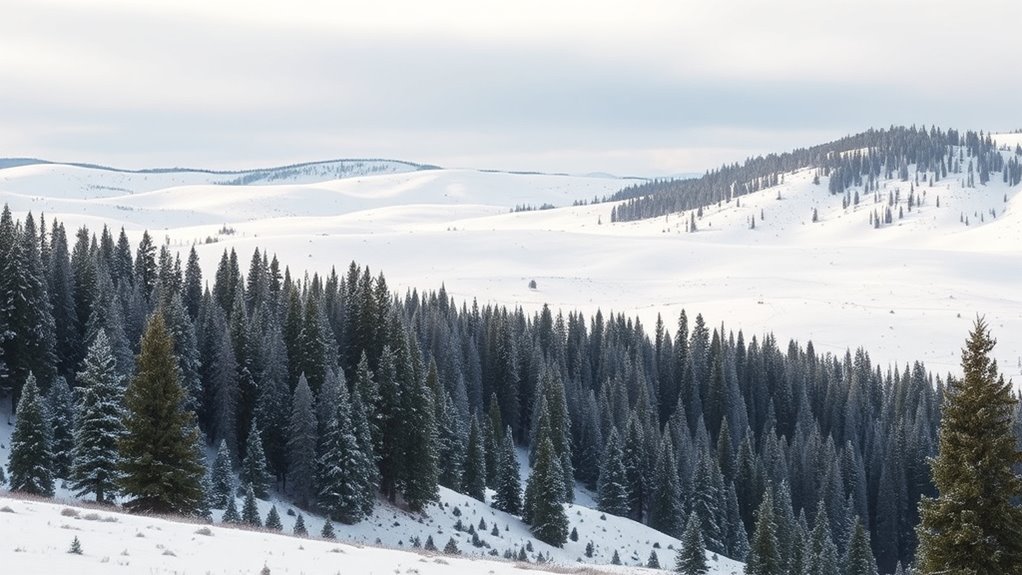

To safeguard your property from Wyoming’s harsh winter winds, you should install a well-planned windbreak using native or hardy trees like pines, spruces, or cottonwoods. Position the shelter belt perpendicular to prevailing winds and include multiple tree rows for better effectiveness. Regular maintenance, pruning, and strategic planting ensure long-term resilience. If you keep exploring, you’ll discover how to design and maintain these natural barriers for lasting winter protection.
Key Takeaways
- Properly positioned perpendicular to prevailing winds, shelter belts block cold gusts and reduce wind chill around properties.
- Incorporate native, hardy tree species like pines, spruces, and cottonwoods to withstand Wyoming’s harsh winter conditions.
- Use multiple staggered rows of trees to disrupt airflow and prevent turbulence and snowdrifts.
- Maintain shelter belts through regular pruning, replacement of damaged trees, and mulching to ensure long-term effectiveness.
- Strategically place shelter belts beyond structures and in line with design principles to maximize wind protection and heat retention.
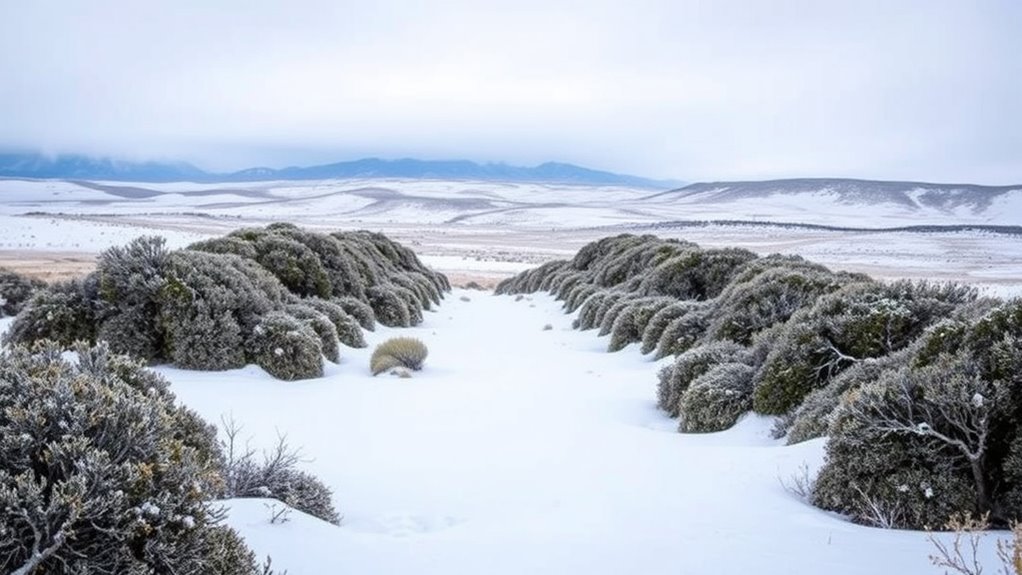
In Wyoming, wind can be relentless during the winter months, making it vital for residents to find effective ways to protect their properties. One of the most practical solutions is establishing a shelter belt, a carefully planned barrier of trees and shrubs that shields your home, livestock, and crops from harsh gusts. To maximize its effectiveness, you’ll need to focus on shelter belt design, which involves strategic placement, species selection, and layout. A well-designed shelter belt should be placed perpendicular to prevailing winds, creating a physical barrier that breaks up strong gusts before they reach your property. You’ll want to consider the size and shape of your lot, ensuring the shelter belt extends far enough beyond your structures to provide ample protection. Incorporating multiple rows of trees can increase windbreak efficiency, but it’s important to balance density with airflow to prevent excessive turbulence that could cause snowdrifts or damage.
Tree planting strategies are central to creating an effective windbreak. You should choose native or well-adapted species that thrive in Wyoming’s harsh winter conditions, such as hardy conifers like pines and spruces, or deciduous trees like cottonwoods and maples that grow quickly and provide substantial wind resistance. When planting, stagger the trees in a zigzag or irregular pattern rather than a straight line, which helps disrupt wind flow more effectively. It’s also wise to plant a mix of tree types to improve resilience against pests and diseases, ensuring your shelter belt remains intact year after year. Proper spacing is vital—plant trees far enough apart to allow healthy growth but close enough to form a continuous barrier. Mulching around the base of your trees will help retain moisture and insulate roots during winter freezes. Additionally, understanding shelter belt design principles can help optimize the placement and effectiveness of your windbreak.
Furthermore, you should consider the age and growth rate of your trees. Young trees need protection from snow and wind until they establish strong roots, so installing temporary wind barriers during the first few years can be beneficial. Regular maintenance, such as pruning and replacing dead or damaged trees, keeps the shelter belt functioning properly. Over time, as your trees mature, your windbreak will become more effective at reducing snowdrifts, conserving heat around your property, and creating a more comfortable environment during Wyoming’s cold, blustery winters. By focusing on thoughtful shelter belt design and strategic tree planting, you’ll create a durable, natural barrier that greatly diminishes the impact of winter winds, making your home and land more resilient against Wyoming’s winter storms.
Frequently Asked Questions
How Do Windbreaks Impact Local Wildlife Habitats?
Windbreaks help protect local wildlife habitats by providing shelter and food sources, which support habitat protection. They influence wildlife migration patterns, offering safe passages and resting spots during seasonal movements. By reducing wind erosion and maintaining plant diversity, windbreaks create a more stable environment. You can see how they foster healthier ecosystems, ensuring animals have the resources they need to thrive and migrate safely through your area.
What Are the Best Tree Species for Wyoming Windbreaks?
You should choose tree species with a good growth rate like aspen, cottonwood, or juniper for Wyoming windbreaks. These trees adapt well to the local climate, providing effective wind protection. When selecting trees, consider their growth rate to make sure your windbreak develops quickly and remains sturdy over time. Native species are ideal, as they thrive in Wyoming’s conditions and support local ecosystems.
How Long Does It Take to Establish an Effective Windbreak?
You can expect plant establishment to take about 3 to 5 years for a windbreak to become effective, depending on tree species and planting conditions. During this growth timeline, young trees develop their root systems and foliage, gradually providing better wind protection. Consistent care, watering, and pruning accelerate this process, ensuring your windbreak reaches peak efficiency sooner. Patience and proper maintenance are key to establishing a strong, effective barrier.
Are There Government Incentives for Planting Windbreaks?
Did you know that government grants and planting incentives can cover up to 50% of your windbreak costs? Yes, you can access these programs to help establish effective windbreaks. These incentives encourage landowners like you to plant trees, reducing erosion and shielding crops from harsh winds. Check with local agencies for specific government grants available in your area, making it easier and more affordable to create a protective windbreak.
How Do Windbreaks Affect Snowdrift Formation?
You’ll notice that windbreaks considerably influence snowdrift formation by altering wind flow, which directly impacts snow accumulation. As wind hits the barrier, it slows down, causing snow to settle and build up on the windward side. This results in larger drifts forming behind the windbreak, protecting areas from harsh winter conditions. By controlling snow distribution, windbreaks help manage snowdrift formation effectively.
Conclusion
As you stand amidst Wyoming’s sprawling plains, it’s no surprise how those windbreaks and winter walls seem to appear just when you need them most. Coincidentally, their sturdy presence shields your home from biting gusts and snow drifts, turning harsh winters into manageable seasons. It’s as if nature herself subtly guides these barriers into place, reminding you that, even in the wildest weather, a well-placed windbreak can make all the difference.