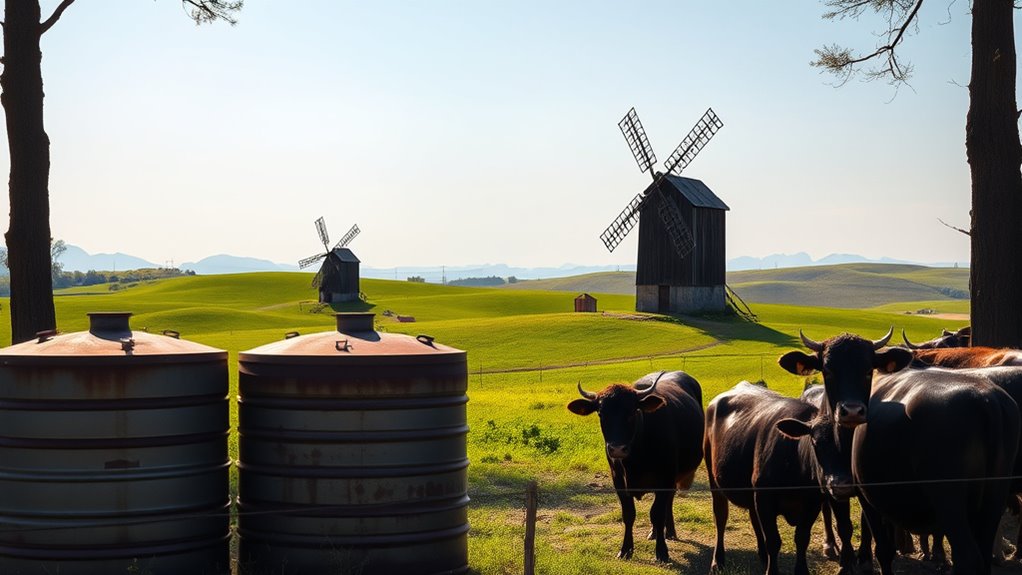

Using windmills and tanks is a smart way to guarantee your cattle always have access to fresh water, especially in remote or dry areas. Windmills harness wind energy to pump water into tanks, providing a reliable water source without relying on the grid. Tanks store and conserve water, supporting livestock through dry seasons. Combining these tools creates an efficient, eco-friendly system that protects natural resources—continue exploring to discover how these technologies can work best for your operation.
Key Takeaways
- Windmills pump water from underground sources to tanks, providing reliable livestock water in remote or arid areas.
- Tanks store water collected or pumped by windmills, ensuring a consistent supply for cattle during dry seasons.
- Combining wind-powered pumps with tanks reduces reliance on grid electricity, supporting sustainable water management.
- Proper tank design and water management techniques prevent contamination and water wastage for healthier cattle.
- Integrating windmills, tanks, and solar systems enhances water availability, conservation, and environmental sustainability on farms.
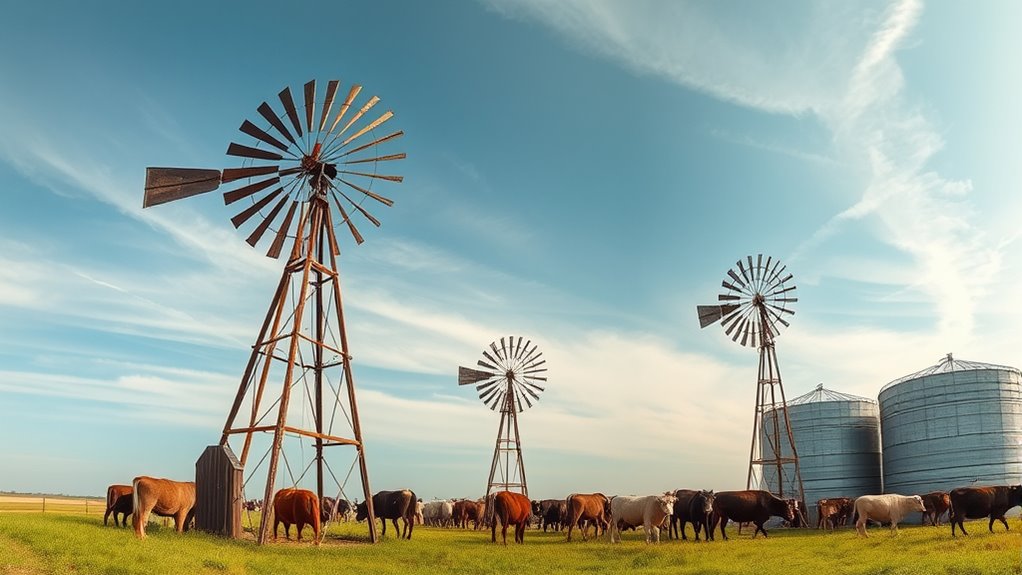
Windmills and tanks may seem worlds apart, but both have played essential roles in shaping human history. When it comes to cattle watering, these structures work together to provide a reliable water source, especially in remote or arid regions. You might think of windmills primarily as sources of electricity, but historically, they were indispensable for pumping water. Today, modern wind-powered water pumps still serve farmers and ranchers, helping conserve water and energy. This shift toward renewable energy aligns with broader efforts to reduce reliance on fossil fuels, making windmills an eco-friendly solution. As you consider water conservation, incorporating wind-powered pumps can notably cut down on electricity costs and minimize your environmental impact. These systems harness natural wind power, ensuring that your water supply remains steady without excessive energy consumption. Notably, the use of renewable energy sources like wind and solar power has increased significantly in agricultural applications, making water management more sustainable. Tanks play a fundamental role in storing water for cattle, especially during dry seasons when natural water sources dwindle. You rely on tanks to guarantee your livestock has access to clean, fresh water at all times. Properly designed tanks prevent water wastage and contamination, which is essential for maintaining healthy cattle. With innovative water-saving techniques, like installing float valves and leak-proof fittings, you can reduce water loss and promote efficient water use on your property. Using tanks also means you can collect rainwater, further aiding water conservation efforts. This not only reduces your dependence on groundwater but also supports sustainable farming practices. When combined with windmills, tanks become part of an integrated system that maximizes resource efficiency, saving you money and reducing environmental stress. Furthermore, modern technology has made these traditional systems more efficient than ever. Solar power, for example, can supplement wind energy or even replace it in some cases, providing a consistent power source for water pumps. Solar-powered pumps are particularly advantageous because they require minimal maintenance and can operate independently of grid access. Integrating solar power with windmills and tanks creates a resilient water management system that’s both sustainable and cost-effective. You’ll find that such setups are especially beneficial in remote areas where grid electricity is unavailable or unreliable. By investing in these renewable solutions, you’re actively contributing to water conservation efforts, protecting natural resources, and ensuring your livestock’s well-being. Ultimately, combining windmills, tanks, and solar power offers a smart, sustainable approach to cattle watering that benefits your operation and the environment.

Water Trough Float Valve for Stock Tank,Water Tank Float Valve Level Control for Pond Farm Livestock Cattle Goat Horse Swimming Pool, Autofill Livestock Waterer
Automatic Stock Water Tank Float Valve: The stock tank float valve livestock water trough float valve has float...
As an affiliate, we earn on qualifying purchases.
Frequently Asked Questions
How Do Windmills Operate in Low Wind Conditions?
In low wind conditions, your windmill operates using specialized mechanics designed for low wind adaptation. These windmill mechanics include larger blades and gear systems that turn more easily at slow speeds. This allows the windmill to generate enough energy to pump water even when wind speeds are minimal. The design guarantees your windmill remains functional, providing reliable water access for cattle despite challenging wind conditions.
What Are the Maintenance Costs for Cattle Watering Tanks?
You’ll find that maintenance costs for cattle watering tanks vary based on size, material, and usage. Conducting a thorough cost analysis helps you anticipate repair expenses and plan budgets effectively. Regular inspections, cleaning, and minor repairs keep tanks in good shape, reducing costly repairs down the line. Expect occasional expenses for replacing parts or sealing leaks, but staying proactive diminishes overall repair expenses and ensures your cattle always have reliable water sources.
Are Solar-Powered Water Systems Viable for Cattle Farms?
Yes, solar-powered water systems are viable for cattle farms. They boast high solar efficiency, making them cost-effective and eco-friendly. Plus, they promote water conservation by providing a reliable water source without waste. You’ll benefit from reduced energy costs and less maintenance compared to traditional systems. With proper installation and regular checks, solar systems can guarantee your cattle always have access to clean water, even in remote locations.
How Do Water Quality Issues Affect Cattle Health?
Water quality issues directly impact your cattle’s health, as waterborne pathogens and water contamination can cause illnesses and reduce productivity. When contaminated water contains bacteria or harmful chemicals, your cattle risk infections, diarrhea, and dehydration. To prevent these issues, regularly test water sources, clean tanks, and guarantee proper filtration. Keeping water clean and free from contamination helps maintain healthy, thriving cattle and improves your farm’s overall productivity.
What Are the Environmental Impacts of These Water Systems?
You should know that windmills and tanks impact the environment mainly through aquifer recharge disruption and wildlife disturbance. These systems can reduce groundwater replenishment by altering natural flow patterns, leading to water shortages. Additionally, they may disturb local wildlife by changing habitats or creating noise and movement that scare animals away. Being aware of these effects helps you manage water resources sustainably and protect ecosystems around cattle watering sites.

Rubbermaid Commercial Products Stock Tank 100-Gallons Structural Foam Heavy Duty Container for Livestock/Animal/Cattle Feed & Water Outdoor Homemade Pool/Hot Tub/Bathtub & Pet Cleaning/Dog Wash
DURABLE RIGIDCELL CONSTRUCTION: For superior performance and long-lasting durability in all types of weather.
As an affiliate, we earn on qualifying purchases.
Conclusion
As you stand beside the windmill and tank, remember they symbolize resilience and hope. Just like these sturdy structures endure through storms, your commitment to caring for cattle sustains life and growth. They remind you that even in harsh conditions, perseverance and patience can cultivate abundance. Keep tending to your land and animals, for like the windmill’s blades turning tirelessly, your efforts turn challenges into opportunities, ensuring the future remains vibrant and full of promise.

Airmax Stock Tank Defense, Livestock Water Trough Cleaner, Clean Drinking Tanks for Horse, Cattle, Goat & Chicken, Safe & Easy-to-Use Cleaning Tablet Treatment for Farming & Agricultural Use, 6 Tabs
Keep Your Stock Tank Clean & Clear: Stock Tank Defense tablets contain natural beneficial bacteria specifically formulated for...
As an affiliate, we earn on qualifying purchases.

API® Stock Tank Deicer and Water Heater | Sinking Pond De-Icer | Livestock Stock Tank De-Icer | Made in The USA (1500 Watt, 1, Count)
SAFE FOR PLASTIC WATER TANKS - This deicer's weighted heated element keeps the deicer fully submerged. The sinking...
As an affiliate, we earn on qualifying purchases.