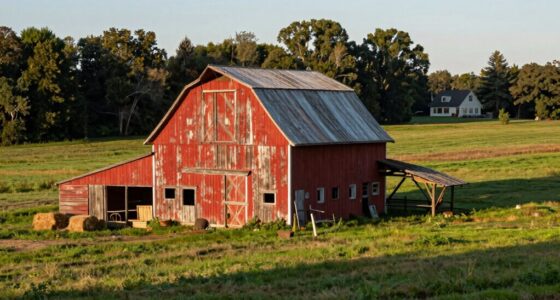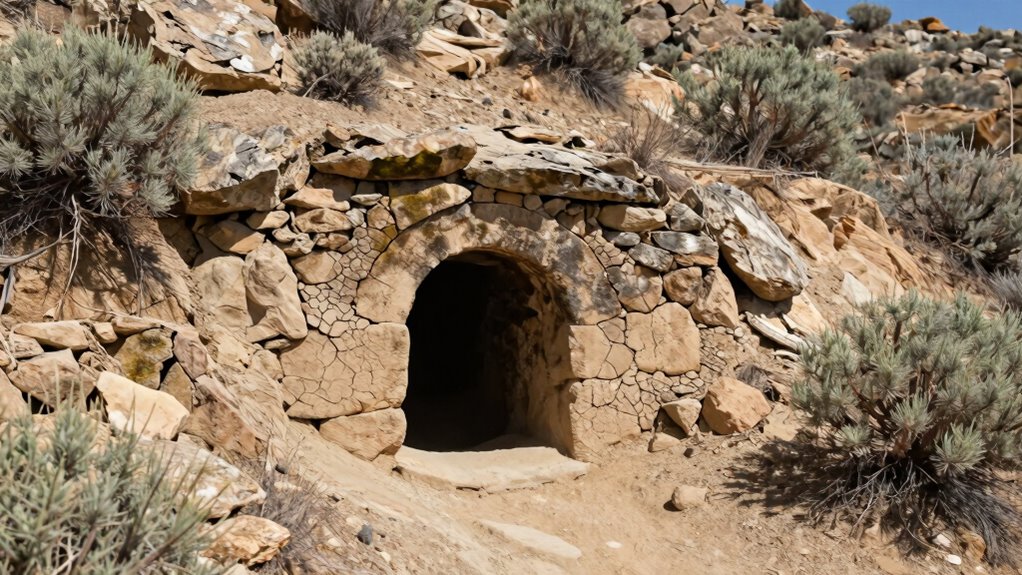

In dry climates, Western root cellars typically sit underground or into hillsides, blending into the landscape with simple stone, earthen, or wood walls. You’ll find small entry doors and interior shelves or bins for storage. These cellars use the earth’s natural insulation and ventilation to keep the environment cool, dark, and humid, with stable temperatures that protect your crops from spoilage. If you want to discover more, you’ll find additional details just ahead.

Get furniture and decor delivered free — and shop member deals
- Fast, free delivery on millions of items
- Access to Prime Big Deal Days deals on October 6–7
- Prime Video, Amazon Music and more included
Key Takeaways
- Western root cellars in dry climates were often built into hillsides or underground to utilize natural insulation.
- Structures featured simple stone, brick, or earthen walls blending seamlessly into the landscape.
- They maintained consistent cool temperatures (35-55°F) by relying on earth’s natural thermal properties.
- Ventilation shafts or small vents prevented moisture buildup and ensured airflow inside the cellar.
- Interiors were organized with shelves or bins, kept dark and humid for optimal crop preservation.
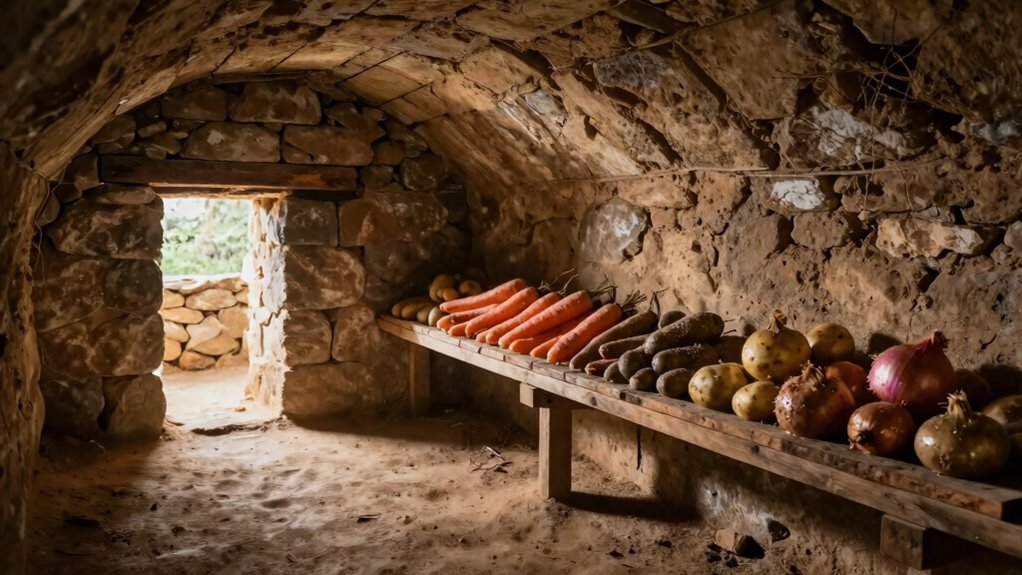
In dry climates, Western root cellars offer an effective way to preserve produce without relying on electricity or modern refrigeration. These cellars are primarily underground storage spaces that utilize the natural insulation of earth to keep temperatures stable. When you build a root cellar in such environments, you’re taking advantage of the earth’s capacity to buffer temperature fluctuations, creating a consistent environment ideal for storing fruits, vegetables, and root crops. The goal is to maintain a cool, dark, and humid environment, which slows down spoilage and keeps your harvest fresh for months.
Most Western root cellars are dug into the hillside or underground, with the entrance at ground level or slightly above. This positioning helps minimize temperature swings and maximizes climate control through natural insulation. The walls and ceiling are often reinforced with stone, brick, or wood, which further helps regulate temperature and humidity levels. In dry climates, the soil itself is usually well-draining, preventing excess moisture from seeping in, which could otherwise cause mold or rot. You might also see features like small vents or air shafts incorporated into the design to facilitate airflow, ensuring the interior remains properly ventilated. Proper ventilation prevents stale air buildup and maintains the ideal humidity level for produce storage.
Most Western root cellars are built into hillsides, with reinforced walls and ventilation for ideal storage conditions.
The appearance of these cellars varies, but they generally blend into the landscape, often appearing as simple stone or earthen structures with small access hatches or doors. Inside, the space might be divided into shelves, bins, or racks to organize your stored crops. The interior remains cool and dark naturally, with the earth helping to sustain an even climate. The soil’s insulating properties play a crucial role in maintaining consistent storage conditions throughout the year. The natural climate regulation provided by the earth reduces the need for mechanical controls, making these cellars highly sustainable. Additionally, proper ventilation techniques are essential to prevent excess moisture buildup and ensure the longevity of stored crops.
Climate control in these underground storage facilities relies heavily on the earth’s natural properties. The soil’s insulating qualities keep the temperature steady, typically between 35 and 55 degrees Fahrenheit, depending on the season. Humidity levels are naturally high, which is perfect for root vegetables and other crops that need moisture to stay fresh. Because you’re not using electricity, you depend on the earth’s consistent temperature and humidity to preserve your harvest. This simplicity makes Western root cellars an enduring, sustainable solution in dry climates, where the landscape and soil work together to create an ideal environment for long-term storage.
As an affiliate, we earn on qualifying purchases.
Frequently Asked Questions
How Deep Are Typical Western Root Cellars in Dry Climates?
You’ll find that typical western root cellars in dry climates are about 4 to 8 feet deep. This depth helps maintain humidity control and keeps temperatures stable. Proper ventilation strategies are essential, so you probably include vents or air shafts to guarantee good airflow. By digging deep enough, you can create an environment that preserves your produce and protects it from extreme heat and dryness outside.
What Materials Are Best for Constructing Root Cellars in Arid Regions?
You should choose materials like stone, adobe, or packed earth for constructing root cellars in arid regions, as they offer natural insulation and help maintain consistent temperatures. Incorporate insulation techniques such as thick walls, earth berms, or additional insulating layers like straw or hay. These materials and techniques work together to keep your root cellar cool and moisture-controlled, essential for preserving produce in dry climates.
How Do Temperature Fluctuations Affect Dry Climate Root Cellars?
Temperature fluctuations in dry climate root cellars are like a wild roller coaster, challenging your stored treasures. You rely on soil insulation to buffer these swings and moisture control to keep conditions stable. When fluctuations are sharp, your crops might suffer or spoil. Proper soil insulation traps coolness, while moisture control prevents drying out or mold. Together, they create a steady haven amid a climate that loves to dance between extremes.
Are There Specific Design Features to Prevent Desert Pests?
To prevent desert pests, you should incorporate pest-proof ventilation and desert pest deterrents into your root cellar design. Use fine mesh screens on all vents to block pests while allowing airflow. Incorporate natural deterrents like garlic or neem oil around the entrance. Keep the cellar sealed tightly, and elevate it slightly to avoid ground pests. Regularly inspect and maintain these features to stay pest-free in your dry climate.
How Long Can Produce Be Stored in Dry Climate Root Cellars?
In dry climates, your produce can stay fresh for several months, thanks to effective preservation techniques in root cellars. The key lies in maintaining cool, stable temperatures and proper humidity levels, which extend storage duration considerably. With careful management, you might preserve root vegetables and fruits for up to six months or more, but neglecting these details could shorten their lifespan. The secret to long-lasting freshness is in your hands.
Conclusion
You might be surprised to learn that some western root cellars could keep produce fresh for up to six months without refrigeration, thanks to their clever design and dry climate. These underground storage spaces, often built into hillsides or beneath homes, used the natural coolness and humidity to preserve vegetables and fruits. So, next time you see an old root cellar, remember it was an ingenious solution—one that kept food fresh for half a year, long before modern refrigeration.
Fall Picks
fall essentials
As an affiliate, we earn on qualifying purchases.