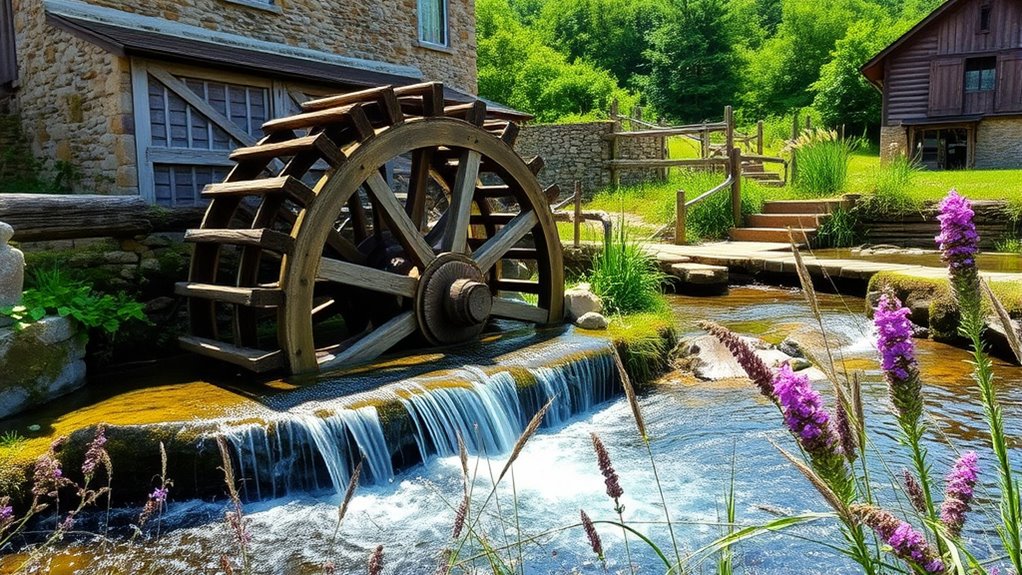

Water wheels and grist mills are historic devices that use flowing water to generate mechanical energy for grinding grains into flour. You’ll find that these systems rely on simple, sustainable technology—harnessing natural water movement to power essential community functions. Over time, many improvements increased their efficiency, but the basic principles remain the same. If you explore further, you’ll discover how these early innovations laid the groundwork for modern renewable energy methods.
Key Takeaways
- Water wheels convert flowing water’s kinetic energy into mechanical power for grinding grains in grist mills.
- These mills played a vital role in early communities, supporting food production and local economies.
- Designs evolved from simple water wheels to more efficient overshot and undershot systems.
- Water wheels exemplify renewable energy use, harnessing natural water flow sustainably.
- Today, preserved water wheels serve as historical symbols of early engineering and sustainable technology.
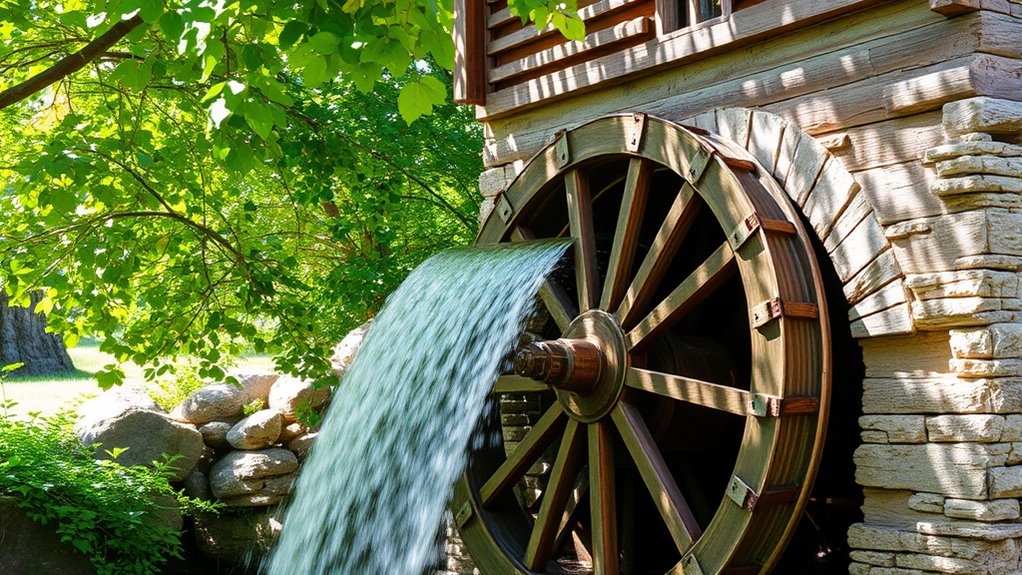
Have you ever wondered how early communities ground their grains into flour? Long before modern machinery, they relied on simple yet effective technology to turn flowing water into power. This is where water wheels and grist mills come into play, representing some of the most enduring examples of historic technology. These devices harnessed the natural force of moving water, transforming it into mechanical energy that could grind grains efficiently. Hydropower engineering, although in its infancy compared to today’s advanced systems, laid the foundation for using water as a reliable energy source. Early civilizations discovered that a flowing stream or river could do the work for them, leading to innovations that would sustain communities for centuries. Water wheels, in particular, became central to this process. They consisted of a large wheel with paddles or buckets attached, positioned in a stream so that the water’s current would turn the wheel. As the wheel spun, it transferred energy through a series of gears and shafts, powering a millstone that crushed grain into flour. This process was not just about convenience; it was a crucial step in food production, allowing communities to store and prepare food supplies for the winter months. Because water wheels used natural, renewable energy, they were a sustainable solution long before the concept of renewable energy was widely recognized. These machines exemplify historic technology in its simplest form—ingenious, practical, and deeply integrated into daily life. The design of water wheels also highlights the importance of **Hydropower engineering** in developing efficient water-powered systems. Throughout history, water-powered grist mills became focal points of towns and villages. They often sat at the heart of a community, serving multiple functions beyond grinding grain—such as sawing timber or performing other mechanical tasks. The engineering behind water wheels was straightforward but effective, relying on water’s kinetic energy rather than complex machinery. This simplicity meant that early engineers could build and maintain these systems with limited tools and materials, making them accessible to a wide range of communities. As time went on, improvements were made to increase efficiency, such as the development of overshot wheels that utilized more of the water’s energy by placing the wheel higher up in the flow. Despite these innovations, the core principle remained rooted in historic technology—harnessing water to do work. Today, water wheels are mostly preserved as historical relics, but they serve as a testament to human ingenuity and the early understanding of hydropower engineering. They remind us that harnessing natural forces for practical purposes is one of humanity’s oldest and most enduring technological achievements.
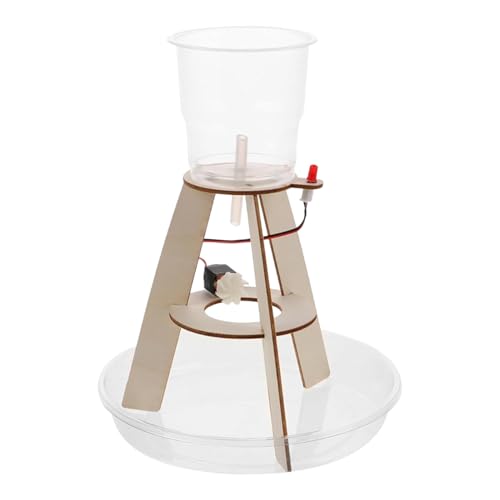
Educational Water Wheel Generator Kit, Reusable Hydro Power Exploration Project, Large Size STEM Energy Kit with Functional Turbine, Learning with Compact Design, Sturdy Eco Safe
Inspiring STEM Activity: The Hydroelectric Generator Kit encourages exploration of physics principles via constructing a hands-on hydro generator,…
As an affiliate, we earn on qualifying purchases.
As an affiliate, we earn on qualifying purchases.
Frequently Asked Questions
How Do Water Wheels Generate Electricity Today?
You generate electricity today by harnessing hydroelectric turbines, which are driven by flowing water. When water moves through these turbines, it spins the turbines’ blades, converting kinetic energy into mechanical energy. This mechanical energy then powers a generator, producing renewable energy in the form of electricity. This process is efficient and sustainable, helping reduce reliance on fossil fuels and supporting a cleaner environment.
What Materials Are Best for Building a Durable Water Wheel?
You should choose materials like hardwoods, which have great wood durability for water wheels, ensuring they withstand constant moisture. For metal components, opt for stainless steel or treated metals that resist corrosion, extending your wheel’s lifespan. The coincidence is that durable wood and corrosion-resistant metals work together to create a water wheel that’s both strong and long-lasting, even in the harsh, wet conditions nature throws at it.
Can Water Wheels Operate in Frozen or Drought Conditions?
You might face challenges operating a water wheel during frozen or drought conditions. Ice blockage can stop the wheel from turning, while low flow reduces power output. To keep it running, you could use heated channels to prevent ice buildup or build a reservoir to maintain steady water flow. But in extreme drought, it may be impossible to operate efficiently, so planning for seasonal variations helps keep your system functional.
How Has Modern Technology Improved Traditional Grist Mills?
A picture is worth a thousand words, and modern tech has transformed traditional grist mills into efficient, innovative machines. You benefit from automated controls, improved milling precision, and energy-efficient systems, boosting productivity. This advancement enhances the historical significance and cultural preservation of mills by integrating tradition with modernity. You’re able to maintain the mill’s legacy while adapting to today’s demands, ensuring these historic sites remain relevant and functional for future generations.
Are There Any Environmental Impacts of Using Water Wheels?
Using water wheels can cause ecological disruption and habitat alteration in nearby environments. You might notice changes in water flow, which can affect aquatic life and plant growth. These impacts occur because water wheels redirect water, potentially harming ecosystems. While they generate renewable energy, you should consider these environmental effects and explore ways to minimize habitat alteration, ensuring a balance between harnessing water power and protecting nature.
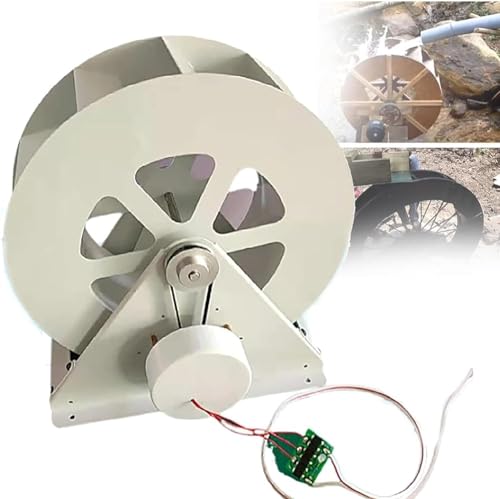
GJVBGA Water Wheel Hydropower Generator Low-Speed Water Wheel Generator for Household Outdoor Lighting Generation Power Equipment Hydro Water Turbine Generator(Size:100W)
1,Water Wheel Generator : Hydro Turbine Generators Have Low Water Flow Requirements,And Can Be Installed In The Wild…
As an affiliate, we earn on qualifying purchases.
As an affiliate, we earn on qualifying purchases.
Conclusion
Now that you’ve seen how water wheels power grist mills, it’s clear they’re the backbone of early industry. They turned raw energy into useful work, proving that necessity is the mother of invention. As you can see, harnessing nature’s force isn’t just about survival—it’s about making progress possible. When you understand these simple machines, you realize they’re the silent workhorses that kept communities thriving, showing that sometimes, the simplest solutions are the best.
historical grist mill model
As an affiliate, we earn on qualifying purchases.
As an affiliate, we earn on qualifying purchases.
water powered mill replica
As an affiliate, we earn on qualifying purchases.
As an affiliate, we earn on qualifying purchases.