Washington Hop Farms have cultivated top-quality hops for over a century, blending tradition with innovative, sustainable practices. They use soil conservation, water efficiency, and organic methods to protect the land while producing premium ingredients for craft beers worldwide. With a focus on resilience and community collaboration, these farms continue to evolve and support ecological goals. If you want to discover the story behind their commitment to quality and sustainability, keep exploring the dynamic history of Washington’s hop industry.
Key Takeaways
- Washington hop farms have over a century of tradition in cultivating high-quality hop varietals for the craft beer industry.
- Farmers combine historic techniques with innovative practices to enhance yield, flavor, and environmental sustainability.
- Long-term commitment to soil health and water efficiency supports sustainable and resilient hop production.
- Ongoing research and breeding efforts develop pest-resistant and climate-resilient hop strains.
- Community partnerships promote ecological responsibility and support the local agricultural economy.
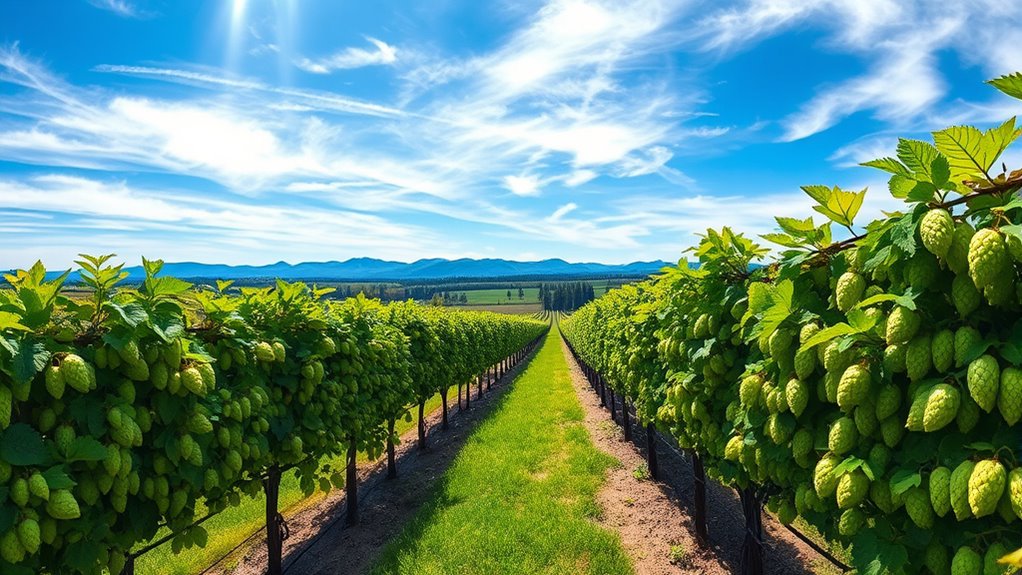
Have you ever wondered where your favorite craft beers get their distinctive hop flavors? The answer often lies in the rich fields of Washington hop farms, where generations have dedicated themselves to cultivating these essential ingredients. Washington’s hop farms are renowned for their commitment to sustainable farming practices, assuring that the land remains healthy and productive for years to come. By prioritizing soil conservation, water efficiency, and integrated pest management, these farms balance high-quality yields with environmental responsibility. This approach not only preserves the land but also enhances the flavor profiles of the hop varietals grown there, giving brewers a diverse palette of aromas and tastes to work with.
As you explore the history of these farms, you’ll notice a deep respect for the land and tradition. Over the past century, farmers have refined their techniques, blending time-honored methods with innovative sustainable practices. This evolution has allowed them to produce a wide array of hop varietals, each bringing its own unique character to beers. From the citrus and pine notes of Cascade to the floral and fruity nuances of Centennial, these hop varietals have become staples for craft brewers worldwide. The diversity of hop types cultivated in Washington is a tribute to the region’s adaptability and dedication to quality.
You might find it interesting that the shift toward sustainable farming has also driven research into more resilient hop varietals. These newer strains are bred to withstand pests, diseases, and climate challenges, reducing the need for chemical interventions. As a result, the hops you enjoy in your favorite craft beers are becoming not only more flavorful but also more environmentally friendly. Farmers are constantly experimenting with different cultivation techniques, such as cover cropping and organic fertilization, to improve hop quality while minimizing ecological impact.
In addition, Washington hop farms often collaborate with local communities and institutions to promote sustainable agriculture. This teamwork ensures that farming practices remain innovative and aligned with ecological goals. When you sip a beer crafted with Washington hops, you’re tasting a product of meticulous effort—one rooted in sustainable farming, a rich history, and a diversity of hop varietals that continue to inspire brewers globally. These farms have built a legacy of quality and responsibility that’s reflected in every pint, making your craft beer experience not just enjoyable but also a celebration of responsible agriculture. Moreover, ongoing research into soil health continues to support the long-term sustainability and productivity of hop farming in the region.

Centennial Hop Pellets for Home Brewing 3oz by N/A
As an affiliate, we earn on qualifying purchases.
As an affiliate, we earn on qualifying purchases.
Frequently Asked Questions
How Do Hop Farms Impact Local Ecosystems?
Hop farms impact local ecosystems by influencing pollinator health and soil sustainability. You might notice that hops can attract pollinators, supporting their populations, but pesticide use can harm them if not managed carefully. Additionally, sustainable farming practices help maintain healthy soil, preventing erosion and preserving nutrients. By balancing these factors, you guarantee the ecosystem remains vibrant and productive, benefiting both the environment and your farm’s long-term success.
What Innovative Farming Techniques Are Used Today?
Today, you’ll see hop farms adopting innovative techniques like sustainable practices and advanced pest management methods. These include organic fertilizers, crop rotation, and integrated pest management that diminish chemical use. You might also notice the use of precision agriculture, which employs sensors and data to optimize watering, fertilizing, and pest control. These innovations help increase yield, protect the environment, and ensure healthier hops for brewing.
How Do Hop Varieties Differ Across Farms?
You’ll notice hop varieties differ across farms due to breeding diversity and harvest timing. Breeding diversity introduces unique flavors and traits, making each farm’s hops distinctive. Meanwhile, harvest timing affects aroma and potency, with some farms harvesting earlier for fresher profiles and others later for more intense flavors. These factors combine to create a wide array of hop varieties, giving brewers a rich palette for their craft beers.
What Are the Economic Challenges Faced by Hop Growers?
You face economic challenges like market volatility and labor shortages, which directly impact your hop farm’s profitability. Fluctuating demand and prices make planning difficult, while labor shortages limit your ability to harvest efficiently. These issues increase costs and reduce income, making it harder to sustain your operation. Staying adaptable and exploring automation or new markets can help you manage these economic pressures and keep your farm thriving.
How Has Climate Change Affected Hop Cultivation?
Climate change has profoundly impacted hop cultivation by increasing weather variability, which challenges your ability to plan and adapt. You must focus on climate adaptation strategies, like adjusting planting schedules and selecting resilient hop varieties. Unpredictable weather patterns, such as droughts or heavy rains, threaten yields and quality. Staying informed about climate trends and implementing flexible farming practices helps you mitigate risks and sustain successful hop production despite ongoing climate shifts.

Craft A Brew – Single Hop IPA (Cascade) – Beer Making Kit – Make Your Own Craft Beer – Complete Equipment and Supplies – Starter Home Brewing Kit – 1 Gallon
MAKE YOUR OWN BEER – Be more than a beer drinker; be a beer maker! This craft beer…
As an affiliate, we earn on qualifying purchases.
As an affiliate, we earn on qualifying purchases.
Conclusion
As you reflect on Washington Hop Farms’ rich, resilient history, you realize the remarkable resilience and relentless dedication that has sustained its success. From planting to harvest, each season showcases steadfastness and skill. Celebrate this century of cultivation, where tradition and tenacity intertwine, inspiring you to appreciate the perseverance behind every pint of your favorite brew. Washington Hop Farms’ story is a proof to time, toil, and the timeless taste of tradition.

Craft A Brew Recipe Kit – Orange Golden Refill – 1 Gallon – Ingredients for Home Brewing Beer
O.G. GOLDEN ALE – This Orange Golden ale is fresh with an infusion of sweet Belgian orange peel…
As an affiliate, we earn on qualifying purchases.
As an affiliate, we earn on qualifying purchases.

KVITER 150 Hops Seeds for Planting (Humulus Lupulus) – European Beer Hops, Common Hop Climbing Perennial Vine Heirloom seeds – Ideal Organic Hops for Brewing. Plant in Outdoor Garden, Pots & Trellises
High Germination Rate: These hop seeds can achieve up to 85% sprout success with a 12-hour soak and…
As an affiliate, we earn on qualifying purchases.
As an affiliate, we earn on qualifying purchases.