During WWII, victory gardens became a key way for you and your community to support the war effort by growing your own vegetables and fruits. These gardens helped ease food shortages, boosted morale, and fostered a sense of patriotism and teamwork. Urban and rural areas alike embraced gardening, sharing seeds and tips to maximize production. If you keep exploring, you’ll discover how these efforts strengthened community bonds and left a lasting legacy on food sustainability.
Key Takeaways
- Victory Gardens boosted wartime food production by encouraging citizens to grow vegetables, reducing reliance on commercial farms.
- Urban farming initiatives in cities increased local food supplies and supported community morale during WWII.
- Victory Gardens symbolized patriotism and resilience, fostering collective effort across rural and urban populations.
- Community cooperation helped overcome shortages of gardening supplies and land, strengthening neighborhood bonds.
- The movement inspired lasting urban farming practices and emphasized self-reliance during and after WWII.
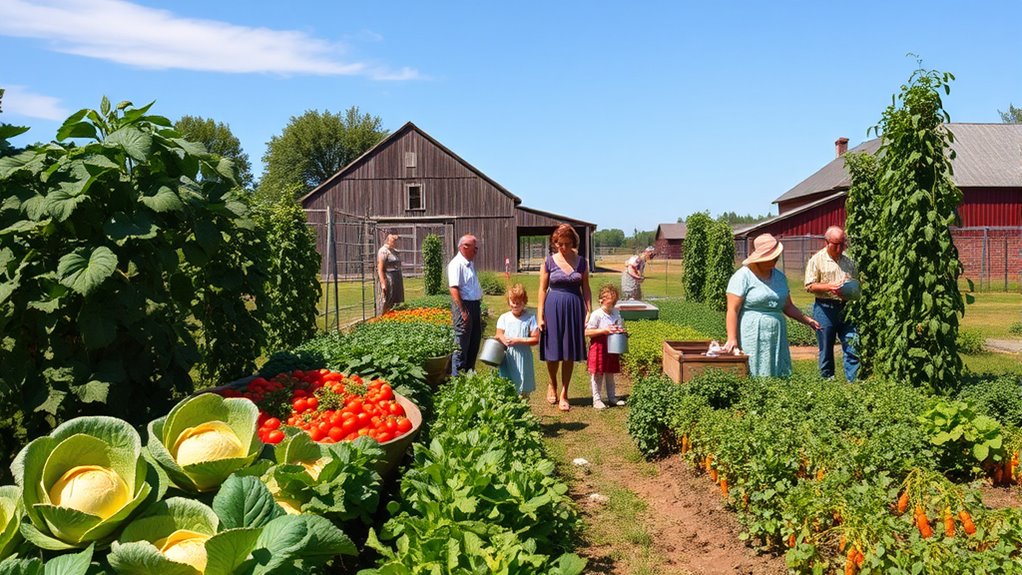
During World War II, victory gardens became a essential part of the home front effort, allowing ordinary citizens to contribute directly to the war production. These gardens weren’t limited to rural areas; many urban dwellers embraced urban farming to grow vegetables, herbs, and fruits right in their backyards, vacant lots, or even balcony containers. This shift in wartime agriculture helped ease pressure on commercial farms, ensuring more food could be sent to soldiers and civilians alike. As a result, millions of Americans participated in wartime agriculture by cultivating their own plots of land, no matter how small, fostering a sense of community and shared purpose.
Urban farming played a significant role during this period. Cities transformed under the influence of wartime agriculture initiatives, with people turning to innovative methods like rooftop gardens and community plots. These efforts not only increased food production but also boosted morale, giving people a tangible way to support the war effort from their own neighborhoods. By growing their own produce, citizens reduced reliance on imported foods and conserved essential shipping resources that were desperately needed elsewhere. This grassroots movement turned unused city spaces into productive farmland, demonstrating that even in densely populated areas, food self-sufficiency was achievable.
The importance of victory gardens extended beyond just supplementing food supplies; they became symbols of resilience and patriotism. Governments encouraged citizens to participate, emphasizing that each garden contributed to the overall success of wartime agriculture. This collective effort helped bridge the gap between rural and urban populations, emphasizing that everyone, regardless of location, could do their part. As wartime agriculture expanded, the movement also promoted better nutrition and a sense of independence, fostering habits that lingered long after the war ended.
You might notice that the success of wartime agriculture relied heavily on community cooperation and resourcefulness. People shared seeds, exchanged gardening tips, and supported each other through local organizations. This spirit of collaboration helped overcome challenges like shortages of gardening supplies or land access. Victory gardens became more than just individual projects—they evolved into a communal effort that strengthened neighborhood ties and reinforced national unity. The legacy of these efforts can still be seen today in modern urban farming initiatives, which draw inspiration from that wartime spirit of self-reliance and community resilience. Additionally, the use of vegetable juices and other preserved foods contributed to nutritional sustainability during this period.
Frequently Asked Questions
How Did Victory Gardens Impact Wartime Food Shortages?
Victory gardens helped reduce wartime food shortages by encouraging urban farming and community involvement. You could grow your own vegetables, freeing up store-bought supplies for soldiers and essential workers. This collective effort boosted food availability and morale, making everyone feel part of the war effort. Your participation in urban farming and community gardens directly contributed to easing shortages and supporting the nation’s needs during wartime.
Were Victory Gardens Promoted Internationally During WWII?
During WWII, victory gardens weren’t widely promoted internationally, mainly focusing on domestic efforts. However, some Allied nations encouraged international participation to boost morale and foster unity. The cultural significance of victory gardens varied across countries, symbolizing resilience and patriotism. While the primary promotion was domestic, the idea inspired similar initiatives elsewhere, emphasizing collective effort and resourcefulness during wartime.
What Types of Vegetables Were Most Popular in Victory Gardens?
You’ll find that popular vegetable varieties in victory gardens included tomatoes, beans, peas, carrots, lettuce, and cucumbers. These choices were favored because they grew quickly and provided essential nutrients. You should focus on simple gardening techniques like proper spacing and watering to maximize your yield. Selecting easy-to-grow varieties guarantees a successful garden, helping you contribute effectively to the war effort while enjoying fresh, homegrown produce.
How Did Government Policies Support or Regulate Victory Gardens?
The government supported victory gardens through incentives like free seeds and gardening advice, encouraging citizens to grow their own food. They also implemented garden regulations to guarantee proper land use and maximize production. These policies motivated you to participate actively, helping to supplement food supplies during wartime. By offering support and guidance, the government made it easier for you to contribute to the war effort from your own backyard.
Did Victory Gardens Influence Post-War Farming Practices?
Victory gardens influenced post-war farming practices by fostering urban agriculture and encouraging community engagement. You might notice that the sense of self-sufficiency promoted during wartime led cities and neighborhoods to prioritize local food production. This shift helped build awareness about sustainable farming and community involvement, inspiring ongoing efforts to grow food in urban areas. As a result, post-war practices increasingly emphasized local, community-driven initiatives in food cultivation.
Conclusion
By planting victory gardens, you helped turn the tide of World War II and proved that every effort counts. Your contribution kept food supplies steady and boosted morale on the home front. It’s clear that when everyone pulls together, even the smallest act can make a big difference. So, remember, it’s not just about the fruits and veggies you grow, but about standing united and showing that the whole is greater than the sum of its parts.