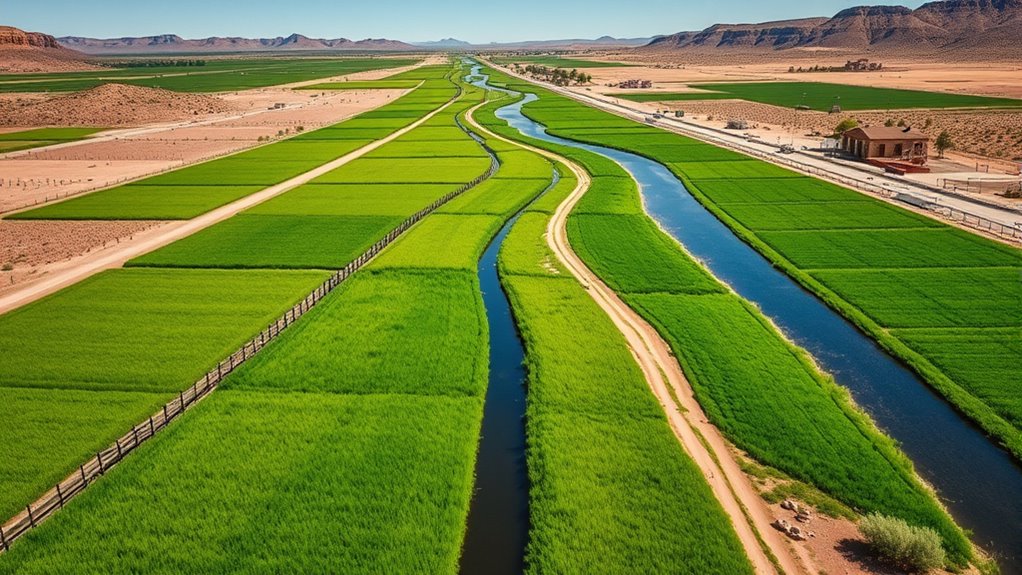

Utah’s irrigation co-ops and pioneer canals are essential for turning arid land into productive farmland. They help manage and deliver water from mountain streams and reservoirs to farms, ensuring reliable supplies. These cooperatives enable communities to share resources, decide collectively on water use, and maintain aging infrastructure. By working together, farmers prevent disputes and promote sustainable practices. To learn more about how these systems support Utah’s agriculture and community, keep exploring the details below.
Key Takeaways
- Utah irrigation co-ops manage shared resources, ensuring efficient water distribution through pioneer canals to support agriculture.
- Pioneer canals are early irrigation channels critical for transporting water from mountain sources to farmland.
- Water rights establish legal access and usage, vital for cooperative management and conflict prevention.
- Co-ops oversee infrastructure maintenance, repairing aging canals to prevent leaks and ensure reliable water supply.
- Community involvement in co-ops promotes sustainable practices, fair water allocation, and infrastructure improvements.

In Utah, irrigation co-ops and pioneer canals have played a pivotal role in transforming arid landscapes into productive farmland. These systems are the backbone of agriculture in the region, allowing water to reach fields that would otherwise remain barren. As a member of a co-op, you understand that securing water rights is essential for farming success. Water rights determine who can use water from local streams, rivers, or aquifers, and they form the legal foundation for irrigation activities. Without clear rights, conflicts can arise, threatening the stability of your water supply and your livelihood. That’s why cooperative management is indispensable—by working together, farmers and landowners pool their resources and coordinate water use to ensure everyone’s needs are met efficiently and sustainably.
In Utah, cooperative management isn’t just about sharing water; it’s about fostering a community that respects legal rights and environmental considerations. You participate in decisions about when and how much water to divert, store, and distribute. This collective approach helps prevent overuse and ensures the resource is preserved for future generations. The co-op’s leadership oversees the operation of pioneer canals, which are some of the earliest irrigation channels built in the region. These canals carry water from mountain streams and reservoirs directly to farms, making cultivation possible in areas with limited rainfall. Because these canals are often old and extensive, managing them requires coordination and maintenance—tasks that fall under the cooperative’s responsibilities. Additionally, maintaining the infrastructure is crucial for preventing leaks and ensuring efficient water delivery.
By working together, you and your fellow farmers can address challenges like drought, infrastructure degradation, or water shortages. Cooperative management enables you to allocate water fairly during dry periods, prevent disputes, and maintain the health of the canal system. It also provides a platform for collective action, such as lobbying for water rights or funding infrastructure upgrades. The sense of shared ownership and responsibility encourages sustainable practices, ensuring that water is used efficiently and that the system remains functional for years to come.
Your involvement in irrigation co-ops and pioneer canals exemplifies how cooperative management and water rights serve as pillars of Utah’s agricultural success. They create a framework where farmers collaborate, share resources, and protect their water supply. This teamwork not only enhances productivity but also helps preserve the arid landscapes that define much of Utah’s natural environment. Through these efforts, you help ensure that the land remains fertile and that farming continues to thrive in a challenging climate. Proper management and understanding of water rights are essential for adapting to climate variability and ensuring long-term sustainability.

Rain Bird DRIPKITBAG Drip Irrigation Repair and Expansion Kit
Convenient and portable storage kit contains 102 professional grade universal Drip irrigation parts
As an affiliate, we earn on qualifying purchases.
As an affiliate, we earn on qualifying purchases.
Frequently Asked Questions
How Do Co-Ops Manage Water Rights Disputes?
You manage water rights disputes by focusing on clear water allocation agreements and open communication. When conflicts arise, you use dispute resolution methods like mediation or negotiation to reach fair solutions. Maintaining detailed records helps prevent misunderstandings. By prioritizing cooperation and clarity, you guarantee fair water distribution, minimize disputes, and keep the irrigation system running smoothly, benefiting all parties involved.
What Are the Long-Term Sustainability Plans for Pioneer Canals?
You might think Pioneer Canals have endless water, but their long-term plans focus on water conservation and climate adaptation. They’re implementing smarter irrigation techniques, upgrading infrastructure, and promoting sustainable usage to guarantee water availability for future generations. Ironically, their success depends on reducing water waste now, proving that adapting to climate challenges isn’t just smart—it’s essential. These efforts aim to keep the canals viable despite changing weather patterns.
How Do Co-Ops Handle Infrastructure Maintenance Costs?
You handle infrastructure maintenance costs through cost sharing strategies and member assessments. Co-ops typically distribute expenses based on usage or land size, guaranteeing fairness. Members contribute regularly via assessments, which fund repairs and upgrades. This approach encourages collective responsibility and helps maintain infrastructure efficiently. By actively participating in assessments and understanding their roles, members ensure the co-op’s sustainability and smooth operation over the long term.
Are There Any Modern Technological Innovations Being Integrated?
Yes, modern tech is transforming irrigation maintenance. You can now use smart sensors to monitor water flow and detect leaks in real-time, saving you time and costs. Drone inspections are also increasingly common, enabling you to quickly assess canal conditions and identify issues from above. These innovations help you respond faster and keep infrastructure in better shape, making your irrigation system more efficient and reliable.
How Do Irrigation Practices Impact Local Ecosystems?
Irrigation practices directly impact local ecosystems by affecting water quality and wildlife habitat. When you use efficient methods, you reduce runoff and pollution, helping maintain cleaner water. Proper irrigation also preserves wildlife habitats by preventing overuse of water sources, which can dry out habitats and threaten species. By managing water wisely, you support healthier ecosystems, ensuring plants and animals thrive while sustaining agricultural needs.
water flow control valve for irrigation
As an affiliate, we earn on qualifying purchases.
As an affiliate, we earn on qualifying purchases.
Conclusion
You might be surprised to learn that Utah’s irrigation co-ops and pioneer canals still serve over 1 million acres of farmland today. These historic systems have helped sustain agriculture for generations, proving their lasting importance. As you see these canals crisscrossing the landscape, remember they’re not just old infrastructure—they’re essential lifelines that continue to support Utah’s farming community and economy. Their resilience showcases how history and innovation work together to water the future.
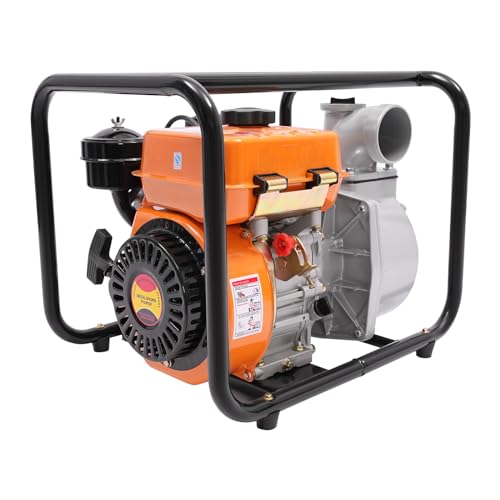
Diesel Engine Water Pump, 3-inch 26m/85.3ft Lift, 22.97ft Suction, 196CC 4-Stroke Portable High Pressure Diesel Powered Trash Water Transfer Pump Garden Farm Irrigation Pump for Irrigation Pool
Sturdy and Durable&Large Capacity: High-quality aluminum and die-casting process make this product corrosion-resistant, wear-resistant, not easy to deform,…
As an affiliate, we earn on qualifying purchases.
As an affiliate, we earn on qualifying purchases.
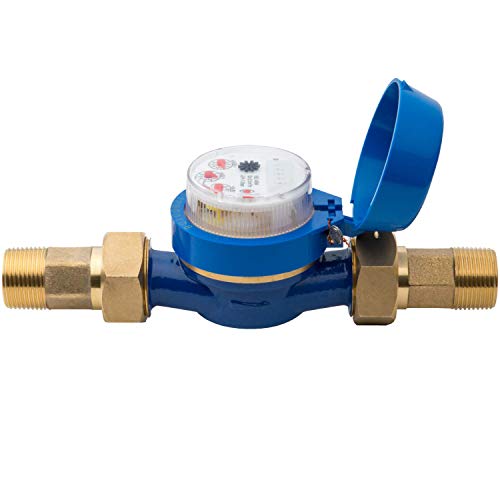
Hunter HC100FLOW 1" Irrigation Flow Meter, Smart Water Meter for Sprinkler Systems, Leak Detection Sensor, Flow Monitoring, Compatible with HC, Pro-HC, HPC, and HCC Controllers
KNOW EXACTLY HOW MUCH WATER YOU’RE USING: Stop wasting water and money. This smart 1" flow meter delivers…
As an affiliate, we earn on qualifying purchases.
As an affiliate, we earn on qualifying purchases.