TL;DR

Get furniture and decor delivered free with Prime
- Fast, free delivery on millions of items
- Prime Video, Amazon Music and more included
- Member-only deals all year
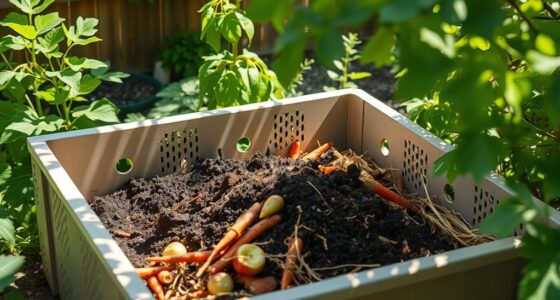
Hunker describes a backyard compost enclosure built by stacking about 30 to 35 concrete blocks without mortar. The design leaves the front open for access and uses gaps or block cavities to allow airflow; cost, site conditions and the exact composting results will vary.
Hunker has outlined a do-it-yourself compost enclosure made from roughly 30 to 35 concrete blocks, stacked without mortar. The design keeps one side open so gardeners can add and turn material, while gaps or the blocks’ hollow cores can provide airflow; the report presents it as a sturdier alternative to some homemade bins, not as a tested guarantee of composting speed or lifespan.
The suggested build uses blocks to form a back wall and two side walls, leaving the fourth side open. Hunker says to start with a row of four to five blocks for the back and use another four to five for each side, adjusting the footprint to suit the available space and intended pile size. The blocks are then stacked into several rows, with the report suggesting about four rows at the back and lower side walls toward the opening.
To help the structure stay stable, the blocks should be staggered rather than aligned directly above one another. The article describes orienting the hollow sides parallel to the ground, or facing them toward the inside of the enclosure. If the cavities face another direction, it advises leaving spaces between blocks so air can reach the pile. The design does not call for mortar, and the open front allows access for adding material, turning the pile and checking its temperature.
Finding blocks may be the main cost-saving challenge. The report suggests checking local online listings, asking construction sites or junk haulers about unused materials, and contacting a nearby Habitat ReStore. It also gives a retail example: new 8-by-8-by-16-inch blocks were listed at Home Depot for less than $3 each when the article was prepared. That price is not a current quote and may vary by location and date.
A Sturdy Enclosure With Open Access
The practical appeal is a simple construction method that uses widely available masonry units rather than requiring carpentry, wire assembly or a purchased prefabricated bin. For gardeners who already have blocks, reusing them may reduce the expense of setting up a dedicated compost area. The modular layout also lets a homeowner add another enclosure later, provided there is room and enough blocks.
The open front is more than a convenience: it gives the gardener access to mix the pile and inspect it. Airflow is relevant because composting relies on biological activity, but the article’s design guidance should not be read as a guarantee that a pile will decompose faster. Results depend on the materials, moisture, pile size and management. The report supplies no measured comparison of composting time, cost or durability against other bin designs.
Products Worth Considering

Philips Hue Large Smart Light Tube, Black – White and Color Ambiance LED Color-Changing Light – 1 Pack

TCL 85-Inch QM6K Series QLED Mini LED 4K HDR Smart Google TV

eufy E25 Robot Vacuum and Mop Combo with HydroJet Roller Mop
As an affiliate, we earn on qualifying purchases.
How the Block Design Works
Backyard composting turns organic material into a soil amendment while keeping that material out of the waste stream, a benefit the Hunker report cites as motivation for setting up a home pile. A container or enclosure gives the material a defined place, but homemade options vary in how they are assembled and maintained. Hunker contrasts the block approach with options such as wood pallets, cardboard, buckets and bags, describing concrete blocks as a more durable choice than some of those materials.
The specific proposal is a dry-stacked enclosure: the blocks are placed on one another without mortar. The report says the build can be completed in less than a day, but does not provide a controlled estimate for all sites or skill levels. Ground preparation, block condition, the desired dimensions and the number of rows can affect both the work and the final structure. Its instructions are a general backyard project, not a site-specific engineering plan.
Costs, Stability and Results Vary
The supplied report does not include independent testing of the enclosure, a measured comparison with commercial compost bins or data showing how much the block arrangement affects decomposition. Its descriptions of durability and airflow are presented as practical guidance, not quantified performance findings. The listed block price is also tied to the report’s publication period, which is not specified in the supplied material.
Important site details are left to the builder: the ground surface, final dimensions, block condition and whether local rules apply. The report does not specify a required foundation or provide structural calculations. Gardeners should assess whether a dry-stacked wall is suitable for their location, keep the enclosure stable, and avoid building where it could obstruct access or create a hazard.
Check the Site Before Building
Anyone considering the design can first measure the intended compost area, decide how much capacity is needed and price blocks locally. Reused blocks may be available through neighborhood listings, reuse stores or contractors, but their condition and quantity should be checked before collection. The builder can then arrange the back and side walls with a clear opening and preserve airflow through the block cavities or deliberate gaps.
Because the Hunker instructions are general, the next step is to adapt the layout to the site rather than assume one set of dimensions will fit every yard. Check for a stable location and any applicable local requirements, and monitor the pile after construction to determine whether its access and airflow are adequate. No further test results or updates to the design are included in the source material.
Key Questions
How many concrete blocks does the suggested compost bin need?
Hunker estimates about 30 to 35 blocks for one enclosure. The amount can change with the footprint, wall height and block arrangement.
Does the enclosure need mortar?
No. The report describes stacking the blocks without mortar, with the blocks staggered between rows for added stability. It does not provide a site-specific structural assessment.
Why leave one side open?
The open front lets the gardener add material, turn the compost and check its temperature. It also makes the pile easier to access than a fully enclosed structure.
How can the blocks provide airflow?
The design uses the blocks’ hollow cores or spaces between blocks to let air reach the pile. Hunker says airflow supports aerobic composting, but the report gives no measured evidence that this layout speeds decomposition by a specific amount.
Are concrete blocks free or inexpensive?
Some may be available through local listings, construction sites, junk haulers or reuse stores, according to the report. Its example of new blocks costing less than $3 each is not a current or universal price; check local suppliers for up-to-date costs.
Source: rss