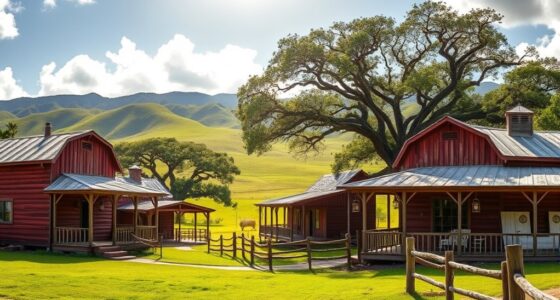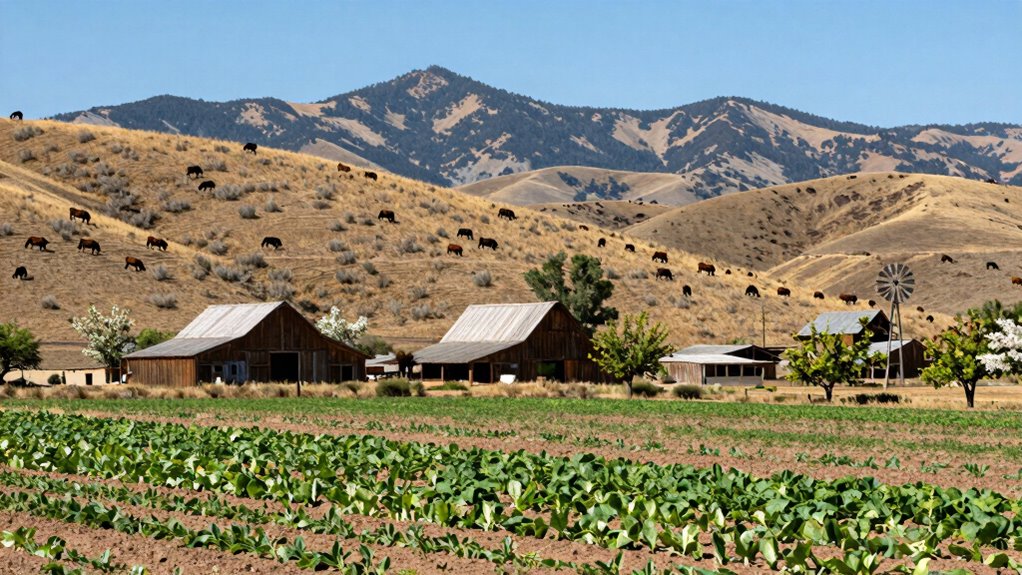

If you compare upcountry ranch life to lowland farm living, you’ll notice that ranchers focus on traditions like cattle herding, rodeos, and seasonal celebrations, all shaped by a cooler climate. Their routines follow seasonal changes and community bonds, and their architecture and livestock are built for resilience. In contrast, lowland farms operate year-round, cultivating crops like rice and sugarcane, influenced by warmer, humid conditions, and more diverse cultural practices. Explore further to see how these environments shape daily life in different ways.
Key Takeaways
- Upcountry ranch life emphasizes traditional practices like cattle herding and community festivals, while lowland farms focus on diverse crops and modern techniques.
- Upcountry routines are seasonal, shaped by cooler climate and livestock needs, whereas lowland farming follows year-round planting and harvesting cycles.
- Cultural traditions in the upcountry are rooted in longstanding customs, whereas lowland communities adapt and blend diverse cultural influences.
- Upcountry architecture and livestock management are designed for colder weather, while lowland farms prioritize irrigation and pest control in warm, humid conditions.
- Community life in the upcountry centers on land and livestock celebrations; lowland communities emphasize crop festivals and market activities.
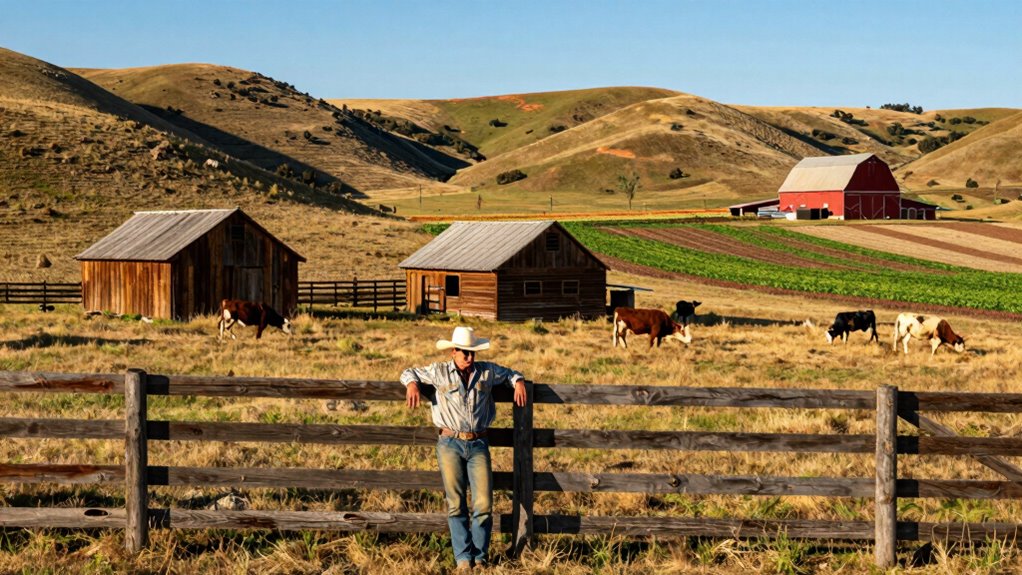
Have you ever wondered how life differs between upcountry ranches and lowland farms? The answer lies in the unique blend of cultural traditions and climate variations that shape daily living on each type of land. When you step into the upcountry ranches, you’re entering a world deeply rooted in longstanding cultural practices. These traditions often revolve around cattle herding, rodeos, and community gatherings that have been passed down through generations. You’ll notice that the social fabric here is tightly woven around shared customs, storytelling, and festivals that honor the land and livestock. These cultural traditions influence everything you do, from the way you dress to the way you celebrate seasonal events. Life on an upcountry ranch isn’t just about work; it’s about maintaining a way of life that honors history and community bonds.
In contrast, lowland farms are shaped by different cultural influences, often influenced by more diverse or immigrant communities, which bring their own traditions and practices. You might find celebrations centered around planting seasons or harvest festivals that reflect a blend of cultural backgrounds. These traditions tend to be more adaptable, influenced by modern agricultural techniques and global markets. The cultural fabric here is more fluid, often blending old customs with new practices, creating a dynamic community that’s always evolving.
Climate variations further distinguish the two environments. Upcountry ranches experience cooler temperatures and more pronounced seasonal changes. This climate influences the type of livestock raised, the timing of herding activities, and even the architecture of the ranch houses, which are built to withstand colder weather. You’ll notice that the changing seasons dictate your schedule, from spring calf branding to winter feed preparations. The cooler, more temperate climate allows for grazing year-round, but it also demands resilience against harsher weather conditions. Additionally, the climate shapes the diversity of flora and fauna that can thrive in each environment, impacting daily routines and resource management.
Meanwhile, lowland farms are usually situated in warmer, more humid areas. The climate here promotes year-round planting and harvesting, making farming more continuous but also more susceptible to pests and disease. You might find that irrigation and pest control are critical parts of daily farm life. Crops like rice or sugarcane thrive in these conditions, and the warm weather extends growing seasons, allowing for multiple harvests each year. The climate variations mean your work rhythm is less dictated by seasons and more by the cultivation cycle of your specific crops.
In essence, whether you’re on an upcountry ranch or a lowland farm, each setting offers a unique way of life shaped by its cultural traditions and climate. Your daily routines, community interactions, and even your outlook are influenced by these natural and cultural environments, making each experience distinct and rich in its own right.
As an affiliate, we earn on qualifying purchases.
Frequently Asked Questions
What Are the Primary Climate Differences Between Upcountry and Lowland Areas?
You’ll notice the climate differences due to elevation impact; upcountry areas are cooler and receive more rainfall, thanks to higher elevation. Lowland areas tend to be warmer and drier. Soil composition also plays a role—upcountry soils are often more rocky and less fertile, influencing agriculture. These climate variations shape your daily life, affecting crop choices and farming methods in each region.
How Do Wildlife Encounters Vary Between Upcountry Ranches and Lowland Farms?
Imagine walking through an upcountry ranch and noticing deer grazing freely, while on a lowland farm, you might spot waterfowl near ponds. Wildlife behavior varies due to habitat diversity; upcountry ranches support more varied species and larger mammals, thanks to rugged terrain and forested areas. Conversely, lowland farms attract different wildlife, like amphibians and birds, thriving in wetlands and cultivated fields. Your encounters reflect these distinct ecosystems.
What Traditional Skills Are Unique to Upcountry Ranch Life?
You develop unique traditional skills rooted in ranching heritage and cowboy skills, like roping cattle, branding, and horsemanship. You learn to ride and care for livestock, essential for managing the ranch efficiently. These skills are passed down through generations and are crucial for daily tasks, ensuring the health of your herd and land. Your hands-on experience deepens your connection to the land and the lifestyle’s rich history.
How Do Water Sources Differ in Upcountry Versus Lowland Regions?
You might think water sources would be similar everywhere, but upcountry ranches rely on mountain streams and underground springs, making water access more unpredictable. Ironically, while lowland farms often have steady river access, upcountry areas depend on these natural sources, which can dry up or flood unexpectedly. This variability demands more resourcefulness and careful water management, highlighting how different living conditions shape daily life and survival strategies.
What Are Common Transportation Methods Used in Each Area?
In upcountry areas, you’ll often rely on horseback travel and ATVs to navigate rugged terrains, making transportation more flexible for ranch chores and exploration. Meanwhile, in lowland farms, you might use tractors, trucks, or even bicycles for easier access across flatter land. Both regions adapt their methods to suit their landscapes—horses and ATVs in the rough upcountry, and motorized vehicles in the more accessible lowlands.
Conclusion
Ultimately, whether you embrace the upcountry ranch’s rugged rhythm or the lowland farm’s fertile flow, both foster a faithful, fulfilling frontier. You’ll find freedom in the vast vistas, forging friendships from farmhands to friends, and embracing the enduring essence of rustic life. So, step into the story, savor the serenity, and savor the simple joys that make every day on the land lively, lovely, and uniquely yours.