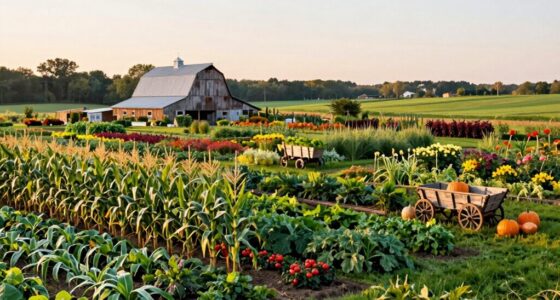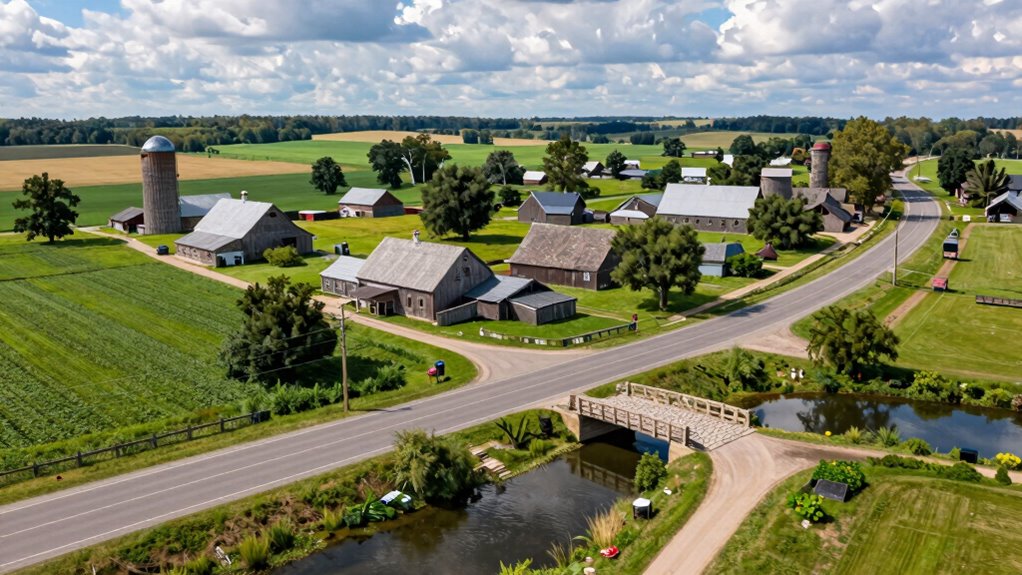

Travel roads, turnpikes, and canals transformed farm communities by connecting them to larger markets and making transportation faster and easier. You gained better access to trade routes, which helped move crops, livestock, and supplies more efficiently. Towns and businesses grew along these routes, boosting local economies. These improvements also encouraged settlement expansion and built trust in transportation safety. If you want to explore how these changes shaped rural life even further, there’s more to discover.

Get furniture and decor delivered free with Prime
- Fast, free delivery on millions of items
- Prime Video, Amazon Music and more included
- Member-only deals all year
Key Takeaways
- Connected isolated farms to markets, boosting agricultural trade and profits.
- Led to the growth of small towns and rural communities along transportation routes.
- Enabled faster and cheaper movement of crops, livestock, and supplies.
- Stimulated rural and urban development through increased infrastructure and commerce.
- Improved transportation safety and reliability, fostering community trust and economic integration.
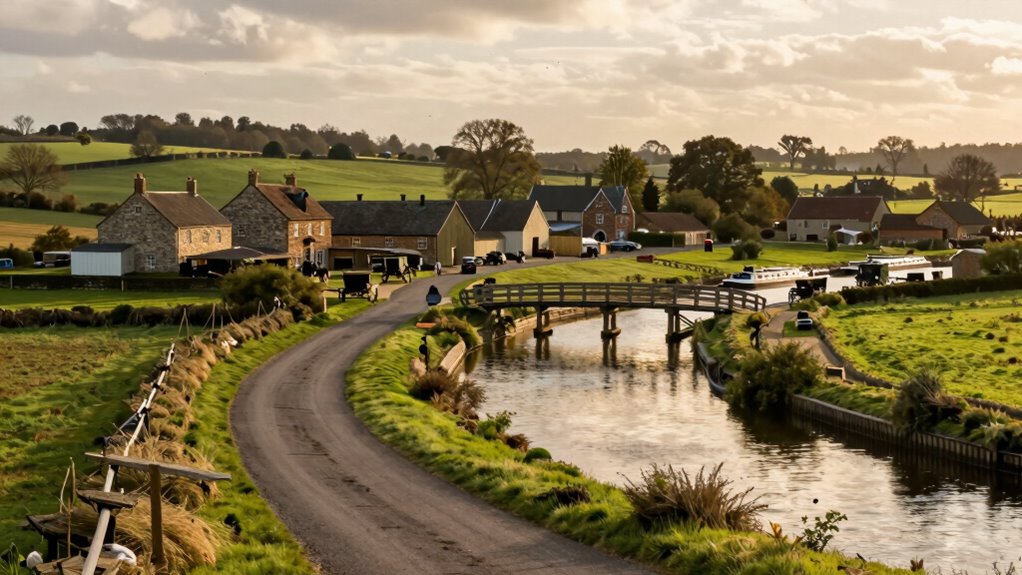
Travel Roads, Turnpikes, and Canals reshaped farm communities.
As travel roads, turnpikes, and canals expanded across the landscape, they transformed farm communities from isolated pockets into connected hubs of commerce and communication. This expansion marked a pivotal point in urban development, allowing small towns and rural areas to flourish alongside growing cities. This connectivity also played a crucial role in economic growth, enabling more efficient trade and resource distribution. When you think about it, these new routes didn’t just carry goods—they carried ideas, people, and opportunities, fundamentally altering the way farms and towns interacted. The increase in transportation options meant you could move crops, livestock, and supplies faster and more efficiently, reducing spoilage and increasing profits. As a result, farmers found new markets for their produce, and towns grew into bustling centers of activity.
Technological innovations played an essential role in this transformation. The development of turnpikes, which were private toll roads, improved road quality and durability, enabling heavier loads to be transported over longer distances. Canals, on the other hand, introduced a new method of moving large quantities of goods via water, often at a lower cost than overland routes. These innovations didn’t just improve existing transportation—they revolutionized it. For example, the construction of canal systems like the Erie Canal created direct links between agricultural regions and major ports, making exports easier and cheaper. You’d notice how this shift encouraged the growth of towns along these routes, as traders and merchants set up shop to serve the increased traffic.
You might also observe how the development of high-quality infrastructure increased the overall efficiency of transportation networks, further accelerating economic growth. With these new transportation channels, urban development accelerated. Settlements expanded outward, and new communities popped up along turnpikes and canal banks. You’d see more markets, warehouses, and inns catering to travelers and traders. This infrastructure encouraged investment and spurred economic growth, turning farms into part of a larger commercial network. Additionally, technological progress in transportation safety and reliability fostered a sense of security for travelers and merchants alike. As roads and waterways connected rural areas to urban centers, communication improved too. News traveled faster, and you could coordinate trade or respond quickly to market demands. Technological innovations made travel safer and more reliable, fostering a sense of connectivity that wasn’t possible before.
In essence, these transportation improvements reshaped the fabric of rural life, turning isolated farm communities into integral parts of an emerging national economy. They laid the groundwork for modern urban development, where connectivity and technological progress continue to drive growth. You can see how roads, turnpikes, and canals didn’t just move goods—they moved communities into a new era of progress, cooperation, and opportunity.
historical turnpike road model kits
As an affiliate, we earn on qualifying purchases.
As an affiliate, we earn on qualifying purchases.
Frequently Asked Questions
How Did Travel Roads Influence Local Farm Labor Availability?
Travel roads increased farm labor migration by making it easier for workers to reach farms and roadside markets. As roads improved, more laborers moved to areas with better opportunities, boosting farm productivity. You notice that these roads connect farms to towns, encouraging workers to stay nearby and participate in roadside markets, which further supports farm communities. Overall, improved roads directly influence the availability of farm labor by facilitating movement and economic activity.
What Economic Shifts Occurred in Farms Due to Turnpike Tolls?
You see, turnpike tolls initially limited farm access to markets, causing economic shifts. Farmers began diversifying crops and livestock to offset costs, fostering economic diversification. As land values fluctuated with improved transportation, some farmers profited, while others struggled. Ultimately, tolls reshaped farm economies by encouraging adaptation and new opportunities, transforming rural communities into more interconnected, dynamic regions. This balance of costs and benefits drove significant changes in farm prosperity and land use.
How Did Canals Impact Small-Scale Farmers Differently?
Canal navigation substantially benefited small-scale farmers by providing a cost-effective way to transport their produce to markets, expanding their reach beyond local areas. You’d find that canals lowered transportation costs, making it easier for small-scale agriculture to thrive and compete with larger farms. This improved access to distant markets meant you could sell more products, increase profits, and sustain your farming community amid changing economic conditions.
Were There Environmental Consequences of Constructing Roads and Canals?
Like Prometheus releasing fire, constructing roads and canals caused ecological disruption and water pollution. You might notice how ecosystems suffered as wetlands were drained or altered, and pollutants ran off into nearby waters. These projects, while transforming transportation, often harmed local environments, impacting wildlife and water quality. So, you see, progress came with costs—an environmental toll that still echoes today, reminding us to balance development with nature’s needs.
How Did Transportation Changes Affect Farm Community Social Interactions?
Transportation changes made it easier for you to attend rural social gatherings, strengthening community bonds. With improved roads and canals, you can now visit neighbors more conveniently, fostering greater community cohesion. These advancements reduce isolation, encouraging regular interactions and shared activities. As a result, your farm community becomes more connected, lively, and supportive, enriching your social life and creating a stronger sense of belonging among residents.
Conclusion
As you stand on the edge of a once-quiet farm, you can almost hear the distant hum of new roads and the whisper of waterways carving through the landscape. These innovations didn’t just connect places—they transformed lives, stirring change beneath your feet. The future of these communities remains uncertain, holding promises and secrets yet to be revealed. Will they flourish with newfound access, or fade into history? The road ahead is waiting to be uncovered.
Halloween Picks
halloween
As an affiliate, we earn on qualifying purchases.