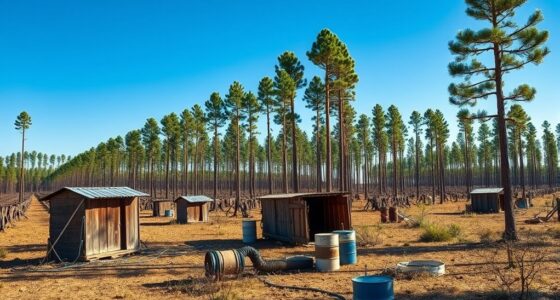
Tobacco barns are essential structures used in flue curing, a method that heats and dries tobacco leaves evenly. These traditional barns often feature thick walls and controlled airflow, sometimes integrated with modern automation for precise temperature and humidity management. This combination preserves cultural practices while improving efficiency and quality. If you continue exploring, you’ll discover how these historical barns adapt with new technologies, ensuring tobacco curing remains both authentic and effective.
Key Takeaways
- Tobacco barns are traditional structures used for curing tobacco, preserving flavor and quality through controlled environments.
- Flue curing involves circulating heated air through channels in or beneath tobacco barns for uniform drying.
- Modern barns combine traditional design with advanced automation, sensors, and airflow systems for precise curing conditions.
- Flue curing reflects regional styles, often incorporating historical barn architectures with updated heating technology.
- Balancing preservation of historic tobacco barns with technological upgrades ensures cultural legacy and improved curing efficiency.
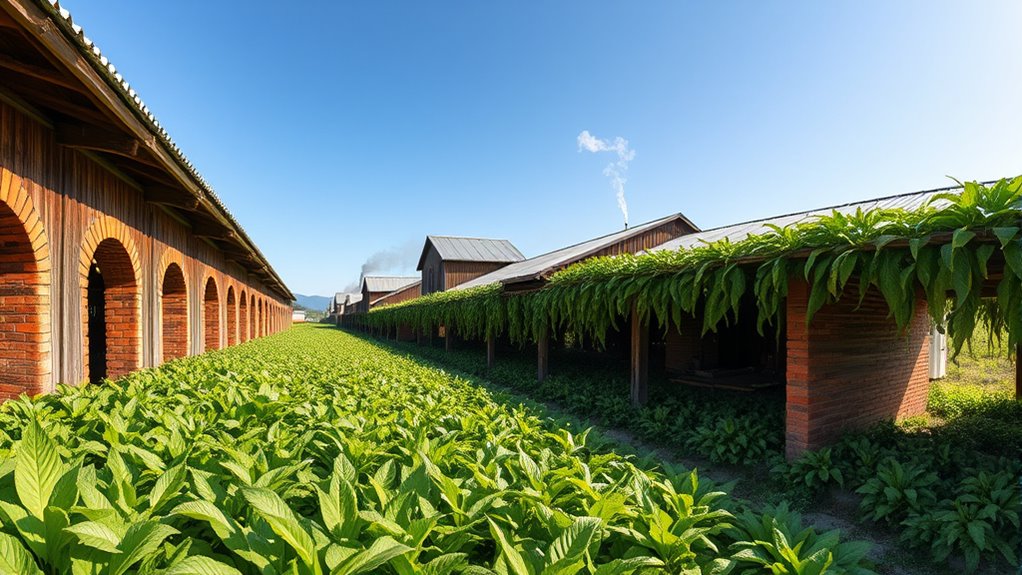
Tobacco barns have long played a pivotal role in the curing process, especially in traditional tobacco-growing regions. These structures aren’t just simple storage spaces; they’re essential to maintaining the quality and flavor of the tobacco leaf. Over the years, the design and use of tobacco barns have evolved, but their importance in history preservation remains strong. They serve as living links to the past, embodying generations of farming knowledge and craftsmanship. Preserving these barns helps maintain a tangible connection to traditional methods, reminding us of the roots of tobacco cultivation and the cultural significance tied to these structures.
Tobacco barns preserve tradition, embodying generations of craftsmanship and maintaining cultural roots in tobacco cultivation.
In recent times, modern techniques have transformed how tobacco is cured, but many growers still rely on the basics of barn construction for authenticity and tradition. While some farmers adopt advanced, automated systems for curing, the classic tobacco barn provides a controlled environment that can be finely tuned. These barns often incorporate features like adjustable vents, thick walls for insulation, and specialized airflow systems to guarantee the tobacco dries evenly. Such elements are essential because inconsistent curing can compromise the quality of the final product. Modern techniques emphasize precise temperature and humidity controls, which can be integrated into barns equipped with sensors and automated ventilation. This technological upgrade allows for more consistent results while still respecting the traditional structure’s core purpose.
Understanding how these barns function with modern techniques can help you appreciate the blend of tradition and innovation. For example, flue curing, a process often associated with tobacco barns, involves circulating heated air through channels or pipes that run within or beneath the barn. This method provides a uniform heat source, fundamental for producing high-quality tobacco. By combining the age-old design of barns with contemporary heating and monitoring systems, growers can achieve ideal curing conditions. This approach not only preserves the history behind tobacco barns but also enhances their effectiveness, guaranteeing the production of premium tobacco leaves. Additionally, the design of tobacco barns often reflects regional styles and adaptations that have been refined over generations.
The journey of tobacco curing reflects a balance between honoring history and embracing progress. Whether you’re a longtime farmer or new to the industry, understanding the importance of both preservation and modern techniques can help you appreciate the full scope of tobacco agriculture. It’s about maintaining the cultural legacy while improving efficiency and consistency. By respecting the traditional design of tobacco barns and integrating new technologies, you guarantee that this craft survives, adapts, and continues to produce high-quality tobacco for generations to come.
Frequently Asked Questions
How Did Tobacco Barns Originate Historically?
You might find that tobacco barns originated from regional variations in historical architecture, adapting to local climate and farming needs. These structures evolved as specialized buildings to cure and store tobacco efficiently, with designs reflecting local traditions. Over time, communities developed unique styles, but all served the same purpose: preserving the crop. Your understanding of these regional differences reveals how local culture influenced the development of tobacco barns throughout history.
What Are the Environmental Impacts of Flue Curing?
Flue curing acts like a double-edged sword, shaping tobacco but impacting the environment. You might notice increased air pollution from smoke and emissions as energy consumption rises. This process releases pollutants into the air, contributing to smog and health issues. It also consumes significant energy, straining natural resources. Being aware of these impacts helps you understand how traditional practices can influence air quality and environmental health.
How Do Modern Techniques Compare to Traditional Curing Methods?
Modern curing techniques outperform traditional methods by offering better automation and efficiency. You’ll find that automated systems reduce labor and guarantee consistent temperature control, which helps preserve the flavor of your tobacco. These advanced methods also minimize environmental impact, making your curing process more sustainable. Overall, modern techniques streamline operations, save time, and maintain high-quality flavor, providing a significant upgrade over traditional tobacco curing methods.
Are Tobacco Barns Used for Any Other Purposes Today?
You’ll find tobacco barns branching into broader roles today. Many serve as charming community centers, creative co-working spaces, or cozy cabins. Alternative uses emerge as preservation efforts protect these historic structures from decay. You might stumble upon rustic retreats, art studios, or event venues housed within their weathered walls. These versatile venues blend tradition with transformation, allowing you to appreciate their historic significance while enjoying modern, multifunctional spaces.
What Safety Measures Are Necessary During Flue Curing?
You need to prioritize fire hazard prevention and ventilation safety during flue curing. Always make sure proper fire extinguishing equipment is on hand, and monitor temperature controls closely to prevent overheating. Maintain good ventilation to avoid buildup of smoke or gases, which can pose health risks and increase fire danger. Regularly inspect the curing structure for any hazards, and train personnel on emergency procedures to keep everyone safe.
Conclusion
Now that you understand how tobacco barns and flue curing work together, you see the care and tradition behind each harvest. This process guarantees quality tobacco while preserving time-honored methods. Remember, you can’t judge a book by its cover, so don’t overlook the craftsmanship involved. Appreciating these barns and curing techniques gives you a deeper respect for the craftsmanship and history behind every puff. It’s a reminder that good things often come to those who take the time.