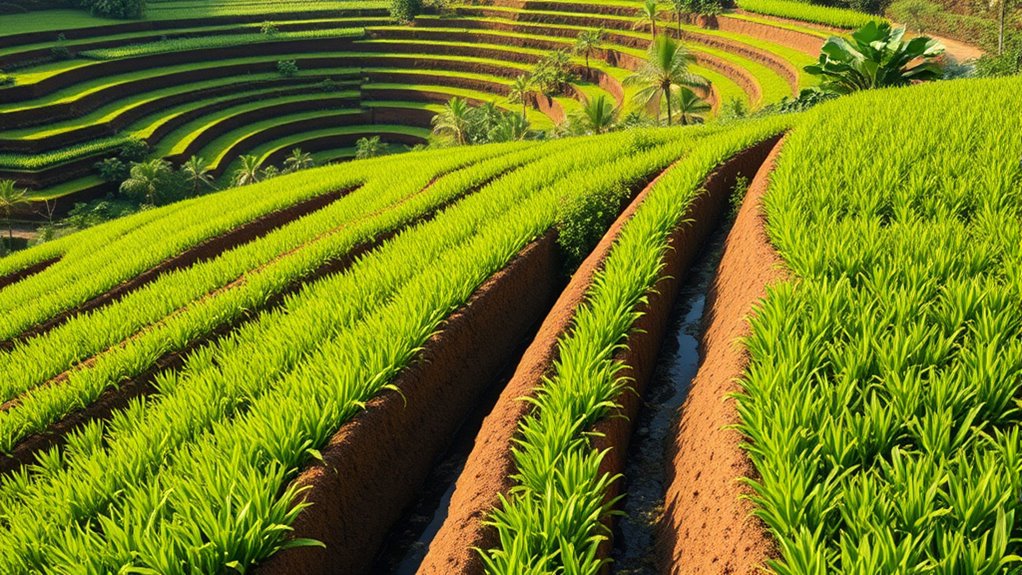

Restoring taro patches, or lo‘i, connects you with Hawaii’s rich cultural traditions while supporting sustainable farming and healthy ecosystems. By rehabbing old water management systems like ditches and sluices, you help preserve traditional Hawaiian practices and respect the land. Taro is a sacred symbol of life, and restoring lo‘i strengthens cultural identity and community bonds. If you want to explore the deeper significance and techniques behind these efforts, there’s much more to discover.
Key Takeaways
- Restoring lo‘i involves reviving traditional water management systems like ditches and ponds crucial for taro cultivation.
- Lo‘i restoration preserves Hawaiian cultural heritage, storytelling, and community practices centered around taro farming.
- Taro patches promote environmental benefits such as biodiversity, water filtration, and soil health.
- Restoring lo‘i supports sustainable agriculture by relying on natural processes and minimizing chemical use.
- These efforts foster cultural continuity, environmental resilience, and community renewal through land stewardship.

Taro patches, or lo‘i, are fundamental to Hawaii’s cultural and agricultural heritage, but many have fallen into disrepair over the years. You might notice that these traditional farming systems once thrived across the islands, providing more than just food; they served as living symbols of Hawaiian identity and community. Restoring these lo‘i isn’t just about cultivating taro; it’s about reconnecting with a way of life that emphasizes harmony with the land and preservation of cultural practices. You play an essential role in this effort, helping to bring back the ancient methods that sustain both the environment and cultural continuity.
Reviving lo‘i restores Hawaiian culture, sustains the environment, and strengthens community bonds through traditional taro farming practices.
Traditional farming in lo‘i involves meticulous care and respect for the land, water, and plants. Unlike modern agriculture, which often relies heavily on chemicals and machinery, these systems depend on natural processes and sustainable practices. You might find yourself involved in restoring the intricate water management systems—ditches, sluices, and ponds—that allow taro to flourish. These waterways are not only functional but also hold cultural significance as they reflect traditional Hawaiian engineering and community effort. Maintaining these systems helps guarantee the health of the soil and water, which are fundamental for growing high-quality taro and supporting local ecosystems. Engaging in water management also enhances understanding of traditional Hawaiian engineering.
The cultural significance of lo‘i extends beyond their agricultural value. They are living classrooms where Hawaiian language, stories, and customs are passed down through generations. By participating in restoration efforts, you help keep this cultural heritage alive. You may learn about the spiritual connection Hawaiians have with taro, which is considered a sacred ancestor and a symbol of life and sustenance. Restoring a lo‘i is, thus, an act of honoring tradition, revitalizing stories, and strengthening community bonds. It’s about more than just planting and harvesting; it’s about preserving a way of life that embodies respect, stewardship, and identity.
As you engage in restoring these patches, you also contribute to environmental resilience. Taro farming naturally promotes biodiversity, water filtration, and soil health, making it an eco-friendly practice that supports climate adaptation. Your efforts help protect these ecosystems from threats like urban development and invasive species, guaranteeing that future generations can experience and learn from this traditional farming practice. Ultimately, restoring lo‘i is a profound act of cultural preservation, environmental stewardship, and community renewal—an ongoing journey that reconnects Hawaiians with their roots while providing a model for sustainable living.

Melphoe 25Pcs Mini Garden Hand Transplanting Succulent Tools Set, 39.4" Thickened Repotting Mat & Plant Tag, Miniature Planting Indoor Fairy Care, Potting, Cactus, Houseplant Bonsai Tool Kit (Black)
Comprehensive Small Garden Tools: Our indoor garden kit Not only for succulents, but also suitable for bonsai plants,…
As an affiliate, we earn on qualifying purchases.
As an affiliate, we earn on qualifying purchases.
Frequently Asked Questions
How Do Native Plants Benefit Lo‘I Restoration Projects?
Native plants play a vital role in lo‘i restoration projects because they provide essential ecological benefits. By incorporating native plants, you support local biodiversity, improve water filtration, and stabilize the soil. These plants are adapted to the environment, making them resilient and easier to maintain. Using native plants helps restore the natural balance, ensuring the lo‘i remains sustainable and thriving for generations to come.
What Is the Historical Significance of Taro Patches in Hawaiian Culture?
You should know that taro patches hold deep Taro cultural significance in Hawaiian culture, serving as a symbol of life, sustenance, and community. Historically, they are central to Hawaiian agricultural traditions, reflecting ancient practices of sustainable farming and spiritual connection to the land. These patches represent more than food; they embody cultural identity, unity, and respect for nature, passing down values through generations.
How Can Community Members Participate in Lo‘I Restoration Efforts?
Imagine tending to a lush, thriving garden where your hands help nurture life. You can participate in lo’i restoration through community engagement and volunteer programs, planting and caring for taro patches alongside neighbors. Your involvement supports cultural preservation and environmental health. By volunteering, you help restore these essential ecosystems, ensuring future generations can enjoy and learn from this beautiful tradition. Your active participation makes a meaningful difference in revitalizing Hawaiian heritage.
What Are Common Challenges Faced During Taro Patch Restoration?
You’ll face challenges like soil erosion, which can wash away valuable nutrients and destabilize the taro patches, and invasive species that compete with native plants, making restoration difficult. Managing these issues requires consistent effort, proper sediment control, and removal of invasive plants. Staying vigilant and working with experienced community members can help you overcome these obstacles, ensuring the health and sustainability of the restored lo‘i.
How Does Climate Change Impact Lo‘I and Taro Cultivation?
Did you know that climate impacts now threaten over 60% of traditional taro and lo‘i cultivation areas? Climate change increases flood risks, which can drown taro plants and damage lo‘i infrastructure. Rising temperatures and unpredictable rainfall disrupt planting cycles, reduce yields, and threaten local food security. You need to adapt farming practices, improve drainage, and monitor weather patterns to protect these essential cultural and agricultural resources from worsening climate impacts.
traditional Hawaiian water management system kit
As an affiliate, we earn on qualifying purchases.
As an affiliate, we earn on qualifying purchases.
Conclusion
Restoring taro patches and lo‘i not only preserves Hawaii’s cultural heritage but also supports local ecosystems. Did you know that over 90% of native Hawaiian wetlands have been lost? By participating in these restoration efforts, you help revive essential habitats and sustain traditional practices for future generations. Your efforts make a real difference—keeping the spirit of the land alive and ensuring that these cherished landscapes thrive once more.
lo‘i restoration water ditches
As an affiliate, we earn on qualifying purchases.
As an affiliate, we earn on qualifying purchases.

SOPHISTICATE Organic Seeds: 6 Bulbs Colocasia esculenta, Green Taro, cocoyam, Taro, Elephant Ears Bulbs
High germination rate seeds
As an affiliate, we earn on qualifying purchases.
As an affiliate, we earn on qualifying purchases.