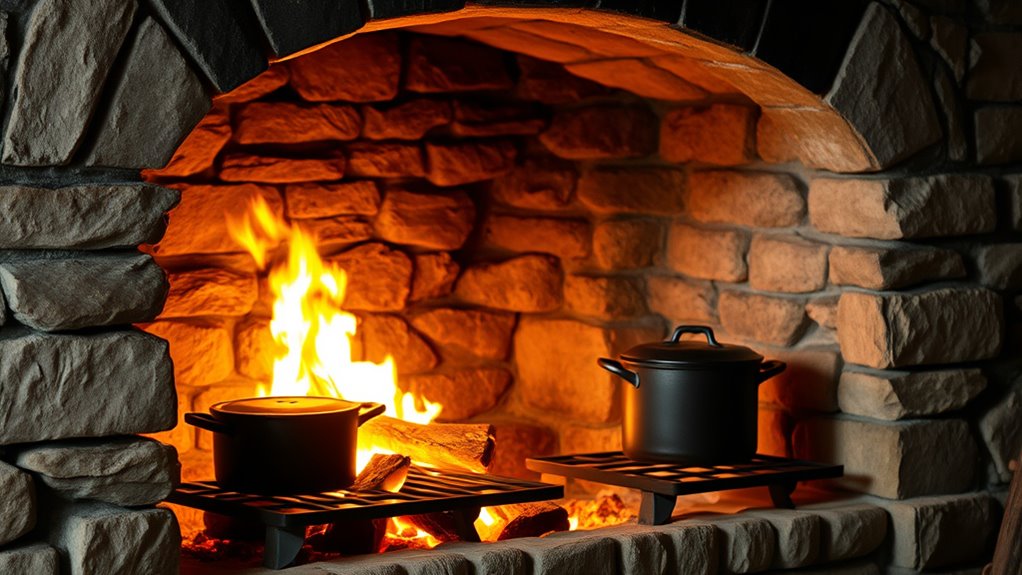

Stone chimneys played a essential role in early homes, supporting hearth cooking and providing warmth. Built from local stones and mortar, they showcase skilled craftsmanship and durable construction techniques passed down through generations. These structures not only served functional purposes but also added rustic charm to homes. Their enduring design reflects history, resilience, and tradition. If you want to discover more about how these timeless features continue to influence our understanding of early domestic life, keep exploring.
Key Takeaways
- Stone chimneys served as central structures for hearth cooking, supporting open fires, brick ovens, and large cooking surfaces in early homes.
- Crafted from local stones and mortar, they were built to withstand heat, weather, and time, ensuring durability for centuries of use.
- Their design facilitated efficient heat distribution and cooking methods, making them essential for daily food preparation.
- Skilled craftsmanship involved precise stone fitting to create stable, heat-resistant chimneys integral to hearth functionality.
- Preserving stone chimneys maintains their historical significance, showcasing traditional construction techniques and their role in early domestic life.
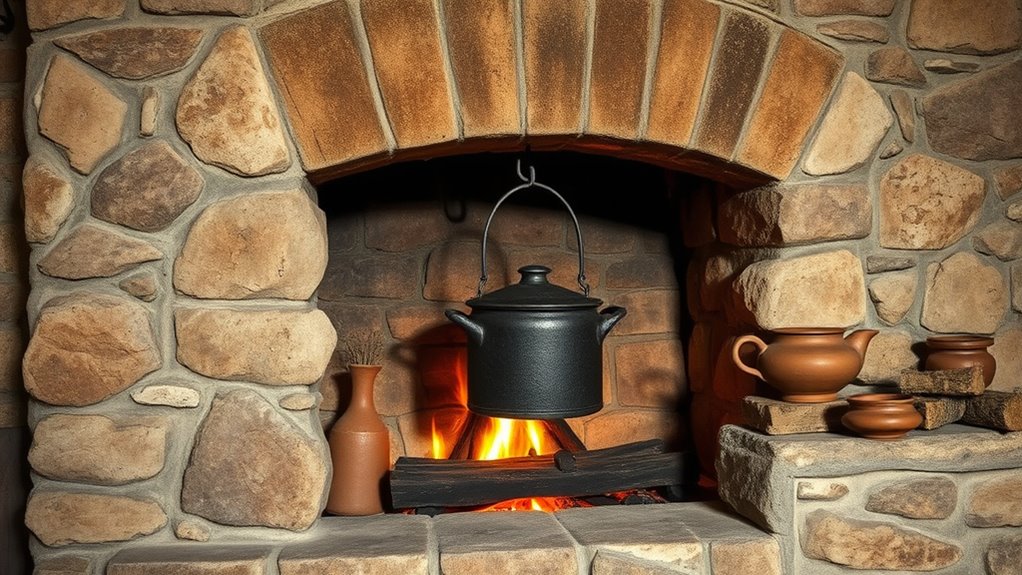
Have you ever wondered how early settlers cooked their meals or kept warm during harsh winters? Back then, the answer often lay in sturdy stone chimneys and hearths built with traditional masonry techniques. These structures weren’t just functional; they were the heart of the home. Crafted from local stones and mortar, they offered durability and warmth, standing through generations. Today, many of these historic chimneys still stand as attestations to early craftsmanship. When doing modern restoration, experts focus on preserving the original materials and methods, guaranteeing that the authentic character of these structures remains intact. This careful approach maintains the charm and historical significance while making sure the chimney can still serve its purpose, whether for aesthetic or functional reasons.
Traditional masonry chimneys preserve history, craftsmanship, and durability for functional and aesthetic restoration.
In early homes, a stone chimney was more than just a place to vent smoke. It was a central feature of daily life, supporting hearth cooking that involved open fires, simple brick ovens, or large cooking surfaces. The traditional masonry used in these chimneys was built to withstand constant heat and weather, often using local stones that added to the rustic aesthetic. During restoration, specialists pay close attention to these details, sourcing similar materials to match the original look and feel. They often reinforce the structure internally with modern techniques, but outwardly, the chimney maintains its historic appearance. This blend of old and new ensures that the structure continues to stand tall for future generations to appreciate. Additionally, understanding traditional masonry techniques can help guide more authentic and sustainable restoration practices.
As you explore restored stone chimneys, you’ll notice the craftsmanship involved in their construction. The skill required to lay each stone precisely so that it fits snugly, creating a stable and heat-resistant structure, is impressive. Modern restoration projects aim to honor this craftsmanship, sometimes incorporating modern technology to improve safety and longevity without compromising authenticity. For example, some restorers use non-invasive methods to analyze the mortar or reinforce weak spots, all while keeping the traditional masonry style intact. This respect for history allows you to enjoy a piece of the past while benefiting from the durability and safety afforded by contemporary techniques.
Whether you’re admiring a historic home or considering a restoration project yourself, understanding the role of traditional masonry in stone chimneys helps you appreciate their timeless design and functionality. These structures tell stories of early ingenuity, survival, and community life. With modern restoration, their legacy continues, seamlessly blending the old with the new. So, next time you see a beautifully preserved stone chimney, remember it’s more than a simple feature—it’s a symbol of resilience, craftsmanship, and history that still warms homes today.

Bluesea 30 Feet Chimney Sweep Kit, Ergonomic Chimney Cleaning Kit, Extends Up to 30 Feet, Chimney Cleaner, Chimney Cleaning Tools, Chimney Cleaning System with Strong Brush, 9 Flexible Chimney Rods
✅【THE LATEST GENERATION DESIGN】The chimney sweep kit has a sturdy, nice chrome button locking system to ensure that…
As an affiliate, we earn on qualifying purchases.
As an affiliate, we earn on qualifying purchases.
Frequently Asked Questions
How Do Stone Chimneys Withstand Modern Weather Conditions?
Stone chimneys withstand modern weather conditions through regular chimney maintenance and careful historical preservation. You should inspect for cracks, loose stones, and mortar deterioration, especially after storms or harsh weather. Applying protective sealants and repairing any damage helps prevent water infiltration and freeze-thaw damage. By maintaining your chimney, you guarantee it remains sturdy and authentic, safeguarding its historical value while resisting modern weather challenges effectively.
What Are the Best Types of Stone for Chimney Construction?
Like a sturdy oak standing tall, your choice of stone determines your chimney’s fate. For ideal durability, opt for durable, weather-resistant stones like granite, limestone, or sandstone, which withstand elements and time. These selections enhance chimney longevity and stability, ensuring it remains resilient amidst changing weather. Trust in the strength of your stone selection, because the right material is the foundation of a chimney that endures for generations.
Can Hearth Cooking Be Safely Done Indoors Today?
Yes, you can safely do hearth cooking indoors today if you follow modern indoor cooking guidelines. Guarantee proper ventilation, use fire-resistant materials, and maintain regular chimney and chimney cleaning to prevent creosote buildup. While historical hearth safety was different, modern standards prioritize safety with smoke detectors and carbon monoxide alarms. By adhering to these practices, you can enjoy authentic cooking experiences while keeping your home safe and compliant with current safety codes.
How Do I Prevent Smoke From Entering the House?
To prevent smoke from entering your house, make sure your chimney has a draft damper and keeps it properly closed when not in use. Regularly inspect and seal any gaps around the damper and chimney to guarantee a tight fit. Proper sealing around the hearth and chimney prevents smoke leaks, and a functioning damper controls airflow, keeping smoke out of your living space. Always maintain these components for safe, smoke-free indoor air.
Are There Eco-Friendly Alternatives to Traditional Stone Chimneys?
Yes, you can choose eco-friendly alternatives like biodegradable chimney liners and renewable stone sources. These options help reduce environmental impact by using sustainable materials and minimizing waste. By opting for biodegradable liners, you guarantee safer, eco-conscious disposal. Using stones from renewable sources supports responsible resource management. These alternatives not only protect the environment but also maintain the functionality and aesthetic appeal of your chimney, making your home greener and more sustainable.

EDGING CASTING 2-in-1 Pre-Seasoned Cast Iron Dutch Oven Pot with Skillet Lid Cooking Pan, Cast Iron Skillet Cookware Pan Set with Dual Handles, Indoor Outdoor for Bread/Frying/Baking/Camping/BBQ, 5 Qt
Pre-seasoned 2-in-1 cast iron dutch oven: The 2-In-1 cast iron dutch oven pot with skillet lid has been…
As an affiliate, we earn on qualifying purchases.
As an affiliate, we earn on qualifying purchases.
Conclusion
Just like a sturdy stone chimney holds the fire’s warmth and history, your connection to hearth cooking keeps tradition alive. Each crack and crevice tells a story, whispering secrets of past generations. Embrace these timeless skills, and let your kitchen become a fortress of flavor and memory. As the flames dance and settle, so too does your craft, grounded and enduring—an everlasting echo of the hearth’s gentle heartbeat guiding you home.

TOOLEAGUE 3Pcs Heavy Duty Masonry Chisel Set, Stone and Rock Tool,11-Inch Point & Flat Chisel, 8-Inch Brick Chisel with Hand Protection
【HIGH QUALITY】:The Masonry Chisel Set is made of CR-V with a hardness of 54-58 and a sturdy forged…
As an affiliate, we earn on qualifying purchases.
As an affiliate, we earn on qualifying purchases.

Gtongoko Fireplace Tools Set 4 Pcs 30 Inch Black Wrought Iron Large Fire Tool Set for Outdoor/Indoor Include Chimney Poker, Antique Shovel, Rustic Brush and Stand Accessories Set
【4 PCS Combination of Fireplace Tools】Complete 4 Pcs set of fireplace accessories including poker, shovel, brush, and stable…
As an affiliate, we earn on qualifying purchases.
As an affiliate, we earn on qualifying purchases.