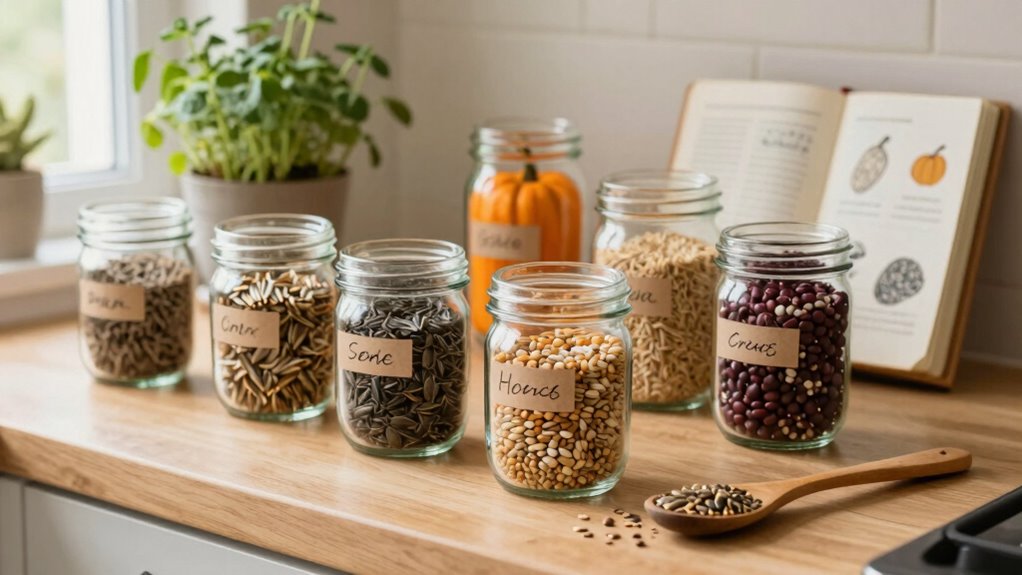

To start a family seed library at home, gather seeds from your favorite, healthy plants, focusing on varieties that thrive locally and resist pests. Seed saving involves letting plants fully mature, then drying and storing seeds in labeled, airtight containers in a cool, dark place. Keep track of your seed sources and performance, and share leftovers with neighbors. Exploring these steps further can help you create a sustainable, family-centered gardening tradition that promotes biodiversity.

Get furniture and decor delivered free with Prime
- Fast, free delivery on millions of items
- Prime Video, Amazon Music and more included
- Member-only deals all year
Key Takeaways
- Collect seeds from your favorite, healthy plants and ensure they are fully mature before harvesting.
- Use airtight containers like glass jars or envelopes to properly store seeds in a cool, dark, and dry environment.
- Label each seed container with the plant name, variety, and collection date for easy tracking.
- Create a record-keeping system to monitor seed sources, planting outcomes, and plant performance.
- Share surplus seeds with family, friends, or neighbors to expand your seed library and promote community gardening.
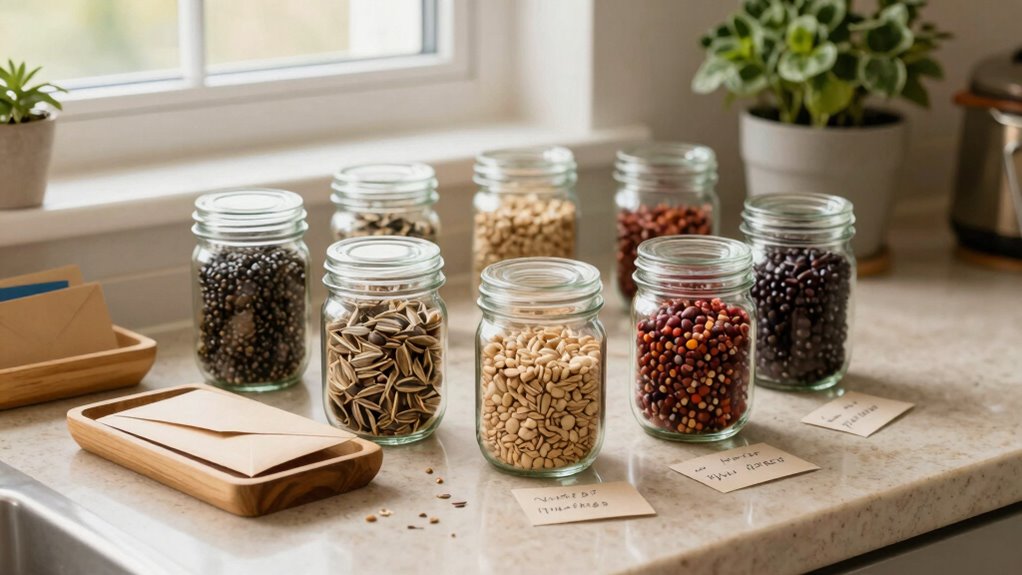
Starting a family seed library at home is a rewarding way to promote sustainability, preserve heirloom varieties, and teach valuable gardening skills. It all begins with understanding seed saving and plant selection. Seed saving involves collecting mature seeds from your favorite plants to grow in future seasons, reducing reliance on store-bought seeds and guaranteeing you have a resilient, adaptable garden. When you practice seed saving, you’re also maintaining genetic diversity and keeping heirlooms alive for generations to come. To start, select healthy, vigorous plants as your seed sources. Focus on plant varieties that thrive in your local climate, resist pests and diseases, and produce tasty, reliable yields. This careful plant selection is vital because the quality of your seeds directly impacts your future harvests.
Starting a family seed library fosters sustainability, preserves heirlooms, and teaches essential gardening skills for resilient, local-focused gardens.
As you choose plants for seed saving, pay attention to their maturity and seed production. Allow some vegetables, herbs, or flowers to fully ripen on the plant before harvesting their seeds. For example, let your heirloom tomatoes turn deep color and soften, or wait until your beans are dry and brittle before collecting seeds. Proper plant selection and seed saving techniques ensure that your seeds are viable and true to their parent plant, which means your garden will become more self-sufficient over time. Additionally, understanding the importance of seed viability can help you better assess the quality and longevity of your stored seeds. Using proper storage techniques will further enhance seed longevity and ensure successful germination in future planting seasons.
Once you’ve collected your seeds, it’s important to clean and store them correctly. Dry your seeds thoroughly in a cool, dark place, then store them in airtight containers like glass jars or paper envelopes labeled with the plant name and date. Proper storage conditions, such as cool temperatures and low humidity, will help maintain seed viability for years. As you expand your seed library, you can develop a system to keep track of the plant varieties you’ve saved, noting which ones perform best and which might need replacing.
Creating a seed library at home isn’t just about saving seeds; it’s about cultivating a deeper connection with your garden and community. Share surplus seeds with neighbors or friends to encourage local gardening and biodiversity. Over time, your seed collection will become a personalized resource, reflecting your family’s gardening preferences and climate considerations. Teaching your children or other family members about seed saving and plant selection turns your garden into a living classroom, fostering a sense of stewardship and sustainability. By integrating these practices, you build a resilient, meaningful family tradition rooted in the joy of growing and sharing your own seeds.
As an affiliate, we earn on qualifying purchases.
Frequently Asked Questions
How Do I Organize and Catalog My Seed Collection Effectively?
To organize and catalog your seed collection effectively, start with clear seed labeling, including plant name, date collected, and source. Use cataloging methods like spreadsheets or seed inventory apps to track details and quantities. Store seeds in labeled, airtight containers sorted by plant type or season. Regularly update your records and rotate older seeds to guarantee viability. This approach keeps your seed library organized, accessible, and easy to expand.
What Are the Best Storage Conditions for Seed Longevity?
Think of seed longevity as a delicate balance—cool, dark, and dry conditions are your best friends. To maintain seed viability, store your seeds in airtight, moisture-proof containers like glass jars or vacuum-sealed bags. Keep them in a cool, stable environment, ideally between 32-41°F (0-5°C). Avoid sunlight and humidity, which can speed up deterioration. Proper storage ensures your seeds remain viable for future planting seasons.
How Can I Ensure Genetic Diversity in My Seed Library?
To guarantee genetic diversity in your seed library, actively select seeds from different plant varieties and sources, and avoid saving seeds from only the most robust plants. Focus on seed preservation by maintaining a wide range of genetic traits, which supports healthy plant breeding. Regularly exchange seeds with other home gardeners or seed savers to introduce new genetics, helping your seed library stay resilient and diverse over time.
Are There Legal Considerations for Sharing Seeds Locally?
You’re walking on thin ice if you don’t check local regulations before sharing seeds. It’s vital to follow rules about seed labeling and local laws to avoid trouble. Some areas have strict regulations on seed variety and source documentation, so always verify these rules first. Doing so guarantees you’re legally protected and helps build trust with your neighbors, preventing misunderstandings and fostering a responsible seed-sharing community.
How Often Should I Update and Refresh My Seed Stock?
You should update and refresh your seed stock annually or after each planting season. Regular seed preservation helps maintain seed vigor and genetic diversity. Keep an eye on seed sourcing to guarantee quality and adaptability, replacing older or less viable seeds with fresh ones from trusted sources. This practice ensures your seed library stays productive, resilient, and ready for planting season after season.
Conclusion
Starting a family seed library is like planting a tiny forest—each seed a promise of growth and future abundance. With a little care and patience, your collection can flourish, passing down stories and sustenance through generations. Embrace each seed as a gift, a whisper from the earth waiting to bloom anew. Before you know it, your family’s garden will be a vibrant tapestry, woven with hope, history, and the promise of tomorrow.
Halloween Picks
halloween
As an affiliate, we earn on qualifying purchases.