In early 20th century St. Louis, milk traveled via organized routes each morning, delivered in glass bottles to homes. Household ice boxes, filled with ice harvested from lakes or rivers, kept the milk cold and fresh without electricity. These ice boxes, along with ice stored in icehouses, played a vital role in preserving the milk for days. If you want to discover more about this historic system, there’s much more to uncover.
Key Takeaways
- Early 20th-century St. Louis milk routes involved careful planning for daily home delivery of glass bottles.
- Ice boxes, lined with tin or wood, kept milk fresh without electricity, relying on ice for cooling.
- Ice was harvested from local lakes or rivers and stored in icehouses for year-round use.
- Refrigeration technology evolved from ice boxes to electric refrigerators, improving milk storage and delivery reliability.
- Milk delivery routines in St. Louis combined route planning with ice-based refrigeration to ensure freshness and efficiency.
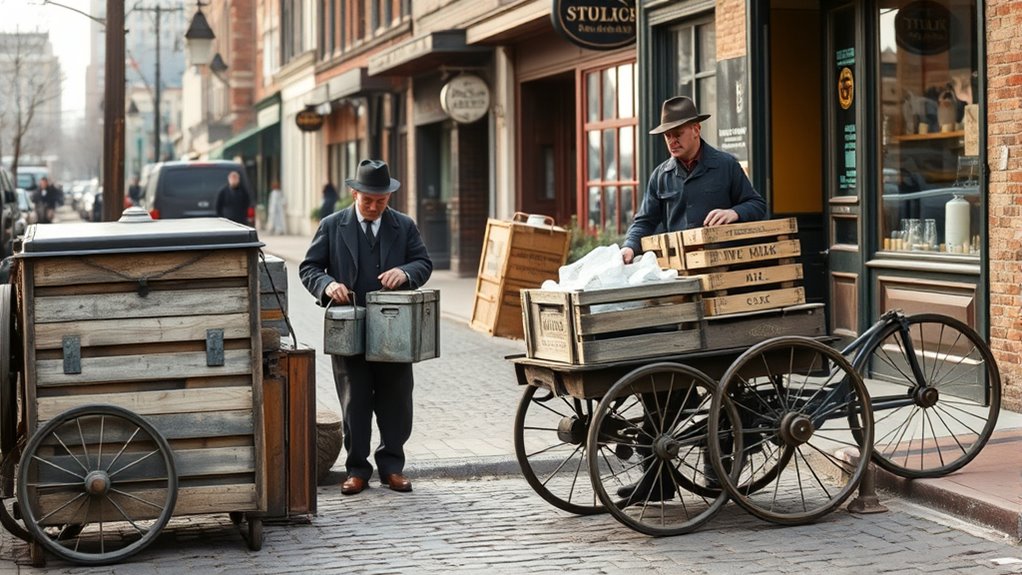
In the early 20th century, St. Louis’s milk delivery methods were quite different from what you might imagine today. Instead of relying on supermarkets or refrigerated trucks, milk arrived at your doorstep through a well-organized system of local dairies. Milkmen would start their routes early in the morning, carefully delivering bottles to homes on designated streets. Your daily milk delivery was a routine that depended heavily on the technological advances of the time, particularly in the domain of refrigeration. During this period, even though refrigeration technology was still evolving, dairies employed various historical refrigeration techniques to keep milk fresh. These included cooling milk in ice-filled tanks or using ice boxes—an essential household item before modern refrigeration became widespread.
Ice boxes played a vital role in preserving perishable goods, especially milk, before the advent of electric refrigerators. You might have had one in your home, lined with tin or wood, with a thick compartment filled with fresh ice. These boxes relied on the simple yet effective method of heat transfer: the ice would absorb heat from the surrounding air and contents, slowing bacterial growth and keeping milk cool for days. Dairies often supplied their milk in glass bottles, which you would place directly into your ice box. This method was convenient because it didn’t require electricity, making it accessible even in homes that couldn’t afford modern appliances. The ice was typically harvested from local lakes or rivers during winter and stored in icehouses, then transported to homes or dairies. This system allowed milk to stay fresh enough for daily consumption, even without the advanced refrigeration techniques we have today. Additionally, some dairies used refrigeration techniques such as ice tanks and ice boxes to extend the freshness of their milk.
Ice boxes kept milk fresh by absorbing heat from ice, a simple, effective refrigeration method before electric refrigerators.
As technology advanced, the reliance on ice boxes gradually diminished, replaced by electric refrigerators that offered greater convenience and reliability. But in the early days, you depended heavily on these simple yet effective methods. The combination of precise milk delivery routes and historical refrigeration techniques helped guarantee that your daily milk supply remained fresh. The milkman’s route was a carefully planned operation, often involving a network of local dairies that maintained strict hygiene standards to prevent spoilage. They understood the importance of keeping milk cold during transit and at home, which is why their vehicles and delivery practices prioritized temperature control.
All in all, the early 20th century in St. Louis was a fascinating time when milk delivery methods and historical refrigeration techniques worked hand in hand. They created a reliable system that brought fresh dairy products directly to your door, relying on innovative yet simple technology to keep milk safe and palatable. Your daily routine was intertwined with these advancements, shaping how communities accessed and enjoyed fresh milk long before modern refrigeration transformed household life.

Antique Ice Box Name Plate, Solid Brass, Ice Box Label in Non Lacquered Brass, Reproduction of Antique White Clad Ice Box Hardware, Beautiful Cabinet Name Plate
Polished Brass – Cast White Clad Ice Box Name Plate nameplate refrigerator Simmons
As an affiliate, we earn on qualifying purchases.
As an affiliate, we earn on qualifying purchases.
Frequently Asked Questions
How Did Milk Routes Evolve Over the Decades in St. Louis?
You’ll notice milk routes in St. Louis evolved markedly over the decades through milk delivery innovations and route optimization. As technology improved, delivery systems became more efficient, allowing for quicker, more reliable service. Route optimization helped drivers cover areas faster and with less effort, reducing costs and increasing freshness. These advancements transformed milk delivery from simple handoffs to highly organized operations, shaping how residents received their daily milk supply.
What Materials Were Traditionally Used for Ice Boxes in St. Louis Homes?
You’d find that traditional ice boxes in St. Louis homes used materials like wood for the exterior, with insulation made from sawdust, charcoal, or cork to keep items cold. These materials helped maintain a cool environment inside, delaying spoilage. You can imagine how these simple yet effective traditional materials played a crucial role before modern refrigeration, making ice boxes essential for preserving dairy and perishable goods during that era.
Are Vintage Ice Boxes Collectible in Today’s Market?
Ever wonder if vintage ice boxes are worth hunting for? They definitely are! These pieces of vintage storage hold significant collectible value today, appealing to antique enthusiasts and retro decor lovers alike. Their nostalgic charm and sturdy construction make them desirable, transforming everyday storage into a statement piece. If you’re into unique collectibles, vintage ice boxes can be a valuable addition to your collection, blending history with timeless appeal.
How Did Refrigeration Impact Local Milk Delivery Services?
Refrigeration technology revolutionized local milk delivery services by making dairy farming more efficient and milk safer to transport. You’d notice that with refrigeration, milk stayed fresh longer, reducing spoilage and allowing home delivery to become more reliable. This innovation eliminated the need for ice boxes, streamlining the process and expanding distribution. As a result, dairy farmers and delivery services could operate more efficiently, ensuring consumers received fresh milk consistently.
What Safety Standards Were Followed for Milk Transportation in St. Louis?
You should know that milk transportation protocols prioritized milk safety, with strict standards to prevent contamination. Notably, in the early 20th century, local regulations mandated refrigeration during transit, reducing spoilage by up to 50%. These safety standards included clean containers, proper refrigeration, and careful handling to ensure milk remained fresh and safe for consumers. Following these protocols protected public health and maintained trust in local dairy delivery services.

2 Pack Glass Milk Bottle with 2 Dispenser Caps, 100% Airtight Heavy Duty Screw Lid. 32 Oz Reusable Glass Water Jug with 3 Lids! Breast Milk Pitcher, Buttermilk, Nut, Juice, Syrup, Coffee Creamer
Solid and durable, keep milk colder: Glass water bottles are more durable and make the milk colder compared…
As an affiliate, we earn on qualifying purchases.
As an affiliate, we earn on qualifying purchases.
Conclusion
Imagine yourself as a traveler through time, riding along the bustling streets of St. Louis. Each milk route is like a gentle river guiding fresh, daily treasures to doorsteps, while ice boxes stand as silent guardians, preserving life’s simple comforts. Together, they weave a story of community and care—silent stewards of tradition. As you reflect, realize that these humble routines are the heartbeat that keeps the city alive, warm, and connected.

VINGLI 14qt Small Ice Chest, Insulated Portable Cooler, Beach Cooler, Retro Vintage Classic Style Hard Metal for Barbeques, Camping, Fishing and Picnics (14 QT, Black)
Durability: Our product features a robust powder coated steel construction, ensuring resistance to rust and fading
As an affiliate, we earn on qualifying purchases.
As an affiliate, we earn on qualifying purchases.

Honeydak Ice Bucket Wooden Barrel with Lid 1.5l Stainless Steel Interior Food Container with Handles for Cocktail Bar Parties Chilling Wine Champagne Home Bar Vintage Rustic Kitchen Decoration
Rustic Barrel Design: experience authentic charm with this whiskey barrel inspired ice bucket featuring wood exterior and stainless…
As an affiliate, we earn on qualifying purchases.
As an affiliate, we earn on qualifying purchases.