Soil conservation districts help prevent another Dust Bowl by promoting sustainable land practices. They work with landowners and communities to implement erosion control, cover cropping, and reduced tillage. These efforts are essential for maintaining healthy soil and preventing environmental disaster. By applying lessons from history, districts focus on science-based policies and community involvement. If you keep exploring, you’ll discover how these initiatives protect resources and guarantee land resilience for future generations.
Key Takeaways
- Soil conservation districts promote science-based land practices to prevent erosion and avoid a repeat of Dust Bowl mistakes.
- Lessons from the Dust Bowl highlight the importance of community engagement in sustainable land management.
- Districts offer incentives and technical assistance for soil-friendly practices like cover cropping and reduced tillage.
- Historically, lack of conservation led to environmental disasters; districts now prioritize education and policy support.
- Protecting soil health ensures long-term land productivity, water quality, and resilience against future environmental crises.
Soil Conservation Districts play a pivotal role in protecting and managing the land to prevent erosion, promote sustainable farming, and preserve natural resources. As someone involved in agriculture or land management, you recognize how essential these districts are in shaping effective strategies. They work closely with local farmers, landowners, and community members to implement practices that reduce soil loss and improve land productivity. One of their key functions is influencing agricultural policies, guaranteeing that regulations support conservation efforts without hindering economic viability. These policies often include incentives for soil-friendly practices like cover cropping, contour farming, and reduced tillage, making it easier for you to adopt sustainable methods. Community engagement is at the heart of these efforts; the districts foster collaboration and education, helping you understand the importance of soil health and conservation. When you participate in district-led workshops or planning sessions, you gain insights into best practices and the benefits of soil stewardship, which can translate into more resilient farming and land use.
Your involvement matters because these districts rely on community input to shape policies that fit local needs. They encourage dialogue among farmers, conservationists, and policymakers, creating a shared sense of responsibility. This collective effort ensures that conservation measures are practical and effective, rather than top-down mandates that might overlook specific challenges you face. By engaging with your local Soil Conservation District, you can access technical assistance, funding, and resources designed to help you implement erosion control measures and adopt long-term sustainable practices. These efforts not only protect your land but also contribute to broader environmental goals, such as water quality improvement and habitat preservation.
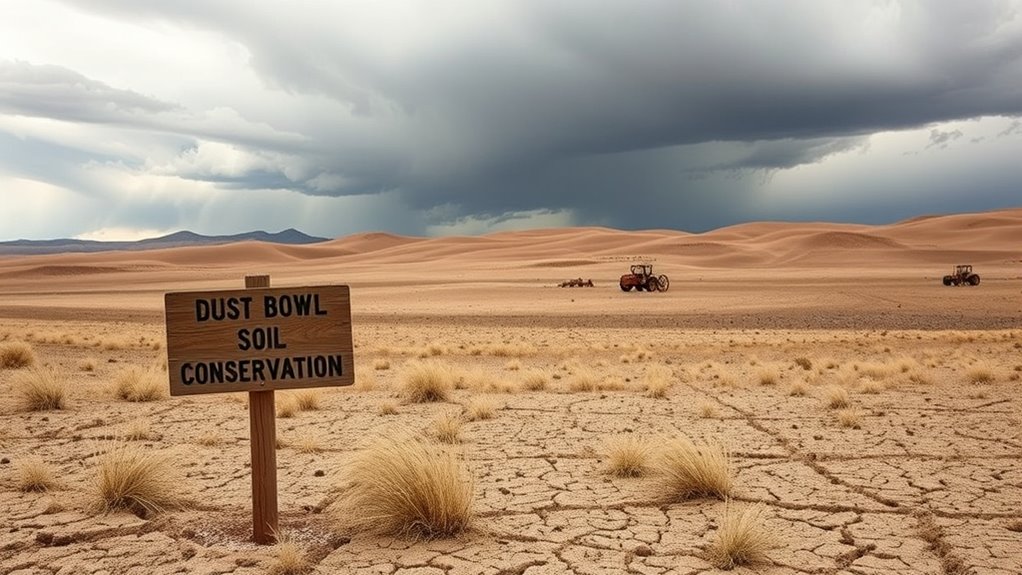
Understanding the history of the Dust Bowl underscores the importance of these districts. During that era, misguided agricultural practices and lack of community engagement led to catastrophic soil erosion and dust storms. Today, Soil Conservation Districts play a critical role in preventing a repeat of such disasters by promoting policies rooted in science and community participation. You’re encouraged to view these districts as partners in your success—supporting policies that balance productivity with conservation and fostering community involvement that ensures everyone’s voice is heard. By working together, you help build resilient, sustainable landscapes that withstand environmental challenges and safeguard resources for future generations. Your active participation and awareness of agricultural policies and community engagement are essential to the ongoing effort to preserve healthy soil and prevent another Dust Bowl scenario.
Frequently Asked Questions
How Do Districts Measure Soil Erosion Rates Effectively?
You measure soil erosion rates effectively by conducting soil testing to analyze soil loss and using erosion mapping to identify vulnerable areas. Soil testing provides data on nutrient depletion and soil depth changes, while erosion mapping creates visual representations of erosion patterns over time. By combining these methods, you gain a thorough understanding of erosion dynamics, enabling targeted conservation efforts and better land management practices to prevent further soil loss.
What Funding Sources Support Soil Conservation Initiatives?
You can find funding opportunities through government programs like the USDA’s Natural Resources Conservation Service, grants, and state or local budgets dedicated to conservation. These funds support policy development and implementation of soil conservation initiatives. Additionally, private foundations and environmental organizations often offer grants. By actively pursuing these sources, you can secure the necessary resources to develop effective policies and carry out conservation projects that protect soil health.
How Do Districts Coordinate With Federal Agencies?
Think of districts as bridges connecting local efforts to federal goals. You coordinate with federal agencies through regular meetings, joint planning, and shared initiatives. By aligning agricultural policies and climate adaptation strategies, you guarantee resources and expertise flow effectively. This teamwork helps protect soil health and combat climate challenges, creating a united front that strengthens conservation efforts. Your collaboration is essential in turning shared visions into tangible environmental progress.
What Training Is Provided to Local Landowners?
You receive training on sustainable farming practices and erosion control techniques through local programs. These sessions teach you how to implement soil conservation methods effectively, helping prevent erosion and improve land productivity. You might attend workshops, field demonstrations, or informational meetings that cover best practices for maintaining healthy soil. This training empowers you to adopt environmentally friendly farming methods, ensuring long-term land productivity and reducing environmental impact.
How Is Success of Conservation Projects Evaluated?
You evaluate the success of conservation projects by monitoring improvements in soil health and engaging the community. You track changes in soil quality, erosion reduction, and crop yields, which reflect project impact. Additionally, you gather feedback from local landowners and community members to guarantee ongoing support and participation. This combined approach helps you measure how well conservation efforts are restoring and maintaining healthy, sustainable land for the future.
Conclusion
By supporting soil conservation districts, you help prevent future dust bowls and protect our land. Some might think these efforts take too much time or effort, but the truth is, a little effort today saves us from disaster tomorrow. When you get involved, you’re part of a solution that safeguards farms, communities, and the environment. So don’t wait—take action now, and together, we can assure a healthier, more resilient future for everyone.