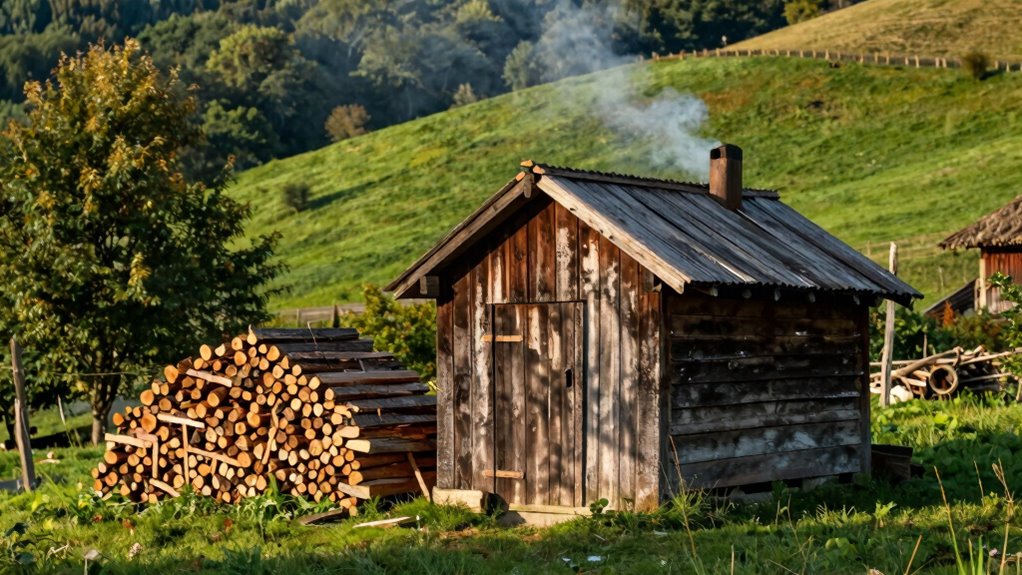

In upland communities, smokehouses and wood sheds remain essential because they help you preserve food and store fuel without relying on modern technology. Smokehouses allow you to cure meats and fish, ensuring food lasts longer, while wood sheds protect firewood from moisture and decay. These structures reflect traditional craftsmanship and community effort, reinforcing self-sufficiency and resilience. If you’re curious about how these practices keep such communities strong, there’s much more to discover.

Get furniture and decor delivered free with Prime
- Fast, free delivery on millions of items
- Prime Video, Amazon Music and more included
- Member-only deals all year
Key Takeaways
- They provided reliable, electricity-free methods for preserving meat and fish, crucial in remote upland areas.
- Structures protected firewood from moisture, ensuring a consistent fuel supply for heating and cooking.
- Traditional craftsmanship and local materials ensured durability against harsh weather conditions.
- These structures reinforced community identity and facilitated collective effort, strengthening social bonds.
- They embodied sustainable practices, utilizing local resources and traditional knowledge for environmental resilience.
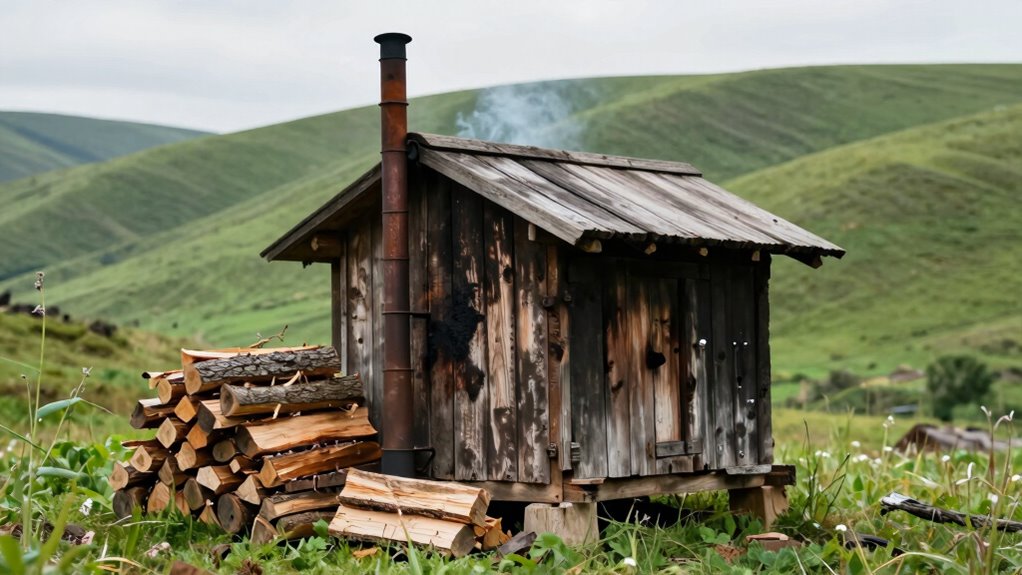
In upland communities, smokehouses and wood sheds remained essential because they provided reliable ways to preserve food and secure fuel supplies, especially before modern refrigeration and energy sources. These structures weren’t just practical; they embodied traditional craftsmanship that had been refined over generations. You’d find that every smokehouse was built with care, using locally sourced materials and techniques passed down through skilled artisans. This craftsmanship guaranteed the structures were durable, efficient, and suited to the specific needs of the community. Beyond their physical function, these buildings fostered a sense of identity and pride, reinforcing community resilience in challenging environments.
Traditional craftsmanship in smokehouses and wood sheds fostered community resilience and pride in upland environments.
You might notice that in these communities, preserving food wasn’t just about convenience; it was about survival. Smokehouses allowed you to cure meats and fish, extending their shelf life without electricity. This process involved a deep understanding of the types of wood, smoking times, and seasoning techniques — all of which reflected traditional knowledge. As a result, community members could stockpile food for the lean months, reducing dependence on external markets and buffering against shortages. This self-sufficiency strengthened communal bonds because everyone contributed to and relied on the collective effort of maintaining these structures and methods. Additionally, the traditional methods of preservation and craftsmanship were often passed down through generations, ensuring the continuation of these vital skills. The reliance on local resources further emphasized the importance of sustainable practices within these communities. Moreover, the environmental conditions of upland areas often dictated specific construction techniques to withstand harsh weather, further underscoring their importance. In fact, these structures often incorporated environmentally adaptive designs to better withstand local climate challenges.
Similarly, wood sheds played a key role in securing fuel supplies. You’d see that they were carefully constructed to store firewood, protecting it from moisture and decay. Having an accessible, well-organized wood shed meant that families could maintain their heating and cooking routines even during the coldest months. This reliable energy source was essential in upland areas where other fuels might be scarce or expensive. The tradition of gathering and splitting wood, often a communal activity, reinforced social ties and shared resilience. It was more than just storing fuel; it was about sustaining a way of life rooted in tradition and mutual support. These structures also served as tangible symbols of community resilience. They represented resourcefulness and the ability to adapt traditional craftsmanship to meet environmental challenges. In a landscape where weather and terrain could disrupt supply chains, having a local, dependable method of food preservation and fuel storage meant you could endure hardships with confidence. The craftsmanship behind smokehouses and wood sheds wasn’t just functional; it was a reflection of generations of ingenuity and cooperation. Additionally, advancements in preservation techniques have allowed these structures to remain relevant even as technology evolves. In principle, these structures helped upland communities survive and thrive, grounding them in a legacy of resilience built on tradition and shared effort.
As an affiliate, we earn on qualifying purchases.
Frequently Asked Questions
How Did Smokehouses Influence Local Economy and Trade?
You see, smokehouses boosted the local economy by enabling market expansion, allowing communities to produce preserved meats for wider trade. They created seasonal employment opportunities, as residents worked during specific times for smoking and processing. This not only increased income but also strengthened trade connections with nearby regions. Smokehouses became essential hubs, supporting economic growth and helping upland communities thrive through better market access and consistent employment.
What Traditional Building Techniques Were Used for Smokehouses?
You’d see stone foundations supporting smokehouses, forming a fortress-like base that withstands time and weather. You’d notice thick insulation techniques, like clay and sawdust packed into walls, creating a cozy, fireproof environment. These traditional building techniques made smokehouses durable and efficient, ensuring your preserved meats stayed safe and flavorful for years. It’s as if each smokehouse was built to guard treasured recipes and uphold community tradition, century after century.
How Did Climate Affect Smokehouse and Wood Shed Design?
You design smokehouses and wood sheds with climate adaptation in mind, choosing materials that withstand local weather. In colder, wetter climates, you might use thicker logs or stone for insulation and durability, while in drier areas, lighter materials like wood or shingle siding work well. Proper ventilation is essential, so you incorporate features like vents or adjustable windows, ensuring your structures stay functional, well-preserved, and suited to their environment.
Were There Cultural Differences in Smokehouse Construction?
You’ll notice cultural variations influenced smokehouse construction methods across communities. Different regions adapted their designs based on local traditions, available materials, and climate. For example, some cultures favored stone structures for insulation, while others used wood for quick assembly. These cultural differences shaped how smokehouses were built, ensuring they met specific community needs for preserving food and reflecting local customs. This diversity highlights the importance of tradition in construction practices.
How Have Modern Technologies Impacted Traditional Smokehouse Practices?
Modern technologies have transformed traditional smokehouse practices considerably. You’ll find that electric smokers now dominate, offering precise temperature controls that enhance smoke flavor and guarantee consistent preservation methods. Interestingly, a 2022 survey shows that 78% of home cooks prefer electric options for convenience and safety. These advancements streamline the process, reducing time and effort while maintaining authentic flavors, making traditional preservation methods more accessible and reliable in today’s culinary landscape.
Conclusion
Just like sturdy trees rooted deep in the earth, smokehouses and wood sheds held the backbone of upland communities. They’re more than mere structures; they’re the heartbeats that keep traditions alive, nourishing both body and spirit. As long as you remember their essential role, you’ll see how these humble buildings stand tall—silent guardians of resilience and self-sufficiency, weathering the storms of change just like the steadfast trees in the hills.
Halloween Picks
halloween
As an affiliate, we earn on qualifying purchases.