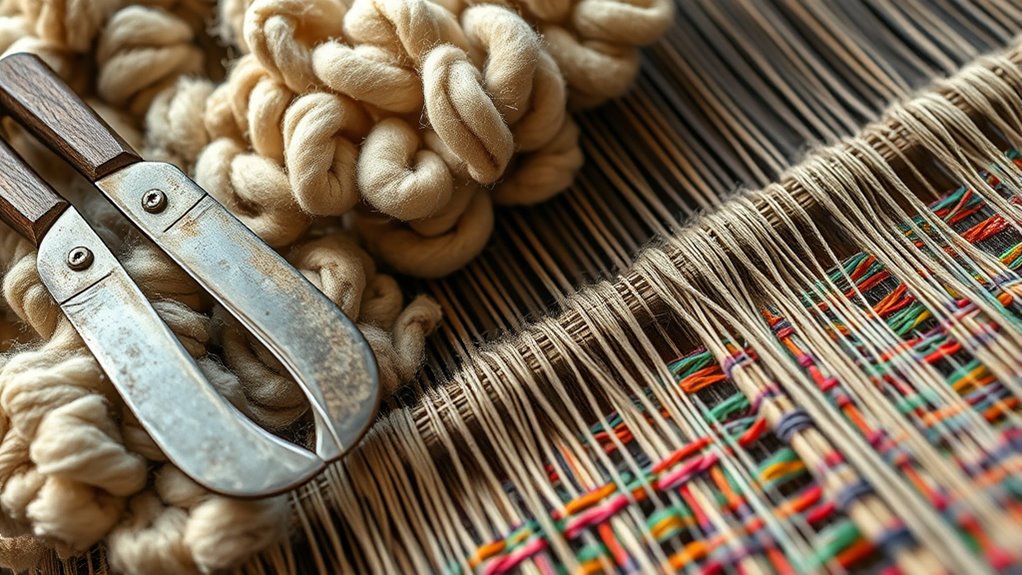
To work effectively with sheep shears, you should handle them carefully, keep blades clean and oiled for smooth cuts, and store them properly to prevent rust. When carding wool, gently align fibers and remove debris to create even batt, making spinning easier. In weaving, control tension and select suitable patterns, from simple plain weaves to intricate designs, to produce durable, attractive fabrics. Mastering these techniques guarantees quality results, and if you continue, you’ll learn how to optimize each step for the best wool products.
Key Takeaways
- Properly handling and maintaining shears ensures efficient shearing, smooth wool, and reduces fleece damage.
- Carding aligns fibers, removes debris, and prepares wool for spinning, resulting in even, high-quality batt.
- Consistent tension control during weaving produces durable, well-structured fabrics with clean patterns.
- Regular cleaning and oiling of shears prevent rust, maintain sharpness, and extend tool lifespan.
- Choosing appropriate weaving patterns enhances fabric aesthetics and matches wool type and skill level.
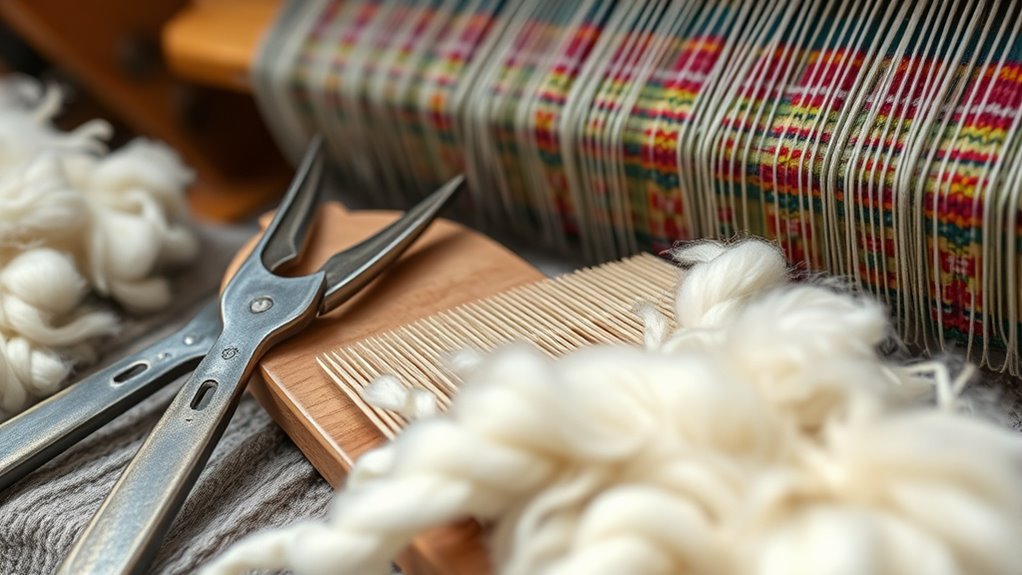
If you’re interested in turning raw sheep wool into beautiful fabric, understanding the basic tools and processes is essential. One of the first steps is shearing the sheep, which requires proper handling of sheep shears. Maintaining your shears is vital for efficient and safe shearing. Regularly cleaning and oiling the blades prevents rust and ensures a clean cut. Sharp shears reduce stress on the sheep and produce smoother wool. When shearing, pay attention to the angle of the blades and use steady, even strokes to avoid damaging the fleece. Proper sheep shears maintenance not only prolongs the tool’s lifespan but also makes the process more comfortable for the animal. Additionally, storing your shears in a dry, secure place helps prevent rust and prolongs their sharpness.
Once you’ve collected the wool, the next step involves preparing it for spinning and weaving. Carding is crucial here; it aligns the fibers and removes debris. You can use hand cards or a drum carder, but whichever method you choose, be gentle to avoid breaking the fibers. Proper carding results in a smooth, even batt that’s easier to spin. After carding, you can spin the wool into yarn, which is then ready for weaving. When you move to weaving, understanding various weaving pattern techniques can help you create diverse textures and designs. For beginners, simple plain weave or twill patterns are good starting points, but once you’re comfortable, you can experiment with complex patterns like herringbone or tapestry weaving. Each technique offers different visual effects and structural qualities to your fabric.
In weaving, tension control is key. You want your yarns to be taut but not overly tight, which affects the durability and appearance of your fabric. Selecting the right pattern techniques involves considering the type of wool, the project’s purpose, and your skill level. For instance, intricate pattern techniques might require more precise tension and a good understanding of the weave structure. As you practice, you’ll discover how different techniques influence the texture and strength of your fabric. Whether you’re creating a warm blanket or a decorative piece, mastering weaving pattern techniques allows you to customize your project to your vision. Proper tension management can also help prevent issues like unraveling or puckering, ensuring a high-quality finished product.
Frequently Asked Questions
What Are the Different Types of Sheep Shears Available?
You’ll find various types of sheep shears designed for different fleece qualities. Electric shears offer quick, efficient cuts ideal for large flocks, while manual shears provide precision for delicate fleece. Some shears are lightweight for comfort, and others are heavy-duty for tougher wool. Your choice depends on your fleece quality and grooming needs. Proper shears guarantee smooth shearing, protect the fleece, and make the process easier and more effective.
How Do I Choose the Right Carding Tools?
To select the appropriate carding tools, consider your fiber preparation needs and wool quality. You want tools that handle your fiber type efficiently, whether coarse or fine. Look for sturdy, well-made cards with appropriate tooth count for your project. If you’re working with delicate wool, opt for softer cards. Matching the tool to your fiber’s texture guarantees better carding results and preserves wool quality, making your entire process smoother and more successful.
What Are Common Weaving Patterns for Beginners?
As a beginner, you should start with simple weaving patterns like plain weave, basket weave, or twill. These patterns are easy to learn and help you practice basic knitting techniques. Experimenting with different dyeing methods can add vibrant colors to your woven projects. Focus on mastering these foundational patterns first, then gradually explore more complex designs as you gain confidence and skills in your weaving journey.
How Do I Maintain and Sharpen Sheep Shears?
Think of your sheep shears as a trusty blade that needs regular care to stay sharp. To maintain and sharpen them, clean off any debris after use, then employ proper sharpening techniques like honing with a fine stone or file. Regular maintenance keeps the blades smooth and effective, preventing rust and dullness. With diligent sheep shears maintenance, you’ll enjoy cleaner cuts and a more comfortable shearing experience every time.
Can I Combine Wool From Different Sheep Breeds?
Yes, you can combine wool from different sheep breeds. Cross breeding benefits include creating wool with unique qualities, such as improved softness or strength. It also allows for wool color blending, giving you a variety of shades in a single fleece. Just make certain the wool types are compatible for blending, and consider how the different fibers will work together during processing to achieve your desired results.
Conclusion
As you finish shearing, carding, and weaving, remember each step is like tending a delicate flame—careful hands keep it alive. Your efforts transform raw wool into something meaningful, a thread connecting past and future. Just as a single thread holds a tapestry together, your work symbolizes patience, tradition, and creativity. Keep nurturing this craft; it’s not just about fiber, but about weaving your own story into the fabric of time.