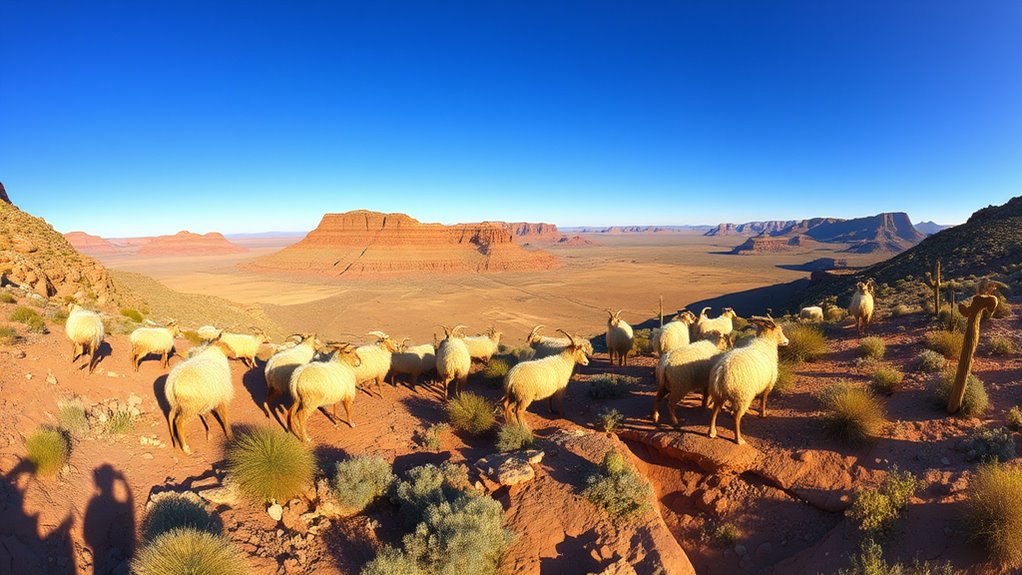

Managing sheep and goats on high desert ranges requires careful grazing practices, predator protection, and adapting to rugged terrain and variable weather. You should monitor grazing patterns, rotate pastures, and prevent overgrazing to protect the land’s health. Using guard animals and secure fencing helps keep predators at bay. Adjusting to seasonal changes and ensuring reliable water and forage sources are key. Keep exploring for more tips to help you succeed in this challenging environment.
Key Takeaways
- Sheep and goats graze selectively on grasses and shrubs, helping maintain plant diversity in high desert ecosystems.
- Proper grazing management prevents overgrazing, soil erosion, and habitat degradation on rugged desert ranges.
- Predator control strategies like guard animals and fencing protect livestock in remote, predator-rich high desert areas.
- Adaptation to seasonal weather involves supplemental feeding and water sourcing to ensure year-round livestock health.
- Sustainable land and livestock stewardship balances animal needs with preserving the fragile high desert environment.
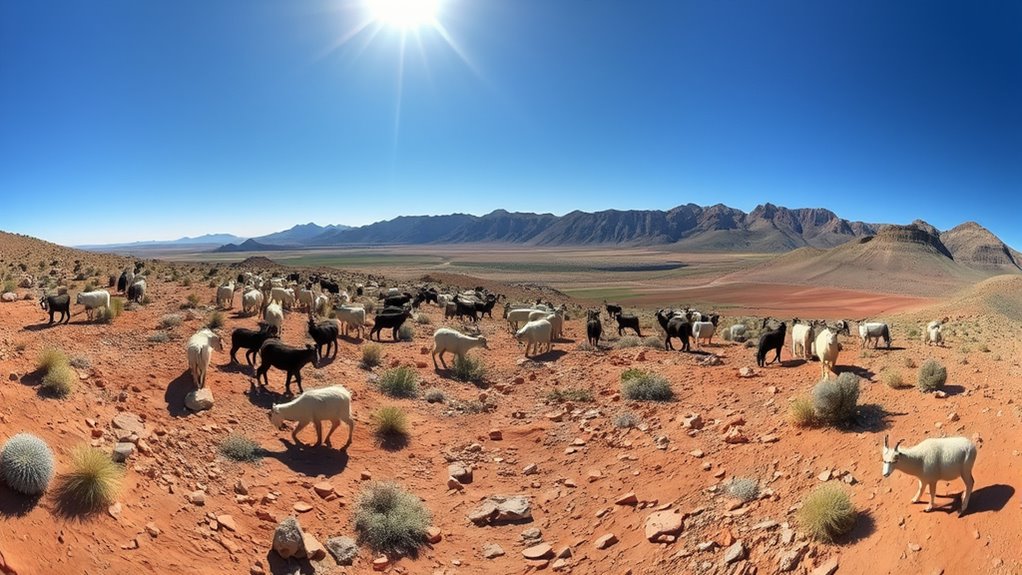
On the sweeping high desert ranges, sheep and goats thrive despite harsh conditions that challenge many other animals. The key to their survival lies in effective grazing management, which guarantees they get enough nutrition without damaging the fragile ecosystem. You need to carefully monitor their grazing patterns, rotating pastures when necessary to prevent overgrazing that could lead to soil erosion or habitat degradation. By managing grazing wisely, you help maintain the balance between livestock health and the health of the land. This approach not only sustains your sheep and goats but also preserves the native plant life and soil stability that support the entire ecosystem.
Dealing with predators is another essential aspect of managing sheep and goats on these ranges. Predators such as coyotes, bobcats, or mountain lions pose a constant threat, especially when animals are grazing freely. You must implement predator control strategies to protect your flock. This might include using guard animals like dogs, llamas, or donkeys that naturally deter predators, or installing fencing designed to keep threats at bay. Regularly patrolling the range and monitoring animal behavior also helps you respond quickly if a predator attack occurs. Your vigilance and proactive predator control measures are indispensable for maintaining a secure environment where your animals can graze peacefully.
The challenging terrain and unpredictable weather add another layer of complexity. You learn to adapt your grazing management practices to seasonal changes, guaranteeing your sheep and goats have access to fresh forage year-round. During dry seasons, you might need to supplement their diet with hay or processed feed, but always aim to rely on natural forage as much as possible. Proper water sources are equally important, and you often need to develop or maintain reliable watering points that are accessible to your animals without causing land damage.
Your role also involves understanding the behavior and needs of sheep and goats in this environment. Goats tend to browse more than sheep, nibbling on shrubs and woody plants, which means you have to plan for diverse forage sources. Sheep prefer grasses, so managing pasture diversity ensures both types of animals thrive. You must balance their nutritional needs with conservation efforts, recognizing that overtaxing the land can lead to long-term problems.
Effective grazing management is crucial for sustaining both your livestock and the health of the land, especially in such a demanding environment. Ultimately, managing sheep and goats on high desert ranges requires a combination of strategic grazing practices, vigilant predator control, and ongoing land stewardship. Your efforts directly influence the health of your livestock and the sustainability of the range, making your role both challenging and rewarding. By staying attentive and adaptive, you help guarantee these resilient animals continue to thrive amid the rugged beauty of the high desert.

KANE Creep Feeder
PERFECT FOR BABY PIGS: Designed for starting baby pigs on dry starter feed and can be used until...
As an affiliate, we earn on qualifying purchases.
Frequently Asked Questions
How Do Sheep and Goats Adapt to High Desert Temperature Fluctuations?
You can help sheep and goats adapt to high desert temperature fluctuations through thermal regulation and dietary adjustments. They naturally shed or grow thicker coats to manage heat, and you should provide shade and plenty of water for cooling. Adjust their diets by offering more fibrous plants in cooler times and energy-rich foods during colder periods. This keeps their body temperature stable and guarantees they stay healthy in extreme temperature changes.
What Are Common Predators of Sheep and Goats in High Desert Areas?
In high desert areas, you might encounter wildlife friends like coyotes, bobcats, and hawks seeking a meal. To keep your sheep and goats safe, focus on predator prevention—secure fencing and vigilant supervision work wonders. Wildlife encounters can be minimized through smart management, ensuring your herd stays protected from natural predators without unnecessary stress. By understanding these common threats, you can better safeguard your animals in the wild, open landscape.
How Does Altitude Affect Sheep and Goat Health and Productivity?
Altitude effects can profoundly influence sheep and goat health and productivity. Higher elevations may cause altitude sickness, reducing their growth and reproductive rates. You might notice decreased feed efficiency and lower weight gains as oxygen levels drop. To maintain ideal sheep health, you should monitor animals closely, provide supplemental oxygen if needed, and adapt management practices to mitigate altitude stress. Proper care ensures they stay healthy and productive despite the challenging environment.
What Water Sources Are Most Reliable for High Desert Livestock?
Think of water sources as the lifeblood of your herd—reliable supplies keep them thriving. You should prioritize wells, springs, and carefully managed ponds, guaranteeing water quality stays high and contamination is avoided. Grazing management plays a crucial role, too, as it helps conserve water and prevent overuse. By maintaining these sources and managing grazing wisely, you ensure your livestock remain healthy and productive in the harsh high desert environment.
How Do Seasonal Changes Influence Grazing Patterns on High Desert Ranges?
Seasonal changes considerably influence your grazing patterns on high desert ranges. In spring and early summer, you can rely on abundant seasonal forage availability, encouraging localized grazing. As summer progresses and forage diminishes, adopting migratory grazing strategies helps you move livestock to areas with better forage. During winter, you’ll need to adjust by seeking out resilient plants or supplemental feed, ensuring your animals stay healthy despite decreased natural forage.

Livestock Mineral Feeder - Little Giant - Cattle Mineral Feeder, 1 Quart (Item No. MF1GREEN)
SIMPLIFIES MEASUREMENT AND CONSUMPTION - Livestock mineral feeder simplifies measurement and consumption of multiple minerals.
As an affiliate, we earn on qualifying purchases.
Conclusion
As you watch sheep and goats grazing on those high desert ranges, it’s almost like nature’s quiet harmony. The way they thrive amid rugged peaks and sun-drenched plains feels like a perfect coincidence—an unspoken balance. You realize that their resilience and adaptability mirror your own journey through life’s unpredictable terrain. In this unexpected rhythm of survival, you see that sometimes, the most unlikely places hold the greatest harmony, connecting you to the wild beauty around you.

Toddmomy Livestock Salt Block Holder Thick Feeder Tray 6.69X6.69X5.70In for Cattle Sheep Goat Salt Brick Licking Box Easy Assembly Farm Feeder
Core Feeding Function: This salt block holder securely holds livestock salt blocks and mineral lick bricks, providing an...
As an affiliate, we earn on qualifying purchases.

SUPVOX Salt Block Holder Thick Livestock Lick Brick Box for Cattle Sheep Goat Horse Mineral Feeding Tray Farm Salt Feeder
Core Functionality: This salt block holder is designed specifically for livestock salt block feeding, providing a sturdy and...
As an affiliate, we earn on qualifying purchases.