Sheep grazing can accelerate soil erosion by disturbing the soil surface, reducing plant cover, and increasing runoff during heavy rains. Their trampling creates pathways that loosen soil particles and break crusts, exposing the ground to wind and water erosion. Overgrazing worsens these effects, leading to bare patches and vegetation loss, which weakens the land’s stability. Implementing proper grazing practices and conservation methods can help protect your rangelands, and exploring more will give you better strategies to manage these impacts.
Key Takeaways
- Sheep grazing impacts soil stability by trampling, breaking crusts, and creating pathways for runoff, increasing erosion risk.
- Selective and overgrazing by sheep reduce vegetation cover, exposing soil to wind and water erosion.
- Soil erosion in rangelands diminishes nutrient-rich topsoil, decreasing forage availability and accelerating land degradation.
- Grazing management strategies, like rotational grazing and controlled stocking, help prevent soil erosion and promote ecosystem health.
- Implementing soil conservation practices, such as reseeding and maintaining ground cover, enhances rangeland resilience against sheep-induced erosion.
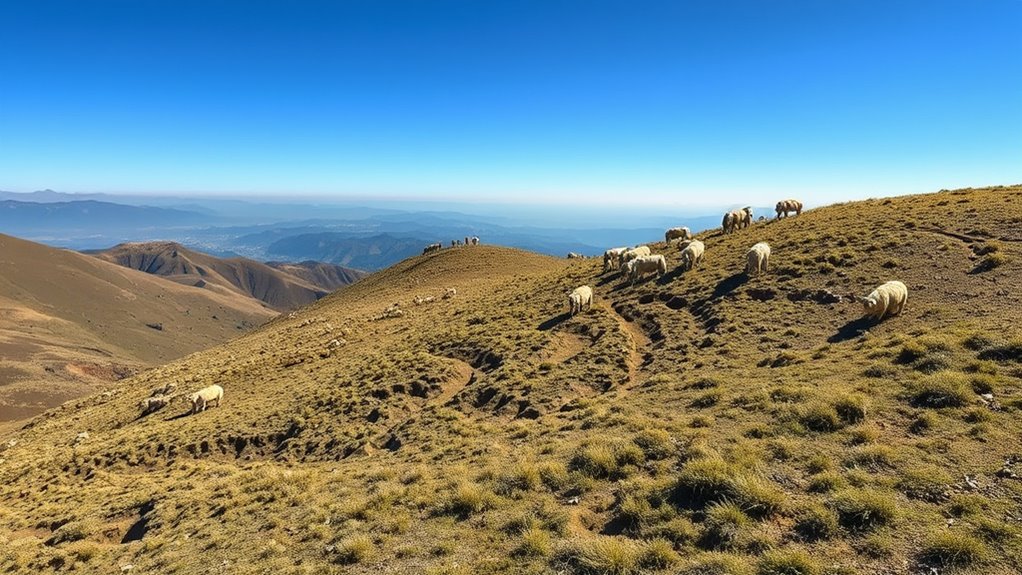
Sheep grazing can considerably impact soil stability and the health of rangelands, making erosion a common concern for range managers. When sheep graze intensively or improperly, the grazing impacts on the land can accelerate soil erosion, threatening the long-term productivity of the ecosystem. Understanding how grazing influences soil conservation is critical for maintaining sustainable rangelands. Grazing impacts include trampling, selective feeding, and removal of vegetation cover, all of which directly affect soil stability. As sheep walk across the land, their hooves disturb the soil surface, breaking down crusts and loosening particles that would otherwise help hold soil in place. This trampling can create pathways that facilitate runoff, especially during heavy rain, washing away topsoil—the most nutrient-rich and essential layer for plant growth.
Moreover, when sheep selectively graze on certain plants, they can reduce the plant cover that protects the soil from erosion. Overgrazing can lead to bare patches where vegetation is sparse or absent, exposing the soil to wind and water erosion. Without enough plant roots to anchor the soil, the land becomes more vulnerable to degradation. This process can initiate a cycle of soil loss, decreased forage availability, and further overgrazing, compounding the erosion problem. To counteract this, range managers focus on implementing grazing management strategies that promote soil conservation, such as rotational grazing or controlled stocking rates. These approaches help maintain a healthy balance between grazing pressure and vegetation recovery, ensuring that soil remains protected and erosion is minimized.
In addition, soil conservation practices, including reseeding and maintaining buffer zones, play a crucial role in mitigating erosion caused by grazing impacts. Keeping adequate ground cover prevents runoff and reduces sediment loss. Proper grazing practices not only protect the soil but also promote the resilience of the entire ecosystem. By managing sheep grazing effectively, you can prevent excessive soil disturbance, preserve vegetation cover, and enhance the land’s natural ability to resist erosion. A careful balance between grazing intensity and conservation efforts ensures rangelands stay productive, healthy, and less prone to degradation. Ultimately, understanding and managing grazing impacts is essential for sustainable soil conservation, allowing the land to support both livestock and native plant communities for generations to come. Recognizing the importance of soil stability in land management is vital to preventing long-term degradation and maintaining ecosystem health.
Frequently Asked Questions
How Do Sheep Selectively Impact Different Types of Grasses?
You notice that sheep use selective grazing, choosing some grasses over others. This behavior impacts grass diversity because they tend to eat the more palatable species first, leaving less desirable plants behind. Over time, this can lead to a decrease in certain grass types and an imbalance in the ecosystem. Your management efforts should aim to promote a mix of grasses, encouraging sheep to graze more evenly and maintain healthy, diverse ranges.
What Role Do Sheep Play in Controlling Invasive Plant Species?
You can use sheep, domesticated for wool production, to control invasive plant species effectively. By grazing selectively, sheep target invasive plants, helping restore native vegetation. Their natural foraging habits reduce invasive spread without chemicals or mechanical removal. Implementing strategic grazing plans maintains ecological balance and promotes healthy ecosystems. Your active management with sheep offers an eco-friendly, sustainable solution to invasive species, supporting biodiversity while benefiting wool production and land health.
How Does Sheep Grazing Influence Soil Microbial Communities?
Sheep grazing impacts soil microbial communities by promoting soil nutrient cycling and enhancing microbial diversity. As sheep feed on vegetation, they create disturbance and organic matter deposits that foster diverse microbes. This activity improves nutrient availability and soil health, supporting plant growth. You’ll notice that grazing helps break down organic material, encouraging beneficial microbes, which in turn sustains a resilient and productive soil ecosystem essential for sustainable land management.
What Are the Long-Term Ecological Impacts of Sheep Overgrazing?
You might notice that sheep overgrazing causes long-term ecological damage, disrupting plant communities and soil health. As sheep population dynamics shift, overgrazing intensifies, leading to habitat degradation and reduced biodiversity. Without proper grazing management strategies, these effects worsen, causing erosion and loss of ecological resilience. Over time, these impacts threaten the sustainability of the ecosystem, making it harder for native species to thrive and for land to recover naturally.
How Can Range Scientists Balance Sheep Grazing With Conservation Efforts?
You can balance sheep grazing with conservation by implementing sustainable grazing practices that protect the land. For example, controlling grazing intensity helps prevent overuse, which affects 70% of rangelands worldwide. Incorporate predator management to reduce sheep losses, encouraging healthier populations. By combining these strategies, you guarantee ecological health, support local economies, and preserve biodiversity, creating a harmonious balance between grazing needs and conservation goals.
Conclusion
As you consider sheep erosion and range science, one thing becomes clear: the future depends on your actions. Will you choose sustainable practices, or let the land suffer? The balance you strike now could determine the health of these ranges for generations. The question remains—what’s your next move? The answer might just hold the key to a thriving, resilient landscape, or it could lead to unforeseen consequences you’re not yet prepared for.