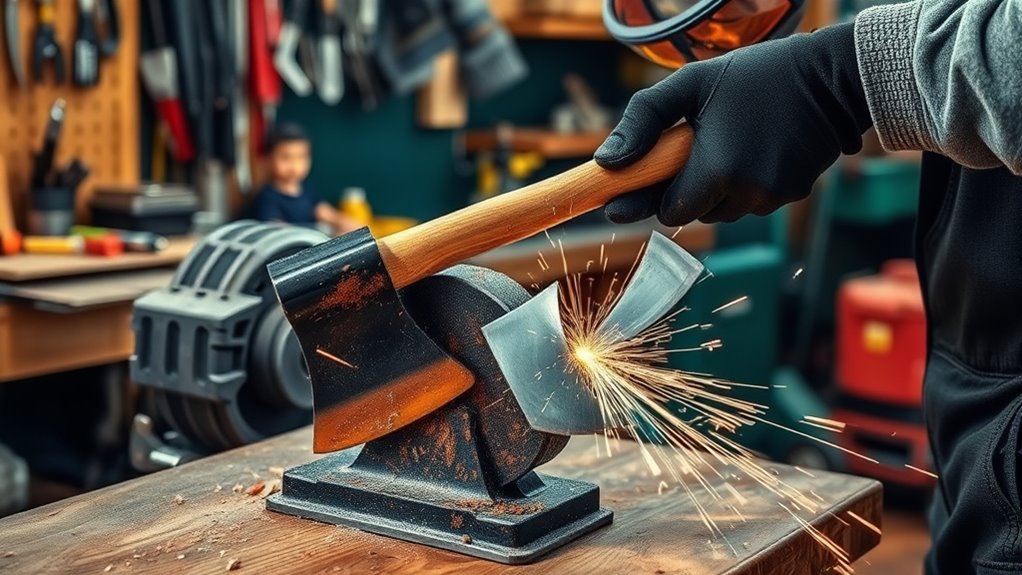

To sharpen axes and mower blades safely, always wear protective gear like gloves, safety glasses, and a dust mask. Secure tools firmly and use the right sharpening tools, maintaining consistent angles for effective edges. Work carefully along the bevel, removing small amounts of metal. After sharpening, clean debris and apply oil to prevent rust. Following proper safety and maintenance routines will keep your tools safe, efficient, and long-lasting—if you want to master the process, keep exploring these essential tips.
Key Takeaways
- Always wear safety gear such as gloves, safety glasses, and a dust mask before starting sharpening tasks.
- Secure tools firmly in a vise or on a stable surface to prevent slipping during sharpening.
- Use appropriate sharpening tools and maintain a consistent angle to ensure effective and safe sharpening.
- Regularly inspect tools for damage and replace severely damaged blades instead of sharpening them.
- Clean and oil tools after sharpening to prevent rust and maintain a sharp, safe edge.
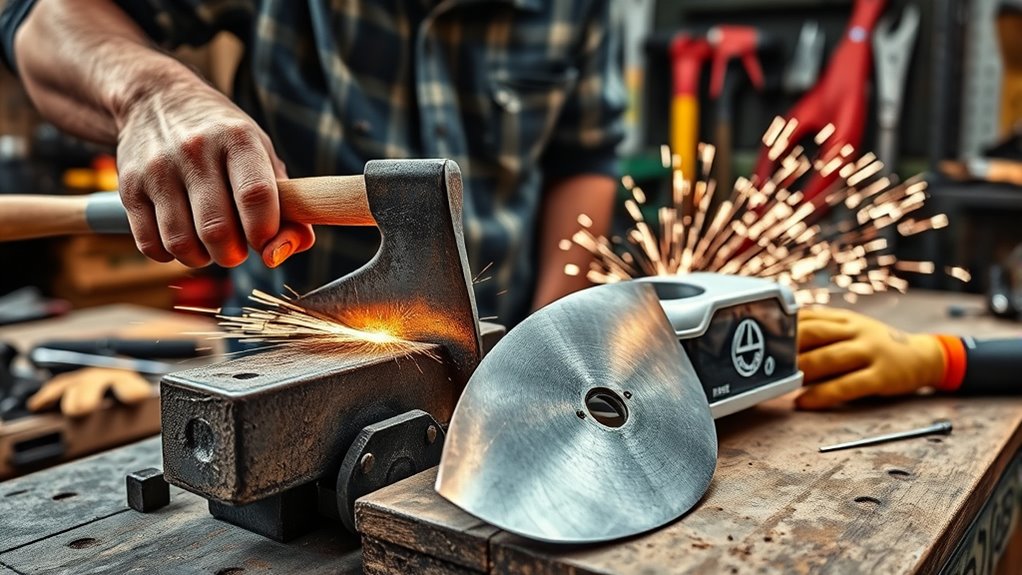
Have you ever noticed how dull axes and mower blades can make your chores more difficult and time-consuming? When blades are dull, you need to apply more force, which increases the risk of accidents and causes unnecessary strain. To keep your tools efficient and safe, sharpening them regularly is vital. But before diving into the process, it’s essential to prioritize safety gear. Wearing sturdy gloves protects your hands from sharp edges and accidental slips. Safety glasses shield your eyes from sparks, metal shavings, or debris that might fly during sharpening. A dust mask can also be helpful if you’re working with grinding tools that produce fine particles. These safety precautions aren’t just for your protection—they help you work more confidently and efficiently.
Sharpening dull blades requires safety gear for confident, efficient, and safe work.
When it comes to maintenance tips, start by inspecting the blade or axe for any significant damage like cracks or chips. If the edge is severely damaged, consider replacing the tool instead of sharpening it. For minor dullness, secure the tool firmly in a vise or on a stable surface to prevent slipping. Use the appropriate sharpening tools—such as a file, sharpening stone, or grinder—depending on the blade’s material and shape. Always maintain the correct angle; for axes, about 25 to 30 degrees is typical, while mower blades often require a specific angle specified by the manufacturer. Consistency in angle ensures a sharp edge that holds longer and cuts effectively.
Keep your movements controlled and deliberate. When using a file or grinder, work along the existing bevel, removing small amounts of metal at a time. Check frequently for sharpness and smoothness. After sharpening, remove any metal shavings with a wire brush or cloth, and wipe down the blade to remove debris. Applying a light coat of oil can prevent rust and keep the edge in good condition. Remember, dull blades not only make your work harder but can also be dangerous, increasing the chance of slips or loss of control.
Incorporating these safety gear and maintenance tips into your routine guarantees that your tools stay sharp, efficient, and safe to use. Regular maintenance saves you time and effort in the long run, and safety should always be your top priority. When you take care of your blades properly, you’re ensuring cleaner cuts, easier chores, and minimizing the risk of injury. So, always wear your safety gear, follow proper maintenance tips, and sharpen your axes and mower blades regularly—your tools will thank you, and so will you.

SHARPAL 103N All-in-1 Knife Garden Tool Multi-Sharpener for Lawn Mower Blade, Axe, Hatchet, Machete, Pruner, Hedge Shears, Scissors
VERSATILE – The most versatile sharpener in the market to sharpen and hone both single and double beveled…
As an affiliate, we earn on qualifying purchases.
As an affiliate, we earn on qualifying purchases.
Frequently Asked Questions
Can I Sharpen Blades Without Removing Them From Equipment?
You can sharpen blades without removing them, but it’s not advisable for proper blade maintenance. Using sharpening techniques like a file or grinder while the blade is attached can be risky and may not produce the best results. For safety and ideal sharpness, it’s best to remove the blade first. This allows you to maintain a consistent edge and avoid injury. Always follow safety guidelines during blade maintenance to ensure safe and effective sharpening.
What Safety Gear Should I Wear During Sharpening?
Think of safety gear as your trusty shield while sharpening blades. You should wear protective eyewear to guard against sparks and metal shards, and gloves to protect your hands from cuts and abrasions. These items are essential because they keep you safe from potential hazards. Never skip this gear, as it’s your best defense. By wearing protective eyewear and gloves, you guarantee your sharpening session remains safe and effective.
How Often Should I Sharpen My Axe or Mower Blades?
You should sharpen your axe or mower blades every 8 to 10 hours of use or when you notice decreased cutting performance. Regular blade maintenance helps guarantee efficiency and safety. Keep an eye on dullness, nicks, or uneven edges, and sharpen as needed to maintain ideal performance. Following proper sharpening frequency not only extends your tools’ lifespan but also makes your work easier and safer.
Can I Sharpen Blades With a Regular File?
Yes, you can sharpen blades with a regular file, but it depends on the blade materials and sharpening techniques. For softer metals, a file works well and is straightforward. However, for tougher materials like hardened steel, specialized tools like a sharpening stone or grinder are better. Always follow proper sharpening techniques, keep the blade at the correct angle, and work carefully to avoid damaging the blade.
What Are Signs My Blades Need Sharpening Urgently?
Your blades are like a chef’s knife—when they’re dull, everything takes extra effort. Signs you need sharpening urgently include uneven cuts, excessive vibration, or grass that looks torn rather than clean. Pay attention to blade material; some metals dull faster. Use proper sharpening techniques, like grinding or honing, to restore sharpness. Don’t ignore these signs, or you’ll compromise cutting quality and damage your equipment.
SHARPAL 103N All-in-1 Knife Garden Tool Multi-Sharpener for Lawn Mower Blade, Axe, Hatchet, Machete, Pruner, Hedge Shears, Scissors
VERSATILE – The most versatile sharpener in the market to sharpen and hone both single and double beveled…
As an affiliate, we earn on qualifying purchases.
As an affiliate, we earn on qualifying purchases.
Conclusion
Just like a blacksmith refines their craft with careful hands, you can keep your tools sharp and safe. Remember, neglecting proper sharpening can turn a simple task into a dangerous ordeal—think of Icarus flying too close to the sun. By following these safety tips, you guard yourself and ensure your blades perform their best. With patience and caution, you’ll master the art of sharpening, turning everyday chores into a smooth, effortless rhythm.
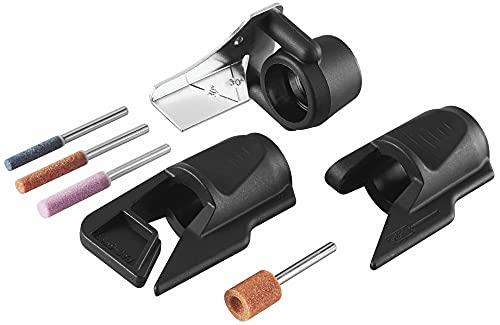
Dremel A679-02 Sharpening Attachment Kit, For Sharpening Outdoor Gardening Tools, Chainsaws, and Home DIY Projects,
Simplified to support your backyard and garden projects and giving your go-to tools a new lease on life….
As an affiliate, we earn on qualifying purchases.
As an affiliate, we earn on qualifying purchases.

Made Here Co. Multi-use Lubricating Penetrant Oil – High-Performance, Rust Prevention, Non-Toxic Formula, 4oz – Ideal for Home, Automotive, and Industrial Use
High-Performance Formula: Engineered for maximum efficiency, our Lubricating Penetrant Oil penetrates deeply to free stuck parts, lubricate, and…
As an affiliate, we earn on qualifying purchases.
As an affiliate, we earn on qualifying purchases.