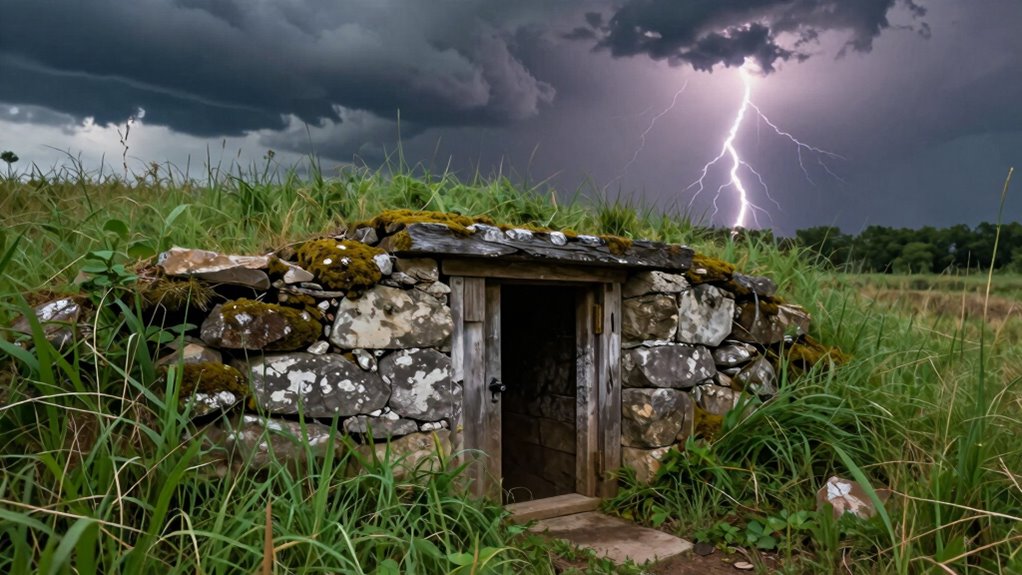

In tornado country, root cellars were built deep underground to protect your food and supplies from harsh weather and storms. Their sturdy stone or concrete walls, combined with water-resistant materials, made them tough enough to withstand tornado force. Staying cool and dry, these cellars kept perishables fresh long after power outages. Their design also symbolized resilience and resourcefulness in tough times. Keep exploring to discover more about how these structures made communities safer and more prepared.

Get furniture and decor delivered free with Prime
- Fast, free delivery on millions of items
- Prime Video, Amazon Music and more included
- Member-only deals all year
Key Takeaways
- Deep root cellars provide enhanced protection from tornado force and severe weather damage.
- Their underground placement offers better insulation and temperature stability for stored goods.
- Depth reduces exposure to tornado debris and high winds, safeguarding food and supplies.
- Deeper structures improve moisture control and prevent spoilage in storm-prone areas.
- Historical necessity and resourcefulness drove communities to build deeper, more resilient underground storage.
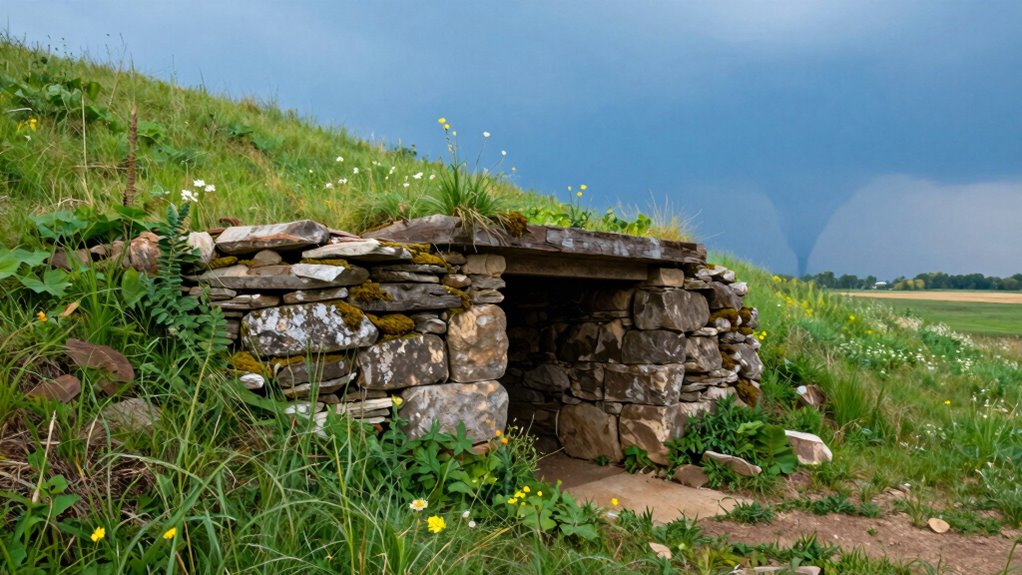
In tornado-prone regions, storing fresh produce safely requires more than just a cool, dark space; it calls for a sturdy, underground root cellar. These cellars offer a reliable way to preserve food through harsh weather, especially when power outages threaten refrigeration. By going beneath the ground, you create a natural barrier against temperature fluctuations, keeping produce fresh longer. The cool, stable environment of an underground preservation space is ideal for storing root vegetables, canned goods, and other perishables, ensuring they stay edible and nutritious well into the winter months. You’ll notice that the construction of these underground preservation spaces often prioritized sturdiness and practicality. Thick stone or concrete walls shield the contents from the force of tornadoes, while small, well-placed ventilation openings prevent moisture buildup. This combination of features helped protect food and, by extension, families during severe weather events. Today, many people restore or maintain these structures not only for their functional benefits but also as cultural heritage sites. They embody a blend of necessity, tradition, and craftsmanship that’s hard to find in modern food storage solutions.
Additionally, water-resistant materials play a crucial role in ensuring the longevity and effectiveness of root cellars in storm-prone areas. Incorporating a variety of construction materials can further enhance a root cellar’s resilience against extreme weather, making it a vital part of disaster preparedness. Proper construction techniques are essential to ensure the integrity and safety of these underground structures, especially in regions susceptible to tornadoes. Moreover, understanding the sound science behind underground storage can help optimize the design and effectiveness of these shelters. For example, employing insulation strategies can significantly improve temperature regulation inside the cellar. In essence, root cellars in tornado country aren’t just about food preservation—they’re about survival. Their underground design offers security against the chaos of storms, while their historical significance highlights the resourcefulness of those who built them. As weather patterns grow more unpredictable, the value of these traditional underground structures remains relevant. They remind us that sometimes, the best way to weather a storm is to go beneath the surface—literally—and draw strength from the ingenuity of the past. Whether used today or preserved as a cultural landmark, root cellars stand as enduring symbols of resilience in tornado-prone communities.
As an affiliate, we earn on qualifying purchases.
Frequently Asked Questions
How Effective Are Root Cellars Against Tornado Damage?
Root cellars are quite effective against tornado damage because of their underground durability and tornado-resistant design. You’ll find they provide shelter from high winds and flying debris, thanks to their sturdy, subterranean construction. Their underground location minimizes exposure to storm forces, making them a reliable refuge during tornadoes. By combining underground durability with tornado-resistant design, root cellars offer a safe, protective space that withstands extreme weather conditions.
What Materials Are Best for Constructing a Tornado-Proof Root Cellar?
Think of your root cellar as a fortress, built with resilience in mind. Use reinforced concrete for its strength and durability, acting like armor against tornado forces. Add underground insulation to maintain a stable temperature, and moisture barriers to prevent water intrusion. These materials work together like a shield, keeping your supplies safe and dry even in the storm’s fury. Your tornado-proof root cellar becomes a sanctuary amid chaos.
Can Modern Technology Enhance Traditional Root Cellar Safety?
Yes, modern technology can enhance your traditional root cellar’s safety. You can incorporate underground insulation to regulate temperature and prevent moisture damage, making it more resilient. Additionally, a wind-resistant design strengthens the structure against tornado-force winds. Using advanced materials and engineering principles, you guarantee your root cellar remains secure and functional, providing peace of mind during severe weather events.
How Long Can Perishable Items Typically Be Stored in a Root Cellar?
Imagine you’re browsing vintage photos of root cellars, and you wonder how long perishables last. Typically, in a well-maintained root cellar, you can store items like potatoes, carrots, and apples for several months—often 3 to 6 months—thanks to preservation techniques. Proper temperature and humidity control extend storage duration, keeping your produce fresh and safe until you’re ready to use them.
Are There Any Legal Restrictions on Building Root Cellars in Tornado Zones?
You need to check local building codes and property restrictions before building a root cellar in tornado zones. Some areas may have specific regulations to guarantee safety and structural integrity, especially in high-risk regions. It’s essential to consult your local planning department or zoning office to get the proper permits and understand any restrictions. Following legal guidelines helps protect you and ensures your root cellar complies with safety standards.
Conclusion
As you step into these underground sanctuaries, you can almost hear the whispers of history echoing through damp stone walls. Root cellars, nestled deep beneath tornado-prone plains, stand as silent guardians of survival, their cool shadows cradling the bounty of seasons past. In their cool darkness, you feel the resilience of those who relied on them, a quiet proof to ingenuity amid nature’s fierce tempests. They’re more than storage—they’re a rooted part of this land’s story.
Halloween Picks
halloween
As an affiliate, we earn on qualifying purchases.