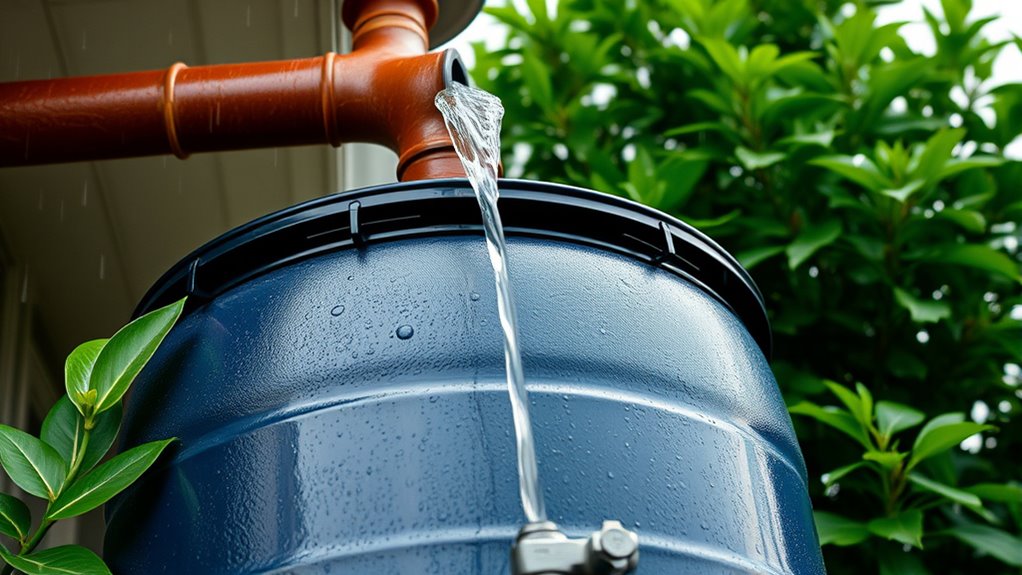

To establish your initial rainwater barrel system, begin by selecting a sturdy, level location near your downspout, and install a diverter to direct water into the barrel. Use mesh screens or filters to keep debris and insects out, and make certain the lid fits tightly to prevent pests. Regularly inspect and clean your barrel to prevent algae and sediment buildup. Keep learning to discover how proper maintenance and filtration can maximize your system’s efficiency.

Get furniture and decor delivered free — and shop member deals
- Fast, free delivery on millions of items
- Access to Prime Big Deal Days deals on October 6–7
- Prime Video, Amazon Music and more included
Key Takeaways
- Install a mesh or fine cloth filter at the top of the barrel to keep out debris and insects.
- Position the barrel on a level, sturdy, and elevated surface near a downspout for efficient water collection.
- Connect a diverter to your roof’s gutter system to direct rainwater into the barrel effectively.
- Regularly inspect and clean the barrel, inlet screens, and filters to prevent algae buildup and blockages.
- Cover the top with a tight-fitting lid or screen to prevent pests, debris, and mosquito breeding.
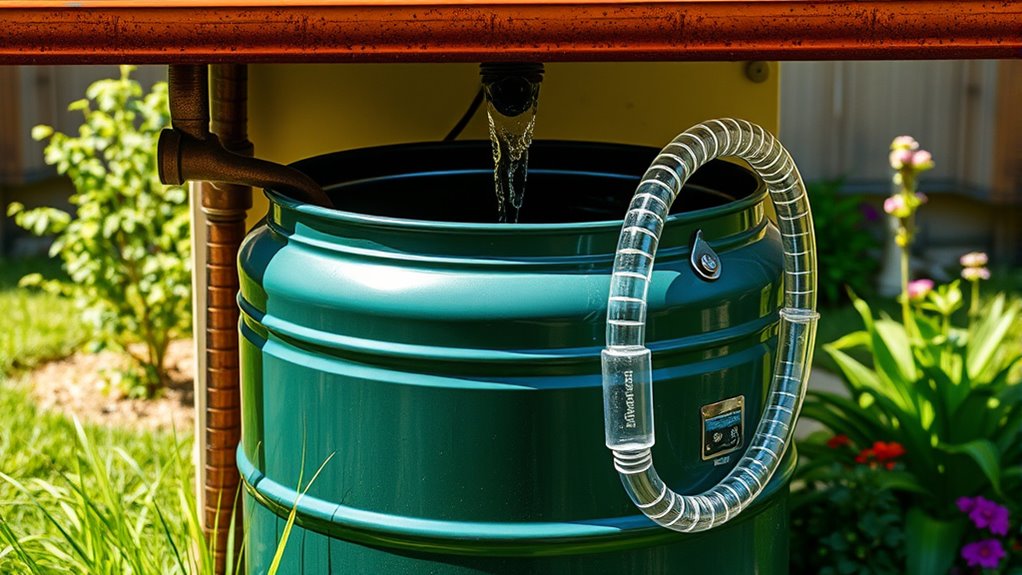
Rainwater harvesting is an effective way to collect and store rainwater for later use, helping you reduce your dependence on traditional water sources. When you set up your first barrel system, the key is to guarantee that the water you collect remains clean and safe for its intended purpose. This begins with proper rainwater filtration. Installing a simple filter at the top of your barrel prevents leaves, debris, and insects from contaminating your stored water. A mesh screen or a fine cloth can work well as a first line of defense. For more thorough filtration, consider adding a second filter or a sediment trap inside the barrel, especially if you plan to use the water for drinking or gardening.
Once your filtration system is in place, barrel maintenance becomes vital. Over time, debris can accumulate at the bottom of the barrel, and algae may grow if the water isn’t properly managed. Regularly inspect your barrel for dirt, sediment, and any signs of algae or mosquito breeding. Rinsing out the barrel every few months helps keep the water fresh and prevents blockages in your outlet spigot. Keep your inlet screen clean to maintain effective rainwater filtration, and ensure the lid fits tightly to avoid debris or pests entering the system.
Regular inspection and cleaning keep your rainwater barrel functioning effectively and prevent issues.
Positioning your barrel correctly also impacts its efficiency. Place it on a level surface, preferably elevated on a sturdy platform, so you can easily access the spigot and use gravity to your advantage when watering plants or filling containers. Make sure the area around the barrel is clear of leaves or dirt that could wash into the system during rainstorms. Connecting a downspout diverter to your gutter system directs rainwater directly into your barrel, minimizing runoff loss and guaranteeing a steady supply.
Another aspect of barrel maintenance involves protecting the stored water from mosquitoes and other pests. Using mosquito dunks or installing fine mesh screens over all openings prevents breeding insects. Covering the top of your barrel with a tight-fitting lid or screen keeps unwanted animals out and reduces evaporation. Regularly checking your system’s components ensures everything functions smoothly, from filters to spigots.
Additionally, understanding that proper filtration and regular maintenance are crucial components of a successful rainwater harvesting system can help prevent contamination and ensure water quality.
rainwater harvesting barrel with diverter
As an affiliate, we earn on qualifying purchases.
As an affiliate, we earn on qualifying purchases.
Frequently Asked Questions
What Are the Legal Regulations for Rainwater Harvesting in My Area?
You should first check your local permits and water rights regulations before setting up a rainwater harvesting system. Many areas require permits or have restrictions on collecting rainwater, especially if water rights are involved. Contact your local government or environmental agency to understand the rules. Ensuring compliance helps you avoid fines or legal issues and allows you to safely and responsibly harvest rainwater for your needs.
How Do I Prevent Mosquito Breeding in the Barrel?
To prevent mosquito breeding in your barrel, you should focus on mosquito prevention techniques. Make sure your barrel has a tight-fitting lid to block mosquito entry. Regularly inspect and clean the barrel to remove any standing water or debris where mosquitoes might lay eggs. You can also add mosquito dunks or biological larvicides safe for water to keep larvae from developing, providing an effective barrier against mosquito breeding.
What Maintenance Is Required for the Rainwater Harvesting System?
Did you know that regular maintenance can extend your rainwater system’s lifespan by up to 50%? You should check your filters regularly and clean or replace them as needed to keep debris out. Also, inspect for leaks to prevent water loss and damage. By staying on top of filter maintenance and leak inspection, you’ll guarantee your rainwater harvesting system functions efficiently and lasts longer.
Can Rainwater Be Used for Drinking Without Filtration?
You might wonder if rainwater can be used for drinking without filtration, but water purification is essential for safety concerns. Rainwater naturally contains contaminants like bacteria and debris, so drinking it directly isn’t recommended. To verify it’s safe, you should filter and purify the water properly. Using proper filtration and purification methods protects you from potential health risks and guarantees that the water is safe for consumption.
How Much Space Is Needed to Set up a Barrel System?
You’ll need enough space for your barrel system, considering storage capacity and placement considerations. Typically, a standard barrel requires about 3 to 4 feet of space around it for easy access and maintenance. You should also account for the size of the barrel itself and any additional equipment, like filters or downspouts. Guarantee your chosen spot is level, stable, and close to your water collection point for efficiency.
Conclusion
Now that you’ve set up your rainwater barrel, you’re holding a small piece of the sky’s gift, a symbol of harmony between nature and you. Each drop captured is like saving a tiny fraction of the earth’s generosity, ready to nurture your plants and sustain your needs. As you step back and watch the water fill, remember you’re becoming a steward of the rain’s cycle—an ongoing dance of life, renewal, and respect for the world around you.
Halloween Picks
halloween
As an affiliate, we earn on qualifying purchases.