
In the 19th century, rail spurs transformed agriculture by connecting farms directly to main railway lines, allowing crops like wheat and corn to reach markets faster. These short branches encouraged farmers to settle closer to transportation routes, leading to the growth of grain towns built around grain elevators and loading points. This infrastructure boosted local economies and shaped settlement patterns. If you keep exploring, you’ll discover how these developments reshaped rural America and its communities.
Key Takeaways
- Rail spurs connected rural farms to main lines, enabling direct grain shipment and fostering settlement growth near transportation hubs.
- Grain towns emerged at key junctions, becoming regional centers for storage, loading, and distribution of agricultural products.
- The development of rail infrastructure stimulated local economies through increased crop access, improved market prices, and support for related businesses.
- The presence of rail spurs influenced settlement patterns, encouraging communities to develop close to rail lines and grain elevators.
- Long-term, rail spurs transformed remote rural areas into vital parts of the agricultural economy, shaping settlement and economic development in the 19th century.
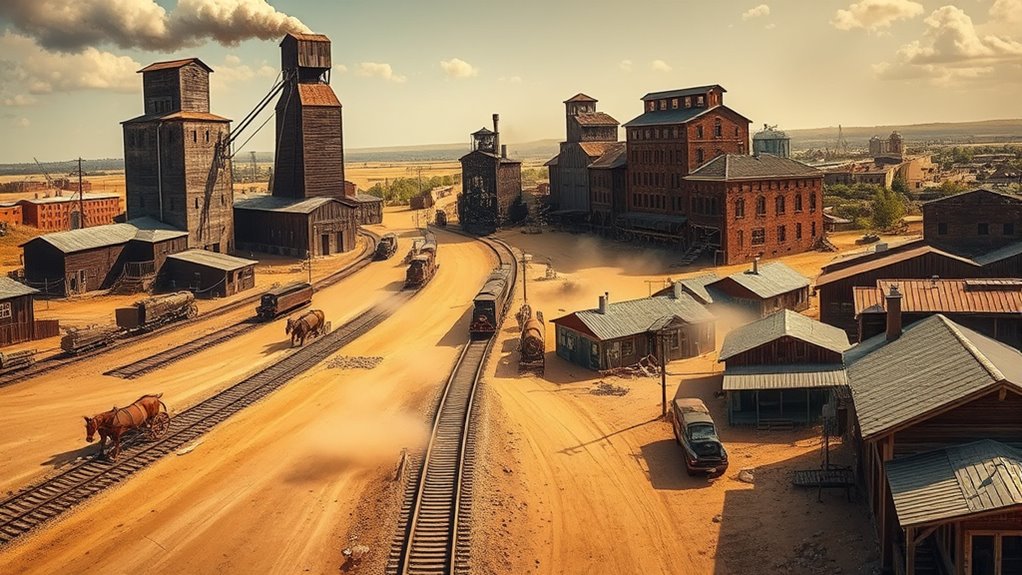
Have you ever wondered how small towns become key players in the agricultural economy? It all starts with the development of rail spurs and grain towns during the 19th century. Rail spurs, which are short railway branches connecting main lines to rural areas, transformed isolated farms into vibrant hubs of activity. These spurs enabled farmers to send their grain directly to larger markets, eliminating the long, uncertain haul by wagon or river. As a result, towns sprouted along these rail lines, becoming critical nodes in the regional economy. These grain towns quickly gained prominence because they served as collection points for local farmers, facilitating the movement of vast quantities of wheat, corn, and other crops to national and international markets. The presence of rail spurs directly influenced settlement patterns, encouraging farmers to establish farms closer to these transportation routes. This, in turn, led to the rapid growth of small communities, which often sprang up around key junctions or grain elevators, the central hubs for storing and loading grain onto trains.
The economic impact of rail spurs and grain towns extended beyond just transportation. They created a ripple effect, stimulating local businesses such as grain mills, feed stores, and equipment suppliers. Towns that once relied solely on subsistence farming or nearby waterways found new vitality as transportation infrastructure expanded. Farmers could now access broader markets, get better prices for their crops, and reinvest in their land and equipment. This increased productivity accelerated settlement patterns, drawing more settlers seeking opportunities in farming and trade. It also encouraged the development of self-sufficient communities that relied on local resources and infrastructure. Moreover, the growth of rail spurs encouraged specialization in agriculture. Farmers began focusing on crops that could be efficiently shipped via rail, which contributed to regional crop diversity and economic stability. These towns often became the backbone of the local economy, with their success tied directly to the efficiency of the rail network. The strategic placement of rail spurs meant that some towns flourished while others faded, depending on their proximity to major rail lines and the volume of grain they handled. Overall, the advent of rail spurs and grain towns during the 19th century reshaped settlement patterns and had a lasting economic impact, turning remote rural areas into essential components of the nation’s agricultural backbone.
Frequently Asked Questions
How Did Rail Spurs Influence Local Economies Beyond Grain Trade?
Rail spurs boost local economies by encouraging industrial diversification beyond grain trade. You’d see new businesses emerge, like manufacturing and retail, taking advantage of easier transportation. These spurs also cause labor market shifts, prompting workers to seek jobs in different sectors. As a result, communities grow more resilient and vibrant, with varied employment opportunities and economic stability, all driven by improved access and infrastructure that rail spurs provide.
What Architectural Styles Were Common in 19th-Century Grain Town Buildings?
You’ll notice that 19th-century grain town buildings showcase a charming mix of architectural diversity, often reflecting vernacular styles adapted locally. Common styles include simple brick or wood structures, with some featuring decorative cornices or gabled roofs. It’s funny how practicality and local materials shaped these designs, making each town’s architecture uniquely suited to its environment. This blend of styles made these buildings both functional and visually interesting, telling stories of their time.
How Did Farmers Adapt to New Transportation Routes in Grain Towns?
You adapt to new transportation routes by embracing grain storage innovations, which help you preserve your harvest for market. These routes connect you more efficiently to rail spurs, reducing transportation time and costs. As a result, the farming community changes, with more cooperative efforts and specialized facilities. You find yourself able to sell your grain faster, increasing profits and encouraging growth in your town’s economy.
Were There Any Environmental Impacts Associated With Rail Spur Construction?
Building rail spurs often leaves the environment scarred, like a wound on the landscape. You’ll notice soil disruption and habitat fragmentation, as construction clears land and splits ecosystems apart. These changes can harm local plants and animals, disrupting natural flow and breeding grounds. So, while rail spurs boost growth, they also carve deep ecological wounds, reminding you that progress sometimes comes at the environment’s expense.
How Did Rail Spur Development Vary Across Different Regions?
You’ll notice that rail spur development varied greatly across regions due to regional disparities in resources and economic needs. In some areas, technological innovations like improved track-building methods accelerated expansion, while other regions lagged behind. This uneven growth shaped local economies, with more developed regions benefiting from faster transportation, and less developed areas struggling to keep pace. These differences highlight how regional disparities influenced the spread and impact of rail infrastructure.
Conclusion
As you walk through these historic grain towns, you can still see the rusted rail spurs stretching out like forgotten veins, linking distant fields to bustling markets. The grain silos stand tall, catching the sunlight like giants watching over the land. You realize how these iron tracks and golden waves of wheat shaped a nation’s growth, turning quiet towns into essential hubs. It’s a vivid reminder of how rail spurs fueled dreams and transformed the landscape forever.