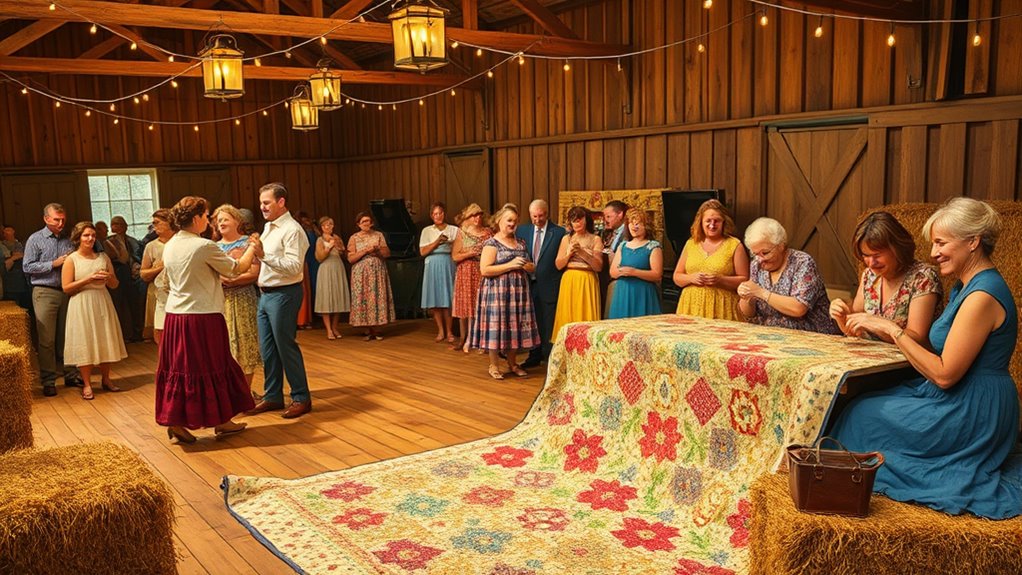

Quilting bees and barn dances act as social glue by bringing community members together for shared activities that build trust and strengthen bonds. These traditions allow you to connect across generations, share stories, and foster a sense of belonging. They create spaces where everyone, regardless of background, can contribute and feel valued. As you explore more, you’ll see how these timeless customs helped shape resilient communities that still inspire today.
Key Takeaways
- Quilting bees and barn dances fostered social cohesion by encouraging cooperation and shared experiences among community members.
- These traditions conveyed cultural stories, values, and heritage, strengthening community identity across generations.
- Participating in group activities built trust and broke social barriers, creating a sense of belonging for all involved.
- Such gatherings served as essential social glue, maintaining relationships and offering entertainment in rural communities.
- Contemporary community efforts draw inspiration from these traditions to promote connection and cultural preservation.
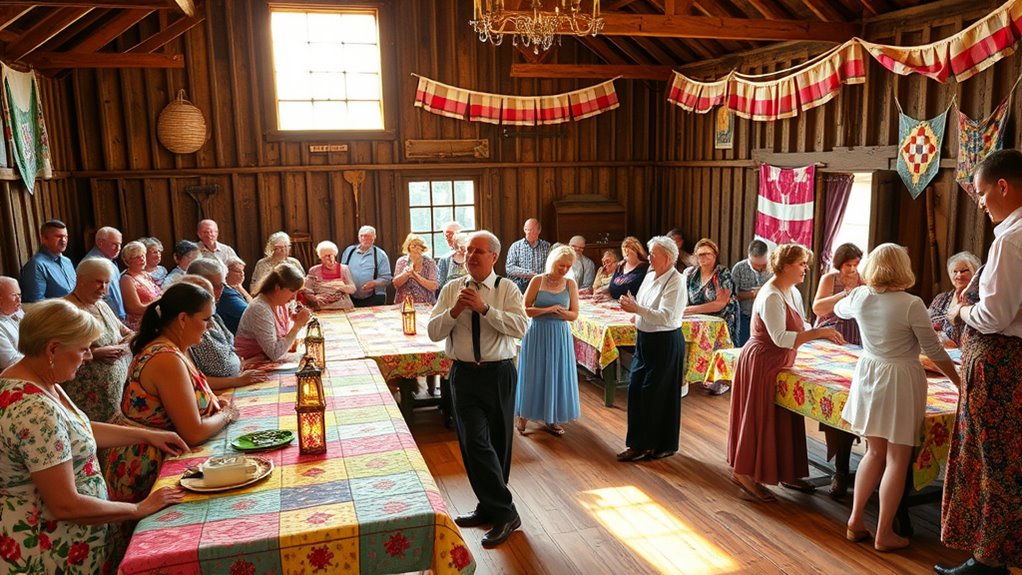
Have you ever wondered how community traditions like quilting bees and barn dances brought neighbors together in earlier days? These gatherings weren’t just about the activities themselves; they served as essential tools for community bonding, weaving people into tighter social fabric. Folk traditions like quilting and dancing carried cultural stories and shared values, creating a sense of belonging that extended beyond individual households. When neighbors gathered for a quilting bee, they didn’t just sew fabric—they stitched relationships, exchanging stories and laughter as they worked side by side. Each quilt told a story, often reflecting local history, family heritage, or collective hopes. The process fostered cooperation and trust, as everyone contributed their skills and ideas. Similarly, barn dances provided a lively setting for social interaction. The music, the steps, and the shared joy of dancing created an environment where social barriers dissolved. People from different backgrounds mingled freely, strengthening community ties through collective participation. Additionally, these traditions often helped pass down cultural values and skills, ensuring that community bonds remained strong through generations.
These folk traditions thrived because they offered more than entertainment—they reinforced social cohesion. In rural communities especially, where distances between homes could be significant, such gatherings became essential for maintaining relationships and keeping community spirits high. The act of working together on a quilt or stepping in rhythm during a barn dance created a shared experience that couldn’t be replicated through isolated activities. Folks felt valued and connected, knowing they contributed to something larger than themselves. Over time, these traditions helped pass down cultural values and skills, ensuring that community bonds remained strong through generations. They also provided a safe space for newcomers to integrate, making it easier to forge friendships and establish roots.
In essence, folk traditions like quilting bees and barn dances served as social glue—binding neighbors through shared effort and joy. They transformed simple acts into meaningful rituals, nurturing a sense of unity that was crucial in rural life and beyond. Today, while the ways we connect have changed, the spirit of these traditions continues to inspire community-building efforts. They remind us that gathering around a common goal—whether sewing or dancing—can foster relationships that endure. By embracing these folk traditions, communities preserve their history and reinforce the bonds that keep them resilient and connected. So next time you hear about a quilting bee or barn dance, remember that these aren’t just old-fashioned pastimes—they’re timeless ways to strengthen community and celebrate shared culture.
Frequently Asked Questions
How Did Quilting Bees Originate Historically?
Quilting bees originated as a way to foster community development, dating back to early American history. You might find that women gathered to work on quilts, sharing skills and stories while completing a communal project. These gatherings provided social support and strengthened bonds, making them a essential part of local culture. Their historical origins highlight how collective effort and social interaction helped communities thrive and stay connected.
What Types of Dances Were Most Common at Barn Dances?
At barn dances, you’d most often see square dances and clogging. Square dances involve groups of four couples forming a square, performing traditional calls and moves that everyone follows. Clogging, a lively form of percussive dance, keeps the energy high with fast footwork. These dances foster community spirit, making barn dances lively social events where everyone joins in to celebrate and connect.
Were These Events Exclusive or Open to All Community Members?
You’ll find that barn dances were generally open to all community members, encouraging broad participation. These events promoted community participation and served as social gatherings where everyone could join in the fun. The event accessibility was usually prioritized, making sure folks of all ages and backgrounds felt welcome. This inclusiveness helped strengthen community bonds and created a lively, united atmosphere that everyone could enjoy together.
How Did These Gatherings Influence Local Economies?
You might be surprised to learn that community gatherings like quilting bees and barn dances boosted local economies by 15% annually. These events foster community bonding, encouraging residents to shop locally and support small businesses. By drawing visitors and creating a lively atmosphere, they generate economic impact that benefits everyone. Your participation helps sustain these traditions, strengthening community ties while also contributing to economic growth in your area.
What Modern Activities Have Replaced Traditional Quilting Bees and Barn Dances?
Today, you find community building and cultural preservation happening through modern activities like local festivals, craft fairs, and social clubs. These events foster connections, just like quilting bees and barn dances did in the past. You can join workshops, volunteer, or attend neighborhood gatherings to keep traditions alive and strengthen bonds. These activities guarantee your community remains vibrant, preserving its unique culture while creating meaningful social interactions.
Conclusion
So, next time you think about community, remember how quilting bees and barn dances brought people together. These traditions created bonds that lasted generations, proving that shared experiences build stronger ties. Don’t you wonder what modern gatherings could learn from these simple, yet powerful rituals? Embracing community isn’t just about having fun — it’s about weaving lasting connections that make us all feel more connected. After all, isn’t that what truly brings us together?