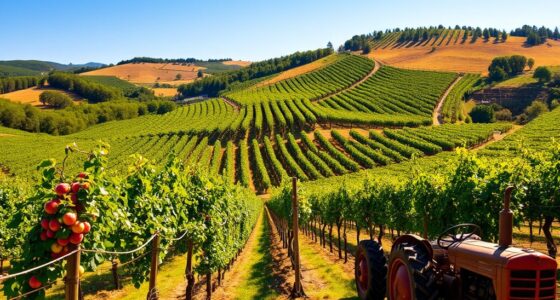
Pueblo communities expertly used terraced farming to turn rugged landscapes into productive fields. They built stone walls and stepped levels on hillsides, preventing erosion and improving water retention. These innovations helped them grow crops despite challenging terrain and limited resources. Their sustainable system reflected careful planning and craftsmanship, creating long-lasting landscapes. If you continue exploring, you’ll discover how these ancient techniques can inspire modern efforts to manage land and water in tough environments.

Get furniture and decor delivered free with Prime
- Fast, free delivery on millions of items
- Prime Video, Amazon Music and more included
- Member-only deals all year
Key Takeaways
- Pueblo fields and terraces are ancient agricultural systems designed to maximize arable land in mountainous regions.
- These terraces, supported by stone walls, prevent erosion and manage water flow effectively.
- They create microclimates that protect crops and improve soil fertility over generations.
- Pueblo communities built and maintained these terraces as sustainable, resilient farming practices.
- Such landscapes exemplify adaptation to challenging environments and continue to inspire modern land management.

Have you ever wondered how ancient peoples transformed rugged landscapes into thriving agricultural sites? It’s a fascinating story of ingenuity and adaptation. Long before modern machinery, early communities practiced ancient farming techniques that allowed them to maximize limited land and resources. One of the most impressive methods they used was terraced architecture, a system of creating stepped levels on hillsides and mountains to cultivate crops effectively. These terraces weren’t just simple flat areas; they were carefully constructed platforms supported by stone walls, designed to prevent erosion and manage water flow. This innovation turned otherwise unusable slopes into productive fields, enabling communities to grow food where flat land was scarce.
When you look at ancient farming within these terraced landscapes, you’re witnessing centuries of engineering brilliance. The terraces break the steepness of natural terrain, reducing runoff and soil erosion while improving water retention. This precise engineering made farming possible in environments that would otherwise be inhospitable. It’s impressive how ancient peoples, with limited technology, could develop such sustainable systems. They aligned their terraces with the sun and local water sources, optimizing growing conditions. These terraces also created microclimates, offering protection from harsh weather and helping crops thrive during droughts or frosts. What’s more, the stone walls and carefully leveled steps helped maintain soil fertility, ensuring that nutrients remained within the soil rather than washing away downhill. Additionally, some terraces incorporated water management techniques that further optimized irrigation and drainage, demonstrating an advanced understanding of environmental control.
The legacy of ancient farming and terraced architecture can still be seen today across various regions, from the Andes to Southeast Asia. These sites are more than just historical remnants; they’re a testament to human resilience and adaptive ingenuity. If you walk through these terraced landscapes, you’ll notice the meticulous craftsmanship involved. Every step, every stone wall, reflects a community’s effort to sustain itself over generations. Modern agriculture can learn from these ancient techniques, especially in areas facing soil erosion or water scarcity. The principles behind terraced architecture—controlling water, preventing erosion, and maximizing land use—are as relevant today as they were centuries ago.
In essence, ancient farming practices combined with terraced architecture show how humans turned challenging environments into productive farmland. They exemplify a harmonious relationship with nature, where careful planning and resourcefulness created sustainable food sources. As you explore these historic sites, remember that behind each terrace lies a story of innovation, perseverance, and a deep understanding of the land. These ancient methods continue to inspire sustainable agricultural practices and remind us of the ingenuity that can flourish even in the most rugged landscapes.
Products Worth Considering

Dyson V8 Cyclone Cordless Vacuum

Levoit Core 400S-P Smart Air Purifier for Large Rooms

Samsung 85 M80H Series Mini LED 4K Smart TV (2026)
As an affiliate, we earn on qualifying purchases.
Frequently Asked Questions
What Tribes Historically Built Pueblo Fields and Terraces?
You might not realize it, but several tribes, including the Ancestral Puebloans and Hohokam, historically built pueblo fields and terraces. These ancient agricultural practices were essential for managing tribal land and optimizing water use. By creating terraces, they prevented erosion and improved crop yields. Their innovative methods demonstrate how tribes actively managed their land, ensuring food sustainability and cultural preservation over generations.
How Do Terraces Help Prevent Soil Erosion?
Imagine a hillside where terraces carve through the land, creating flat steps. These terraces help prevent soil erosion by reducing water runoff speed, allowing water to soak in instead of washing soil away. They serve as an effective soil conservation and erosion control method, especially on slopes. By breaking the land into manageable sections, terraces protect the soil, maintain fertility, and prevent landslides, ensuring the land remains productive over time.
Are Pueblo Terraces Still Maintained Today?
Yes, pueblo terraces are still maintained today. People actively preserve these ancient farming structures because they’re essential for terrace preservation and preventing soil erosion. By keeping these terraces in good condition, you help sustain traditional agriculture and protect the land. Maintenance efforts often include repairing walls, clearing debris, and ensuring proper drainage, which honors the cultural heritage and supports ongoing agricultural practices rooted in ancient farming techniques.
What Crops Were Traditionally Grown on These Terraces?
You’ll find that these ancient farming terraces traditionally supported a diverse variety of crops. Farmers grew maize, beans, squash, and potatoes, showcasing crop diversity that guaranteed food security and soil health. Even today, some communities maintain these terraces for sustainable agriculture, preserving their cultural heritage. The ancient farming techniques used here demonstrate resilience and adaptability, allowing crops to thrive in challenging environments while honoring their historical significance.
How Do Terraces Influence Local Water Management?
Terraces turn your land into a clever water trap, making irrigation techniques surprisingly efficient. By using ancient terrace construction methods, you prevent runoff and guarantee water stays where it’s needed. This clever system reduces water wastage, helping crops thrive even in dry seasons. So, next time you see a hillside, remember: those terraces are like nature’s own water management superheroes, quietly saving your harvest from drowning in excess or starving in drought.
Conclusion
As you walk through the Pueblo fields and terraces, you become part of a living mosaic etched by time. These ancient landscapes whisper stories of ingenuity and harmony with nature, like a silent symphony played on earth’s canvas. Let the terraces’ gentle curves and fields’ rich textures remind you that, just like these enduring structures, your own resilience can carve beauty into the world. Embrace their timeless spirit and carry it forward, stone by stone.