
Railroads revolutionized prairie economies by giving you access to distant markets, allowing faster transport of crops. They made it easier to ship large amounts of grain quickly and reliably, connecting farms to urban centers and export hubs. This boosted profits, encouraged larger farms, and opened up new sales opportunities. Towns grew along tracks, becoming crucial trading points. If you want to see how these changes shaped regional growth and market systems, keep exploring further.
Key Takeaways
- Railroads connected prairie farms to urban and export markets, enabling faster transportation of agricultural products.
- They reduced transportation costs and spoilage, making farming more profitable and encouraging larger-scale cultivation.
- Towns emerged along railroad lines, serving as hubs for grain storage, processing, and shipment.
- Railroads facilitated access to broader markets, allowing farmers to diversify crops and reduce dependence on middlemen.
- Overall, they transformed the prairie economy into an integrated, market-driven system, fueling regional growth.
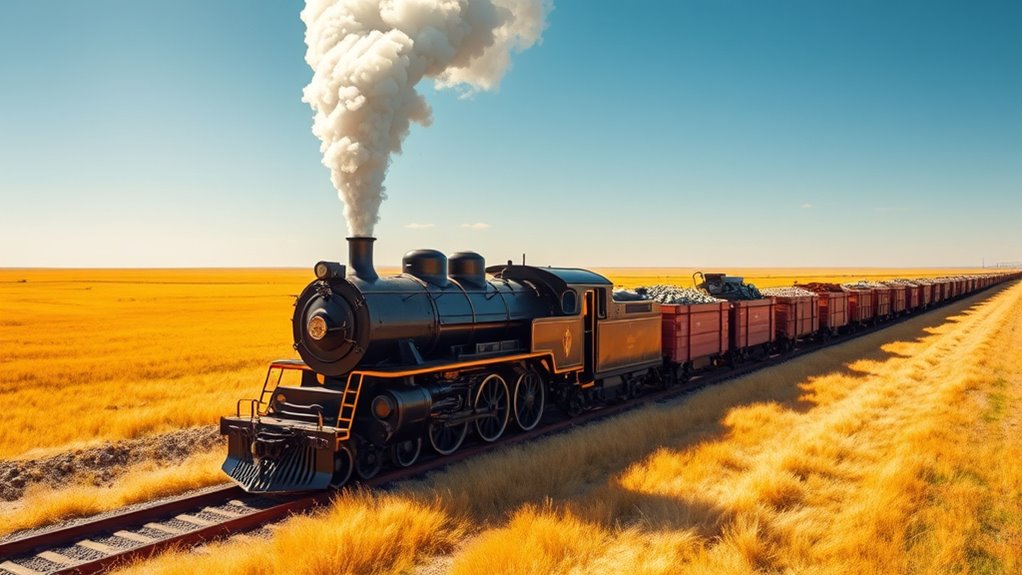
Prairie railroads transformed the economic landscape by providing essential market access to farmers and merchants across vast, open plains. Before the railroads, transporting grain was a slow, costly, and unreliable process, limiting farmers’ ability to sell their crops beyond local markets. With the expansion of the railroads, however, you gained a faster, more efficient way to move large quantities of grain to distant markets. This shift wasn’t just about convenience—it revolutionized the way agricultural products reached consumers and merchants. You could now get your harvest to urban centers and export hubs more quickly, increasing your profits and encouraging larger-scale farming.
The railroad expansion was a game-changer because it opened up previously inaccessible regions for commercial development. As tracks spread across the prairie, farmers and merchants found themselves connected to national and international markets. Grain transportation became more streamlined, reducing spoilage and transportation costs. This, in turn, lowered the price of crops and made farming more profitable, motivating more people like you to cultivate larger fields and invest in machinery. The railroads’ ability to carry bulk goods efficiently meant that you could send your wheat, corn, or oats to buyers hundreds of miles away with relative ease. This access to broader markets also meant you could sell more crops, diversify your crops, and even plan for future harvests without the fear of being stranded by poor transportation options.
The growth of railroad networks also spurred economic activity along the prairie. Towns sprouted up along the tracks, serving as hubs for grain storage, processing, and shipment. As railroads expanded, they connected rural farms to processing facilities, allowing you to sell your crops directly to companies that could refine or package them for sale elsewhere. This interconnected system created a more stable, predictable market environment. Moreover, railroads helped establish pricing standards and reduced regional price disparities, giving you better control over your income. Farmers no longer had to rely solely on local markets, which often meant dealing with middlemen and fluctuating prices. Instead, you could now access national markets, negotiate better prices, and plan your planting and harvesting cycles more effectively.
In essence, the expansion of the railroads and improved grain transportation transformed the prairie economy from isolated farms into an integrated, market-driven system. You became part of a larger commercial network, gaining access to markets that once seemed out of reach. This transformation fueled growth, prosperity, and the development of the American frontier, making the prairie more than just a vast expanse of land—it became a crucial artery of commerce and opportunity. Additionally, the improved transportation infrastructure played a critical role in enabling this economic shift, illustrating how technological advancements directly impacted regional development.
Top picks for "prairie railroad market"
Open Amazon search results for this keyword.
As an affiliate, we earn on qualifying purchases.
Frequently Asked Questions
How Did Prairie Railroads Influence Regional Economic Development?
You see, prairie railroads boosted regional economic development by introducing railroad innovation that made transportation faster and more reliable. This improved market access, allowing you to diversify your economy beyond traditional farming. With easier shipping of crops and goods, you could expand industries like manufacturing and trade. In turn, these railroads helped you create new jobs, attract investments, and grow your community’s prosperity, transforming the prairie into a thriving economic hub.
What Were the Main Challenges Faced by Prairie Railroads?
You face significant challenges with prairie railroads, including the massive task of railway construction across vast, untamed lands. Land grants, while essential for financing, often led to disputes and legal issues. These railroads struggled with harsh weather, difficult terrain, and securing enough investment. Overcoming these obstacles was vital for connecting remote regions, but the process demanded immense effort, strategic planning, and constant adaptation to overcome the natural and legal hurdles.
How Did Market Access Impact Settlement Patterns?
Market access considerably influenced settlement migration by making agricultural markets more accessible, encouraging people to settle in prairie regions. When railroads improved transportation, you found it easier to move crops to markets and buy supplies, which drew more settlers. As access expanded, settlement patterns shifted toward these transportation hubs, increasing population density in certain areas. This connection between market access and settlement migration shaped the development of prairie communities.
What Role Did Government Policies Play in Railroad Expansion?
Like a conductor guiding a train, government policies steered railroad expansion. You see, government subsidies helped fund the building of railroads, making it possible to connect distant lands. Regulatory policies ensured safety and fair practices, preventing chaos on the tracks. These actions fostered growth, opened markets, and shaped the nation’s destiny. Without such measures, the railway revolution might have stalled, leaving communities isolated and opportunities unrealized.
How Did Prairie Railroads Affect Indigenous Communities?
You might notice that prairie railroads caused Indigenous displacement, forcing communities off their ancestral lands. This expansion led to significant cultural disruption, as traditional practices and ways of life were often undermined or lost. The railroads opened up new territories, but at a steep cost to Indigenous peoples’ sovereignty and cultural integrity. These changes deeply affected their social fabric, leaving lasting impacts on their communities and heritage.
Conclusion
As you reflect on prairie railroads and market access, it becomes clear that these rail lines are the veins fueling the heart of the economy. They connect vast fields to bustling markets, turning the prairie into a thriving mosaic of opportunity. Without them, the region’s prosperity would fade like a fading sunset. Embracing their essential role, you see how these railroads are the lifeblood that keeps commerce flowing through the endless prairie landscape.