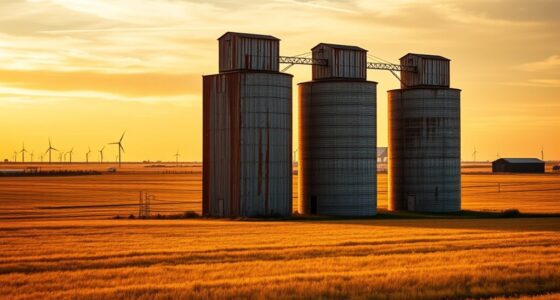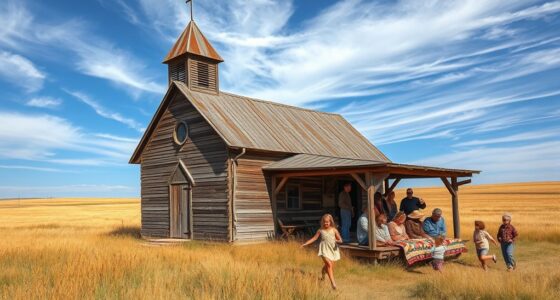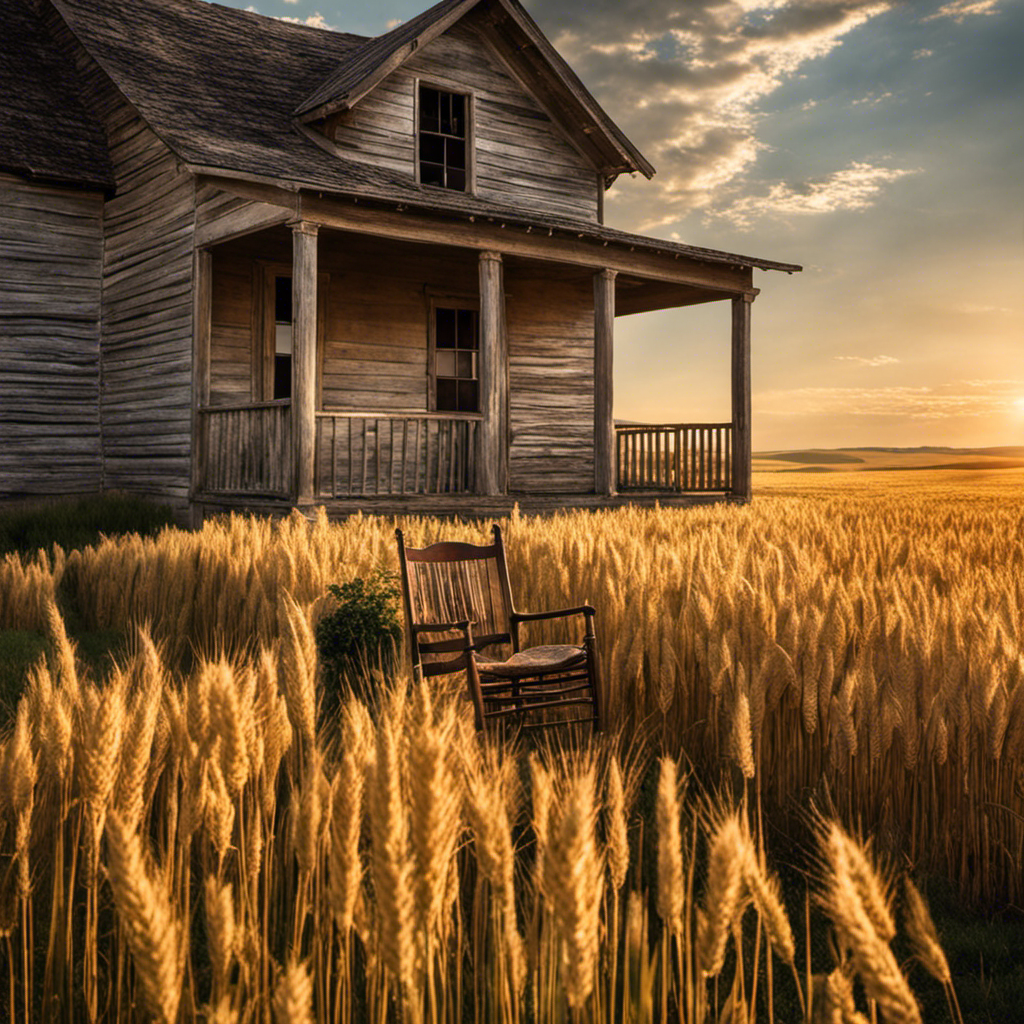
To balance open views with weather protection on plains homesteads, you can use strategic landscape designs like windbreaks and solar shading. Planting trees or installing low walls helps block harsh winds and provides shade without obstructing your scenic views. Overhanging roofs and carefully placed trees can keep interiors cool and shield your home from the sun. These thoughtful choices create a comfortable, picturesque environment—if you want to discover how to implement these techniques yourself, keep exploring.

Get furniture and decor delivered free with Prime
- Fast, free delivery on millions of items
- Prime Video, Amazon Music and more included
- Member-only deals all year
Key Takeaways
- Strategically placed windbreaks, like trees or low walls, block harsh winds while maintaining sightlines.
- Overhanging roofs and awnings provide shade and protection without obstructing views.
- Layered tree arrangements serve as natural barriers, reducing wind impact while preserving landscape openness.
- Combining windbreaks with solar shading techniques ensures comfortable outdoor and indoor environments.
- Thoughtful landscape and architectural planning balance scenic vistas with effective weather protection.

Have you ever wondered how settlers on the plains managed to enjoy sweeping open views while still protecting themselves from harsh weather? The secret lies in clever landscape and architectural choices, particularly through windbreak design and solar shading techniques. These strategies allowed settlers to preserve the vast, unobstructed vistas that define the plains while providing necessary shelter from wind, snow, and sun. You can think of windbreaks as natural barriers that block harsh gusts, while solar shading keeps your home cool during blazing summer days without sacrificing the scenic views.
Windbreak design is key to creating a more comfortable living environment. Instead of building solid walls or fences that block the landscape, settlers often planted rows of trees or erected low walls to serve as windbreaks. These barriers are strategically placed to redirect and slow the wind, reducing its force before it reaches the home or farmstead. The arrangement of trees—often in a staggered or layered formation—maximizes protection while still allowing air and light to flow through, maintaining the openness of the plains. You might notice how these natural barriers also serve as wind filters for crops, preventing soil erosion and making farming more sustainable. Proper windbreak design helps maintain the health of the soil and the longevity of the landscape, ensuring that the land remains productive over time. The goal is to strike a balance: shielding your home from relentless gusts without cutting off the expansive views that define the plains landscape.
Strategic tree rows and low walls balance protection and openness, shielding homes while preserving sweeping plains views.
Solar shading is another essential component, especially in the warmer months when the sun beats down fiercely. Settlers used design elements such as overhanging roofs, awnings, and strategically placed trees to block the intense summer sun from directly hitting windows and walls. These features create shaded areas around the home, helping to keep the interior cool without relying heavily on artificial cooling methods. When you incorporate solar shading into your homestead design, you’re not only protecting your home from heat but also preserving the clarity of the scenic views outside. It’s about controlling light and heat while maintaining the sense of openness and connection to the landscape.
Together, windbreak design and solar shading form an effective system that allows you to enjoy the vast, open vistas of the plains while staying comfortable and protected from the elements. These strategies demonstrate how thoughtful planning can enhance your connection to the landscape without sacrificing practicality. Whether planting a row of trees or designing your roof overhangs, you’re creating a harmony between the natural environment and your living space—giving you the best of both worlds.
windbreaks for outdoor landscape
As an affiliate, we earn on qualifying purchases.
As an affiliate, we earn on qualifying purchases.
Frequently Asked Questions
What Materials Were Traditionally Used in Plains Homestead Construction?
You’ll find that traditional building materials like wood, sod, and adobe were commonly used in plains homestead construction. These materials provided excellent climatic adaptation strategies, offering insulation against harsh weather while maintaining open views. Wood was readily available for framing, sod acted as natural insulation, and adobe helped regulate temperature. By choosing these materials, homesteaders balanced weather protection with the desire for expansive, unobstructed views across the plains.
How Did Homesteaders Adapt to Extreme Weather Conditions?
Imagine you’re living in a prairie, and you need climate resilience. Homesteaders adapted by building their homes with thick walls, steep roofs, and strategic placement to shield against harsh winds and extreme temperatures. They used seasonal adaptations like adding porches for shade or insulating walls for winter. These practical measures helped them survive the weather’s unpredictability while maintaining open views, proving their resilience in facing the plains’ challenges.
Were There Specific Design Features to Prevent Wind Damage?
You can prevent wind damage by incorporating windbreaks like rows of trees or shrubs around your homestead, which slow down gusts. Structural reinforcements, such as sturdy framing and reinforced walls, also help withstand strong winds. These features work together to protect your home, reduce wind pressure, and preserve open views, ensuring your homestead remains resilient against the harshest weather while maintaining scenic beauty.
How Did Landscape Planning Contribute to Both Views and Protection?
You shape landscape planning to achieve visual harmony and aesthetic integration, balancing open views with protection from harsh weather. By strategically placing trees and shrubs, you create natural windbreaks that shield your homestead without obstructing scenic vistas. You also design the layout to blend seamlessly with the environment, ensuring that protective features enhance, rather than detract from, the overall beauty and openness of your landscape.
What Modern Techniques Are Used to Enhance Historical Homestead Designs?
Think of modern techniques as a fresh coat of paint on old frames. You use innovative insulation to keep the warmth in and cold out, while solar integration adds a touch of sustainable brilliance. These updates enhance historical homestead designs by blending tradition with technology, preserving their charm while boosting efficiency. It’s like giving a vintage car a modern engine—keeping the soul intact, but making it run smoother and greener.
Conclusion
By thoughtfully balancing open views with weather protection, you create a homestead that’s both beautiful and practical. Imagine designing your porch with adjustable shutters that let you enjoy the scenery on clear days while shielding you from harsh winds or rain when needed. This approach guarantees you stay connected to the landscape without sacrificing comfort, much like the Johnsons, who transformed their plains property into a haven that’s both scenic and resilient.
Halloween Picks
halloween
As an affiliate, we earn on qualifying purchases.