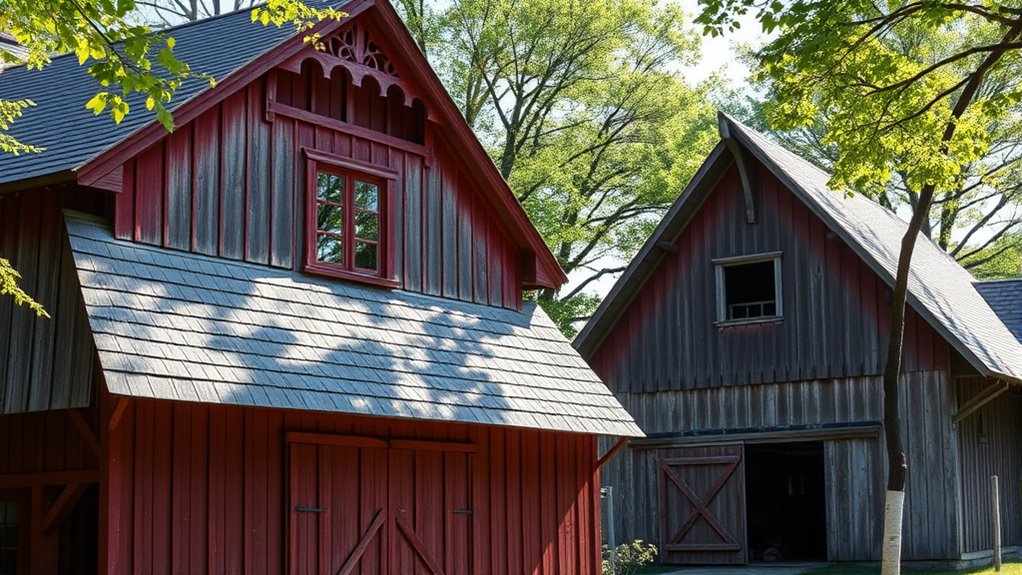

Pennsylvania Dutch barns showcase distinctive forebays and cribs that highlight their practical design and craftsmanship. The forebay extends from the front, creating a sheltered workspace and adds visual appeal, while the crib inside offers organized spaces for hay, grain, or livestock. These features are constructed with traditional methods like mortise and tenon joints, emphasizing durability and regional ingenuity. Exploring these elements further reveals the rich history behind these iconic farm structures.
Key Takeaways
- Pennsylvania Dutch barns feature a prominent forebay that provides shelter and easy access for loading hay, livestock, and farm activities.
- The forebay’s gabled roof and supporting posts enhance both functionality and distinctive visual appeal.
- Interior cribs are built with traditional joinery, creating organized compartments for hay storage and livestock housing.
- Cribs reflect regional craftsmanship, utilizing durable construction techniques like mortise and tenon joints.
- Both forebays and cribs exemplify practical design principles that support farm efficiency and durability over time.
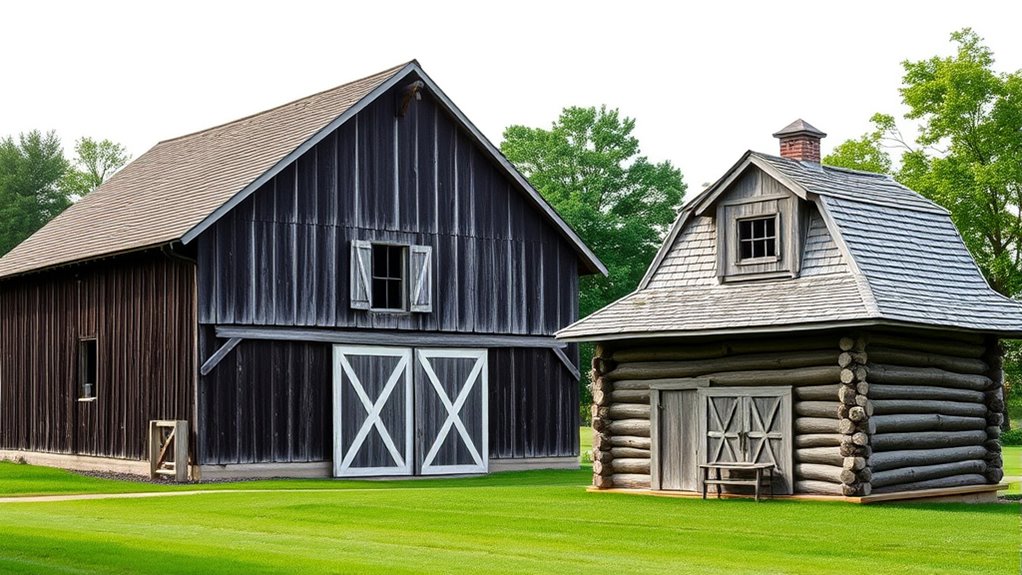
Pennsylvania Dutch barns are a distinctive and historic part of the region’s architectural heritage. When you look at these barns, you’re seeing more than just functional structures—you’re observing a tradition rooted in practical design and cultural expression. Their traditional construction methods reflect a careful craftsmanship that has been handed down through generations, blending functionality with regional aesthetics. These barns typically feature a broad, rectangular shape with a gambrel roof, which maximizes storage space for hay and livestock. The architectural features are straightforward yet purposeful, emphasizing durability and efficiency. You’ll notice that the materials used—mainly timber and wood—are locally sourced, and the construction techniques are designed to withstand Pennsylvania’s varying climate. The craftsmanship involved ensures that these barns remain resilient over decades, often standing as a testament to the skills of early settlers.
One of the most striking architectural features of Pennsylvania Dutch barns is the forebay, a projecting structure that extends from the front of the barn. If you stand in front of one, you’ll see that the forebay creates a covered area, which historically served as a sheltered workspace or entryway. This feature isn’t just functional; it also adds a distinctive visual element to the barn’s façade. The forebay often has its own roof, which is typically gabled, and is supported by sturdy posts. Its design allows you to load and unload hay or livestock with ease, protecting these valuable resources from weather. The presence of a forebay also signifies a degree of sophistication in the barn’s design, showcasing an understanding of the needs of farm life while maintaining the aesthetic harmony of the structure. Additionally, the use of traditional construction techniques such as mortise and tenon joints highlights the craftsmanship and durability of these structures.
In addition to the forebay, Pennsylvania Dutch barns often feature a crib, an interior architectural element used for storage and livestock. The crib is a series of compartments inside the barn, built with traditional construction techniques that emphasize practicality. These compartments allow you to organize hay, grain, or animals efficiently within the space. The interior layout, with its clear division of areas, reflects a thoughtful approach to farm management. You’ll find that the structural integrity of the crib is maintained through the use of mortise and tenon joints, which are hallmarks of traditional construction. These features not only serve functional purposes but also contribute to the barn’s overall aesthetic, blending form and function seamlessly. Together, the forebay and crib exemplify how Pennsylvania Dutch barns are more than mere storage buildings—they are carefully crafted structures that embody regional ingenuity and cultural heritage.
Amish Wisdom: Lined Journal (Quiet Fox Designs) 144 Lined Pages with Sage Advice for Practical Living, and Folksy, Humorous Quotes from Pennsylvania Dutch Culture
As an affiliate, we earn on qualifying purchases.
As an affiliate, we earn on qualifying purchases.
Frequently Asked Questions
What Materials Are Typically Used in Pennsylvania Dutch Barn Construction?
You’ll find that Pennsylvania Dutch barns are built with sturdy wooden beams and stone foundations, ensuring stability and durability. The wooden beams form the main structure, often crafted from local hardwoods, while the stone foundations provide a solid base, preventing moisture damage. These materials reflect traditional craftsmanship and are chosen for their availability and longevity, making the barns resilient against the elements and ideal for agricultural use.
How Do Forebays Improve Barn Functionality?
Think of forebays as the barn’s lungs, breathing fresh air to boost ventilation. They improve barn functionality by enhancing barn ventilation, preventing moisture buildup, and keeping the air fresh for animals and stored crops. Plus, forebays serve as efficient storage zones, making it easier to organize tools and supplies. This clever design maximizes storage efficiency and maintains a healthier environment, helping your barn work smarter, not harder.
Are Pennsylvania Dutch Cribs Unique to Specific Regions?
Yes, Pennsylvania Dutch cribs are somewhat unique to specific regions, reflecting regional architectural styles and local materials. These cribs often showcase traditional construction methods passed down through generations, making them significant to historical preservation efforts. You’ll find variations depending on local influences, but their distinctive design helps maintain regional character and cultural heritage. Preserving these cribs guarantees that this unique aspect of Pennsylvania Dutch architecture continues to tell its story.
What Are Common Preservation Challenges for These Historic Barns?
Like a fragile antique, these barns face many preservation challenges. You’ll notice structural deterioration from age and weather, which threatens their integrity. Modern restoration efforts often struggle to balance keeping the original charm while upgrading materials for durability. You must carefully address issues like rotting wood, foundation problems, and roof damage, ensuring each repair respects the barn’s historic character while safeguarding it for future generations.
How Do Barn Designs Vary Between Different Pennsylvania Dutch Communities?
You’ll notice that barn designs vary across Pennsylvania Dutch communities due to regional architectural variations and cultural influences. In some areas, barns feature forebays for additional shelter, while others emphasize cribs for storage. These differences reflect local building traditions, available materials, and community preferences. By observing these variations, you can see how local culture shapes barn construction, making each structure uniquely suited to its specific region and purpose.

Puzzled Farm Barn 3D Wooden Barn Toy Building Kit for Kids and Adults – 3D Farm Set Kids Building Kit, Fun Educational DIY Woodworking Toys to Paint and Build Wood Barn Toy Farm Play Set – 21 Pieces
THE WOODEN FARM BUILDING SET COMES WITH UNIQUE DESIGN YOU WILL LOVE – Experience the joy of building…
As an affiliate, we earn on qualifying purchases.
As an affiliate, we earn on qualifying purchases.
Conclusion
Discovering Pennsylvania Dutch barns reveals a fascinating glimpse into history and craftsmanship. Did you know that over 20,000 of these barns still stand today, many built over 200 years ago? Their unique forebays and cribs tell stories of early settlers’ ingenuity and community life. As you appreciate their craftsmanship, remember you’re witnessing living history—an enduring symbol of resilience and tradition that continues to inspire us all today.
Carter’s by Davinci Colby 4-in-1 Convertible Crib w/Trundle Storage – GREENGUARD Certified, Convertible Baby Crib to Toddler Bed, Daybed, Full-Size Bed – 4 Adjustable Mattress Heights, Walnut
Carter’s by daVinci Colby 4-in-1 Convertible Crib: Grows with your child from baby crib to toddler bed, daybed…
As an affiliate, we earn on qualifying purchases.
As an affiliate, we earn on qualifying purchases.

Hand Hewn: The Traditions, Tools, and Enduring Beauty of Timber Framing
As an affiliate, we earn on qualifying purchases.
As an affiliate, we earn on qualifying purchases.