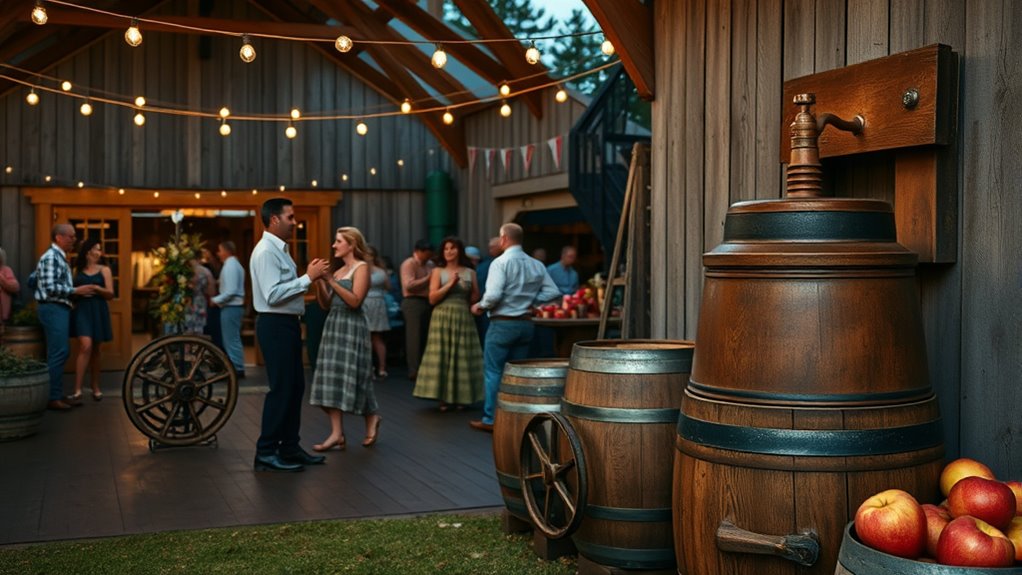
In Pennsylvania, traditional cider presses and barn dances highlight the state’s rich cultural roots. During apple harvests, you’ll see orchards filled with families working together to gather fruit and press cider using methods passed down through generations. The lively barn dances feature folk music and energetic dancing, creating a festive, community atmosphere that celebrates heritage. If you continue exploring, you’ll discover how these traditions keep Pennsylvania’s history alive and thriving today.
Key Takeaways
- Traditional Pennsylvania cider presses utilize age-old methods, emphasizing community involvement and cultural heritage.
- Apple harvest festivals feature cider pressing as a central activity, celebrating local agrarian traditions.
- Barn dances accompany cider festivals, with lively folk music and dancing rooted in Appalachian and Pennsylvania Dutch culture.
- These events foster community bonding, showcasing Pennsylvania’s rich cultural identity through shared celebrations.
- Music, dance, and cider pressing collectively preserve and promote Pennsylvania’s historical and cultural heritage.
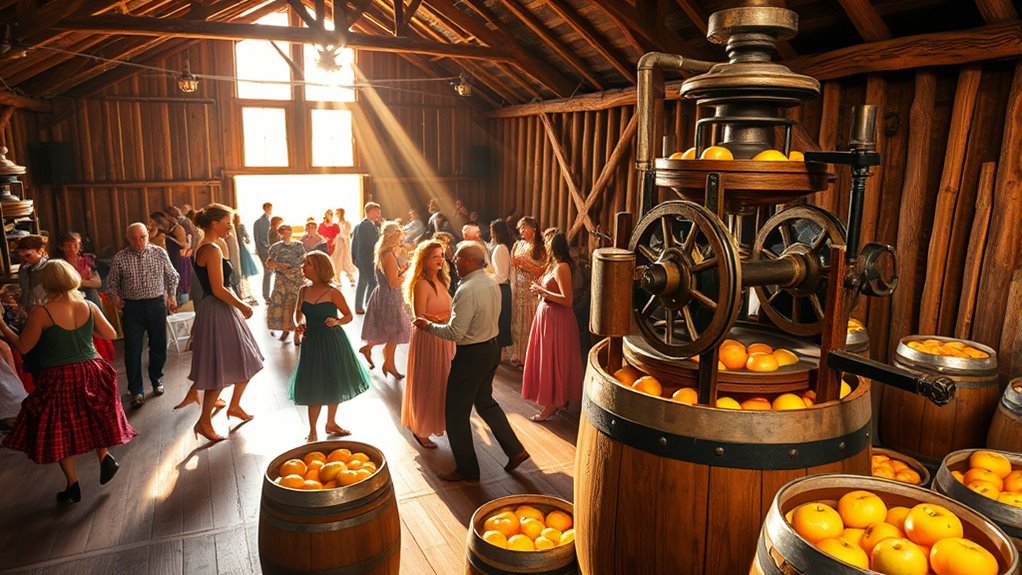
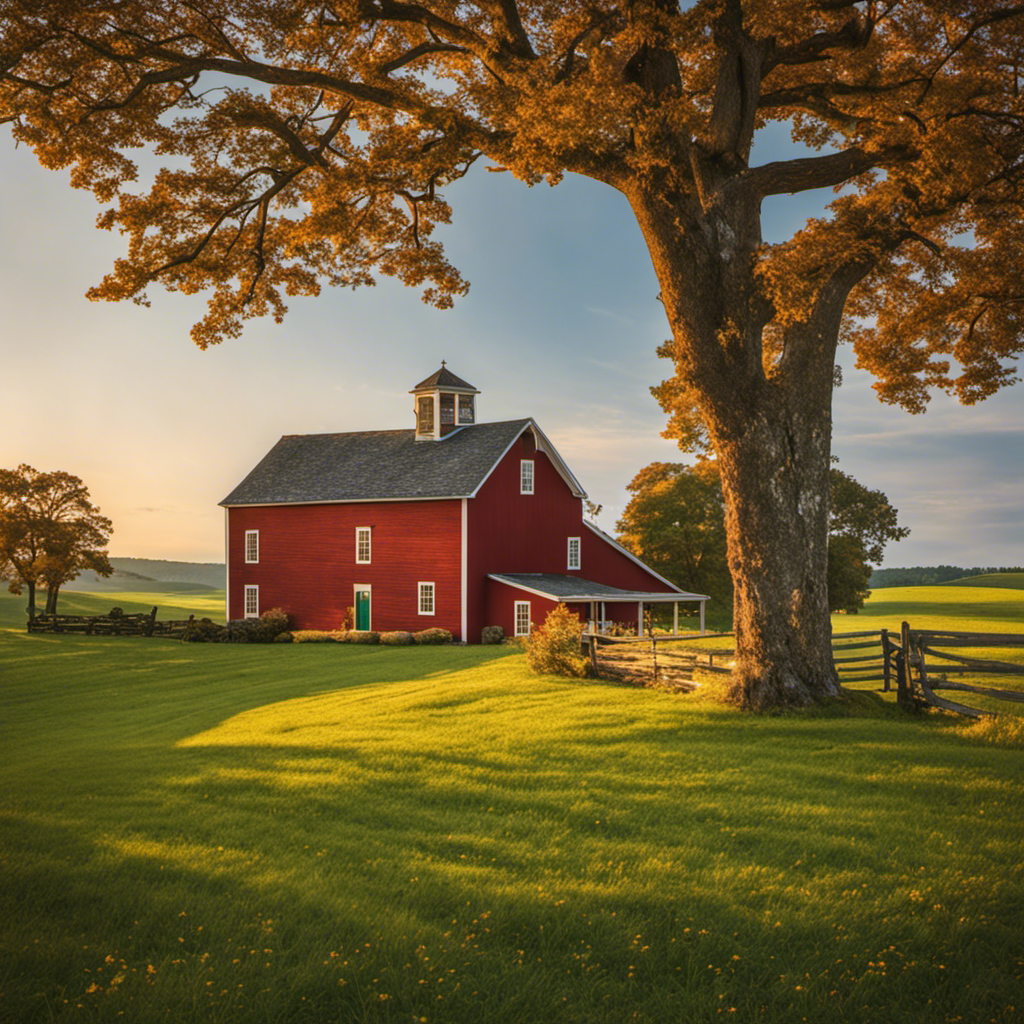
Have you ever wondered how Pennsylvania’s rich traditions of cider pressing and barn dancing come to life? It all begins with the apple harvest, a busy time when orchards burst with ripe fruit ready for picking. You’ll see farmers and families working side by side, gathering apples from trees heavy with fruit. This harvest isn’t just about collecting apples; it’s a communal event filled with excitement and anticipation. As the apples are picked, the air fills with the sweet scent of fresh fruit, setting the stage for the upcoming festivities. Once collected, the apples are pressed into cider using traditional methods that have been passed down through generations. You can almost hear the squeal of the press and feel the cool juice as it flows into barrels, ready for fermentation. These cider presses are more than just tools—they’re symbols of community and heritage, bringing people together to celebrate their agrarian roots.
During these gatherings, traditional music plays a crucial role. It’s the heartbeat of the event, creating an energetic and joyful atmosphere. The lively tunes, often played on fiddles, banjos, and other folk instruments, echo through the barns and fields. You might find yourself tapping your foot or wanting to join in as dancers circle and stomp to the rhythm. These musical traditions, rooted in Appalachian and Pennsylvania Dutch cultures, keep the spirit of old-time barn dances alive. Everyone, from young to old, gets involved, clapping along and learning the steps. The music isn’t just background noise; it’s a essential part of the celebration, connecting generations and preserving heritage. As the evening unfolds, the barn becomes a lively dance floor, filled with movement and laughter. The sounds of traditional music intertwine with the chatter of friends and family, creating an authentic experience that transports you back in time.
This blend of apple harvest festivities and traditional music embodies Pennsylvania’s enduring love for its cultural roots. It’s about more than just cider or dancing; it’s about community, history, and the joy of shared traditions. Whether you’re pressing apples, listening to folk tunes, or dancing in a barn, you’re taking part in a story that’s been cultivated for centuries. These events highlight how Pennsylvania’s past continues to thrive, enriching its present with vibrant celebrations. So, next time you’re at a cider press or barn dance, remember—you’re experiencing a living piece of Pennsylvania’s heritage, one that brings people together through the simple joys of harvest, music, and community.
Additionally, understanding the cultural significance of these traditions helps preserve their authenticity and ensures they continue to thrive for future generations.
Frequently Asked Questions
Are There Specific Safety Guidelines for Operating Cider Presses?
Yes, there are specific safety guidelines you should follow when operating cider presses. You need to prioritize equipment safety by inspecting the press before use and ensuring all guards are in place. Follow operational procedures carefully, such as keeping hands clear of moving parts and never overriding safety features. Always wear protective gear, and keep a clean workspace to prevent accidents, ensuring a safe and efficient cider pressing process.
Can Visitors Participate in Barn Dance Workshops?
Yes, visitors can participate in barn dance workshops. These interactive dance sessions welcome all skill levels, encouraging you to join in and learn traditional steps. Workshop participation is typically open to everyone, often led by experienced dancers who guide you through the movements. It’s a fun, engaging way to experience local culture firsthand. Just wear comfortable clothes and be ready to enjoy an energetic, community-oriented experience.
What Are the Best Times of Year for Cider Pressing Festivals?
Think of cider pressing festivals as ripe fruit ready to burst—your best times are during the fall, when seasonal harvests are at their peak. Typically, September through November offers the most vibrant festival schedules, celebrating the bounty of the harvest. Planning your visit during these months guarantees you experience the lively atmosphere, delicious tastings, and hands-on pressing that make cider festivals unforgettable.
Are There Accommodations Nearby for Overnight Stays During Events?
Yes, you’ll find plenty of local lodging and overnight options nearby. Many cider pressing festivals partner with nearby bed and breakfasts, inns, and hotels to accommodate visitors. You can book these accommodations well in advance to guarantee a comfortable stay. Whether you prefer cozy inns or larger hotels, there’s usually a range of options to suit your needs, making it easy for you to enjoy the festivities without worries about overnight accommodations.
Is There Historical Significance Behind Traditional Barn Dance Music?
You’ll find that traditional barn dance music holds deep historical significance, rooted in folk traditions that reflect cultural heritage. Many people assume these tunes are just fun, but they actually preserve community stories and social customs from generations past. By participating, you connect with history, experiencing the lively spirit and timeless rhythms that have kept these cultural traditions alive through centuries of barn dances.
Conclusion
So, next time you step into a Pennsylvania cider press or dance at a lively barn, remember you’re part of a tradition that’s been alive for centuries. These experiences aren’t just fun—they’re the heartbeat of rural heritage, more vibrant than a rainbow after a storm. Don’t miss the chance to immerse yourself in this incredible, time-honored world. It’s an adventure that’ll leave you feeling more alive than you’ve ever felt before!