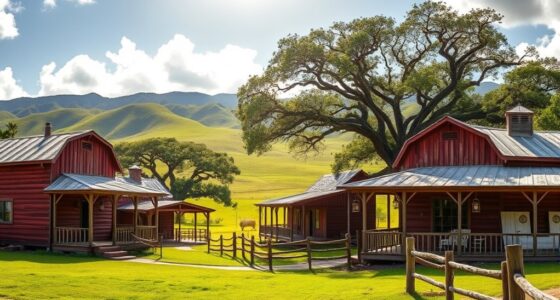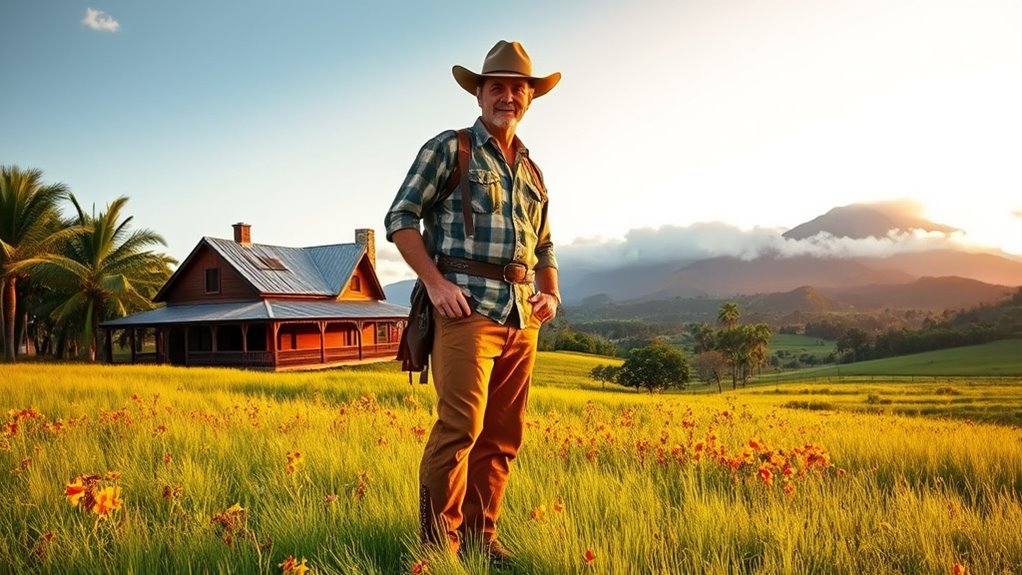

Paniolo cowboys in upcountry Hawai‘i carry a rich ranching tradition that blends Native Hawaiian culture with skills from Spanish, Mexican, and American influences. They’re expert horsemen who manage cattle with respect for the land and animals. Their activities, like branding, herding, and cattle drives, are celebrated through community events like rodeos. This vibrant heritage shapes daily life, honoring resilience and environmental harmony. If you continue exploring, you’ll discover the deep roots and ongoing significance of this unique cowboy culture.
Key Takeaways
- Paniolo cowboys are skilled ranchers who preserve Hawaii’s unique horseback riding and cattle management traditions.
- Upcountry ranches serve as cultural hubs where heritage, ranching skills, and community celebrations are actively maintained.
- The Paniolo way integrates Native Hawaiian influences with Spanish, Mexican, and American cowboy techniques.
- Ranching practices include traditional cattle drives, branding, and fencing, emphasizing respect for land and animals.
- Community events like rodeos showcase Paniolo skills and reinforce the cultural significance of upcountry ranching.
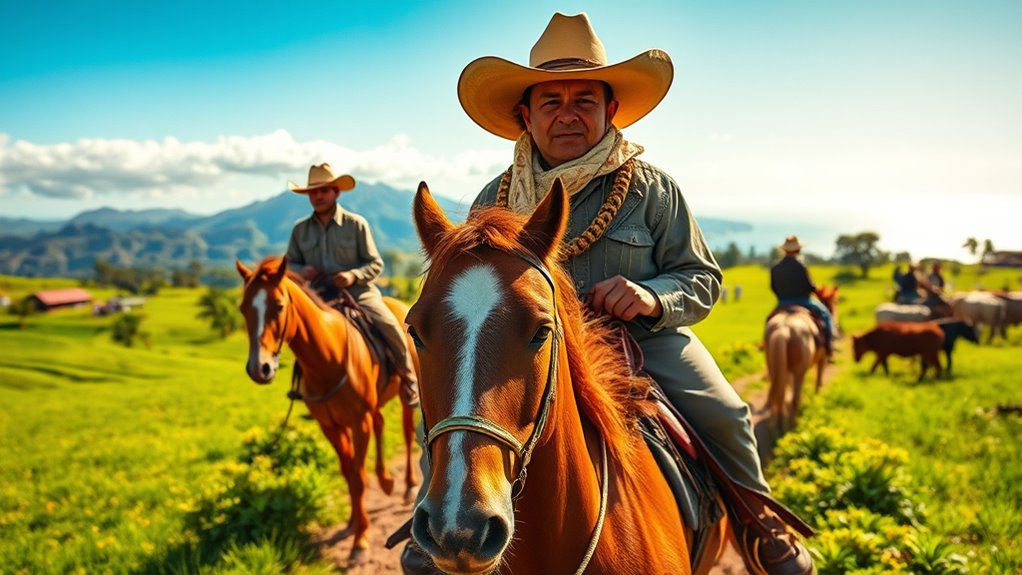
Nestled in Hawaii’s upcountry landscapes, Paniolo cowboys have a rich tradition of ranching and horseback riding that continues to thrive today. As you explore these scenic areas, you’ll quickly realize that Hawaiian cattle traditions run deep, shaping the very fabric of the ranching community culture that has been passed down through generations. The Paniolo way of life isn’t just about working the land; it’s about preserving a unique heritage that blends Native Hawaiian influences with cowboy skills introduced by early settlers. You’ll notice that ranching here isn’t just a job—it’s a way of life rooted in pride, resilience, and a profound connection to the land.
Hawaiian cattle traditions run deep, weaving pride, resilience, and heritage into everyday ranching life.
In your journey through upcountry Hawaii, you’ll see how the ranching community culture is woven into everyday life. Paniolos, or Hawaiian cowboys, are more than just ranch workers—they’re custodians of an enduring tradition. Their horsemanship skills are legendary, and their approach to cattle management emphasizes respect for the animals and the land. You might observe them branding calves, herding cattle across lush pastures, or repairing fencing, all with a sense of purpose that’s deeply ingrained in their identity. The community often gathers for rodeos, where they showcase their skills, celebrate their heritage, and pass down stories that reinforce their shared history. This strong sense of community is reinforced by their cultural traditions, which have been maintained and celebrated for generations.
Hawaiian cattle traditions have evolved over decades, blending native practices with influences from Spanish, Mexican, and American ranching techniques. This fusion creates a unique style of cowboying, characterized by a deep understanding of local terrain and a harmony with the environment. You could participate in or watch traditional cattle drives, where the Paniolos work seamlessly with their horses to move herds through rugged hills and valleys. These events aren’t just functional—they’re cultural celebrations that honor their ancestors and keep their traditions alive.
The ranching community culture fosters a sense of camaraderie and mutual respect. Paniolos often work together, sharing knowledge and skills to ensure the health of their cattle and the sustainability of their land. As you observe, you’ll notice that the sense of pride in their work is palpable, and it’s this pride that sustains their vibrant heritage. The Hawaiian cattle traditions and ranching community culture aren’t just relics of the past—they’re active, living parts of the upcountry landscape, shaping how these cowboys work and connect with their environment every day.

Melesh Straw Cowboy Hat, Western Cowgirl Hat, Wide Brim Sun Beach Hat for Men and Women (US, Alpha, One Size, Khaki-M26)
VERSATILE DESIGN: Classic western-style straw cowboy hat suitable for both men and women, perfect for beach outings, outdoor…
As an affiliate, we earn on qualifying purchases.
As an affiliate, we earn on qualifying purchases.
Frequently Asked Questions
What Is the History of Paniolo Culture in Hawaii?
You might be interested to know that paniolo culture in Hawaii dates back to the 19th century when Hawaiian cowboys adapted Mexican vaquero traditions. You’ll find that Hawaiian rodeo events celebrate this heritage, showcasing skills like roping and riding. Paniolo music also plays an essential role, blending Hawaiian melodies with cowboy tunes, creating a unique cultural expression that honors the history and spirit of the Hawaiian cowboy lifestyle.
How Do Paniolo Cowboys Differ From Mainland Cowboys?
You’ll notice that paniolo cowboys differ from mainland cowboys through their strong Hawaiian heritage, which influences their traditions and practices. Their cowboy attire often includes unique elements like floral shirts and bandanas, reflecting island culture. You might also see them riding horses in lush, tropical landscapes rather than open plains. Overall, their style and history blend Hawaiian roots with cowboy skills, creating a distinct, vibrant identity.
What Are Popular Activities at Upcountry Ranches?
At upcountry ranches, you can enjoy popular activities like horse riding through scenic landscapes and cattle herding, which gives you a hands-on experience of ranch life. You might also participate in roping lessons or explore nature on guided trail rides. These activities let you immerse yourself in the ranch’s outdoor environment, offering a true taste of cowboy life with plenty of opportunities for adventure and learning.
How Can Visitors Experience Paniolo Traditions Today?
They say “You can’t take the cowboy out of the boy,” and you can experience paniolo traditions today through Hawaiian music and horseback riding. Join a ranch tour or a rodeo, where lively music fills the air and skilled riders showcase their craft. You’ll feel connected to the island’s cowboy heritage, creating memories while embracing authentic paniolo culture firsthand.
What Types of Cattle Are Raised on Upcountry Ranches?
On upcountry ranches, you’ll find cattle breeds like Angus, Hereford, and Charolais, known for quality beef. Ranchers use traditional techniques like rotational grazing and selective breeding to maintain healthy herds. These methods help improve cattle genetics and sustainability. As a visitor, you can learn about these cattle breeds and ranching techniques through guided tours, giving you a firsthand look at the skill and care involved in upcountry ranching.

TuffRider Ladies Starter Front Zip Paddock Boots | Durable, Easy to Clean Water-Resistant Horse Riding Boots for Women – Black – 8 – Wide
Starter Paddock Boots: These entry level woman ankle length riding boots are designed for every day riding, training,…
As an affiliate, we earn on qualifying purchases.
As an affiliate, we earn on qualifying purchases.
Conclusion
As you stand on these upcountry ranches, you can almost hear the echoes of paniolo cowboys guiding herds through misty mornings—like guardians of tradition. Imagine a cowboy, herding cattle under a golden sunrise, his silhouette blending with the land’s rugged beauty. Just as they’ve preserved Hawaii’s ranching spirit for generations, you become part of this living history—where every hoofbeat and sunset tells a story of resilience and timeless connection to the land.

The Heritage Forge Wild West Mini Branding Irons Set, 15 Pieces, Decorative Stamps for Leather, Wood, Hats, Felt, Cowhide, Steaks (1-inch)
MADE IN THE USA: Hand-crafted on American soil, these are made to stand the test of time and…
As an affiliate, we earn on qualifying purchases.
As an affiliate, we earn on qualifying purchases.

WORKPRO Fencing Pliers, 10-inch Multi Fence Pliers Tool, Heavy Duty Fencing Tools, Barbed Wire Fence Tools, Fence Cutter, Nail Puller, Staple Puller, Cutting Wire, Hammer Head
Versatile Multi-Tool Fence Pliers: The WORKPRO 10-inch fence pliers combine six essential functions in one powerful tool. It…
As an affiliate, we earn on qualifying purchases.
As an affiliate, we earn on qualifying purchases.