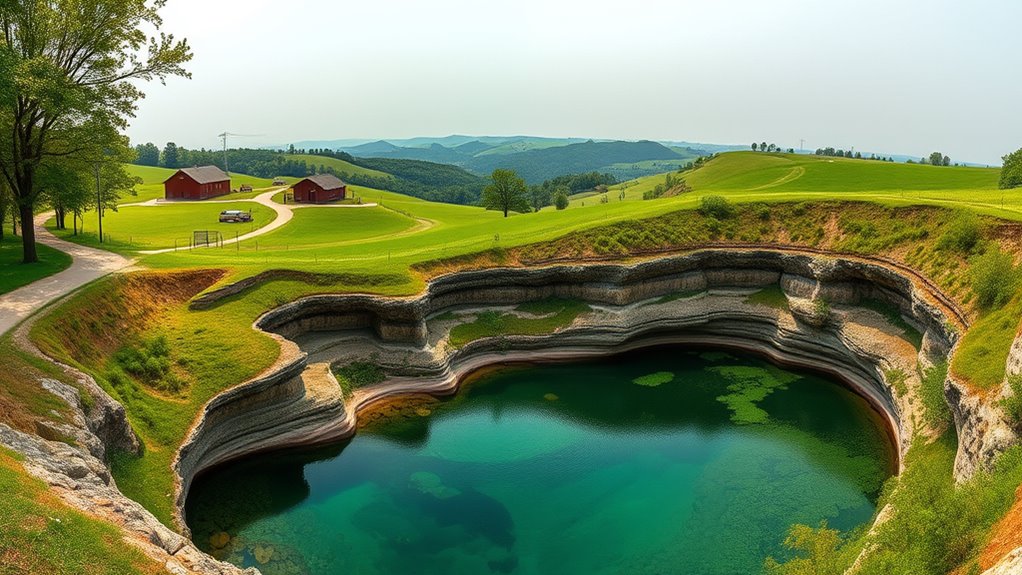

Ozarks hill farms are shaped by springs and sinkholes that create a unique and vibrant landscape. Springs emerge from underground aquifers, providing fresh water that sustains plant and animal life, while sinkholes form when underground cavities collapse, altering land and creating natural reservoirs. These features influence farm layout and land stability, making them essential to the area’s ecology. Continue exploring to discover how these formations support the rich ecosystem of Ozarks hill farms.
Key Takeaways
- Springs in Ozarks Hill Farms emerge from underground aquifers fed by rainwater filtering through limestone and dolomite rocks.
- Sinkholes form when underground limestone cavities collapse, creating depressions that can affect land stability and water flow.
- Springs support diverse ecosystems by providing fresh water essential for plants, animals, and farm operations.
- Sinkholes can serve as natural water reservoirs, influencing soil moisture and landscape features on the farms.
- Both springs and sinkholes are interconnected features that shape the landscape and water resources of Ozarks hill farms.
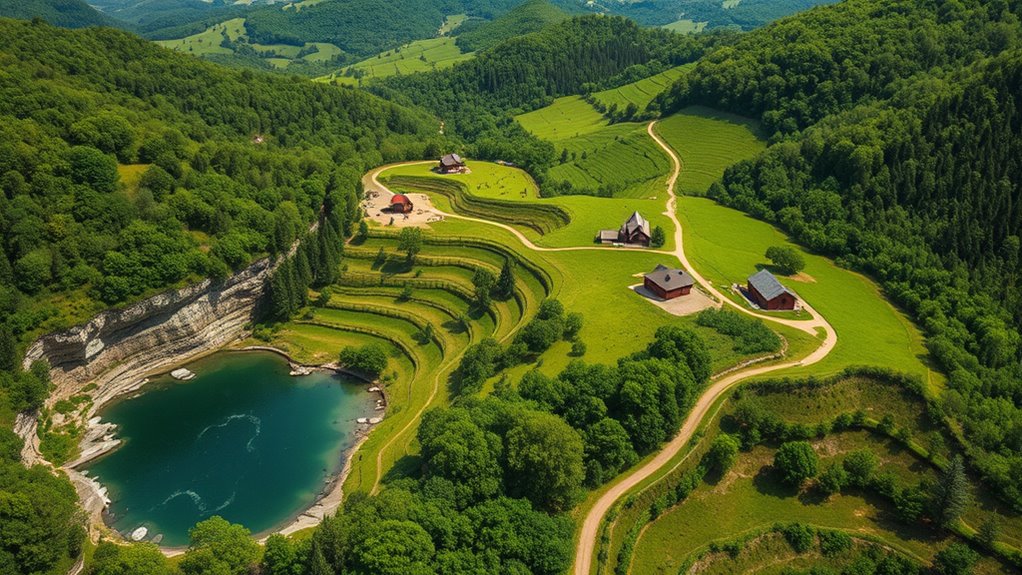
Have you ever wondered what life on a hill farm in the Ozarks truly looks like? It’s a landscape shaped by natural processes that influence the land, water, and ecosystem in profound ways. One of the most fascinating aspects of this terrain is the presence of spring ecosystems. These springs arise from underground water sources, often hidden beneath the hills, and create lush, vibrant environments that support a diverse array of plant and animal life. When rainwater seeps through the porous limestone and dolomite rocks common in the Ozarks, it slowly filters down until it reaches an underground aquifer. The water then naturally finds its way to the surface, emerging as springs that feed into streams and rivers. These spring ecosystems are essential to the region’s ecology, providing fresh water to wildlife and sustaining the lush vegetation that farms rely on. You might notice how these springs carve out small wetland areas, creating unique habitats that teem with life. These ecosystems are dynamic, constantly replenished by rainfall and underground flow, making them resilient yet sensitive to environmental changes.
Alongside these springs, sinkhole formation is another defining feature of the Ozarks landscape. Sinkholes develop when underground cavities—created by the dissolution of limestone—become too large to support the land above. Over time, the surface collapses, forming a depression or a bowl-shaped hole. This process can happen gradually or suddenly, often catching farmers and landowners by surprise. Sinkholes can alter the terrain dramatically, swallowing parts of fields or roads and creating new microhabitats. For hill farms, sinkholes are both a challenge and an opportunity. They can disrupt farming operations but also serve as natural water reservoirs, collecting rainwater and maintaining moisture levels in the soil. Understanding sinkhole formation helps you appreciate how interconnected land and water are in the Ozarks. It’s a reminder that the landscape is constantly changing, shaped by natural underground processes that are invisible yet impactful. Monitoring these formations is essential for farm management, as they influence water availability, soil stability, and land use.
Living on an Ozarks hill farm means respecting these natural features—recognizing how spring ecosystems sustain life and how sinkhole formation reshapes the environment. These processes are not just geological phenomena; they are the backbone of the region’s ecology and a critical part of working the land. By paying attention to these features, you gain a deeper understanding of the delicate balance that keeps the Ozarks landscape vibrant and resilient.
Frequently Asked Questions
How Do Sinkholes Affect Local Farming Practices?
Sinkholes can critically impact your farming practices by disrupting the karst topography and groundwater recharge. When a sinkhole forms, it may cause soil instability and loss of valuable land, making planting difficult. Additionally, sinkholes can alter groundwater flow, affecting water availability for crops. You need to monitor these formations closely, as they influence soil health and water management, which are vital for sustainable farming in areas with karst landscapes.
What Wildlife Is Commonly Found Near Springs and Sinkholes?
You’ll often find native fish thriving in springs and sinkholes, as these habitats provide clean, oxygen-rich water. Amphibians, like frogs and salamanders, also frequent these areas, relying on the moist, protected environment for breeding and shelter. These ecosystems support diverse wildlife, offering essential habitats that sustain native species and contribute to the overall health of the local environment. Protecting springs and sinkholes benefits both wildlife and your community.
Are There Safety Precautions for Visiting Sinkholes?
You should always prioritize hazard awareness when visiting sinkholes. They can be unpredictable, with unstable edges and hidden depths that pose serious risks. Follow safety guidelines like staying on designated trails, avoiding the edge, and never venturing into closed or unmarked areas. Keep a close eye on children and be alert to changing conditions. By respecting these precautions, you can explore safely while appreciating the natural wonder beneath your feet.
How Do Springs Influence Nearby Agricultural Land?
Springs greatly influence nearby agricultural land by providing a consistent source of spring water, which often has high water quality that benefits crops. This spring water can enhance soil fertility, promoting healthy plant growth. You’ll notice that areas around springs tend to have lush vegetation because of the reliable moisture and nutrients. Using spring water responsibly helps maintain soil health and supports sustainable farming practices in the region.
Can Sinkholes Be Rehabilitated or Stabilized?
Yes, sinkholes can be rehabilitated or stabilized by improving geological stability through proper land use planning. You might need to fill the sinkhole with suitable materials or reinforce the surrounding land to prevent further collapse. Engaging geotechnical experts helps assess risks and develop effective strategies. With careful planning and intervention, you can minimize hazards, protect property, and guarantee safer land use in areas prone to sinkholes.
Conclusion
As you explore the Ozarks Hill Farms, remember that springs and sinkholes are like hidden secrets beneath the surface, shaping the landscape silently. Just like a farmer discovering a spring that nourishes the land, you’ll see how these natural features sustain the ecosystem and enrich your experience. Think of the land as a living storybook—each sinkhole and spring writing a chapter of resilience and beauty, waiting for you to uncover its timeless tale.