
To protect your orchard from frost, you should use a combination of heaters, wind machines, and protective covers. Heaters create a warm bubble around your trees, while wind machines mix warmer air above with cold air near the ground to raise temperatures. Covering trees with frost cloths adds extra protection. Planning ahead and acting before cold weather hits can make a big difference. Keep exploring to learn how to optimize these methods for your orchard’s health through winter.
Key Takeaways
- Heaters create a warmer microclimate around trees, preventing frost damage during cold nights.
- Combining wind machines with heaters enhances frost protection by mixing warmer air with cold ground-level air.
- Using frost cloths provides an extra physical barrier, shielding delicate buds and blossoms from freezing temperatures.
- Monitoring weather forecasts allows timely activation of heaters and covers before frost conditions occur.
- Proper placement and scheduling of frost protection tools minimize orchard damage and support healthy yields.
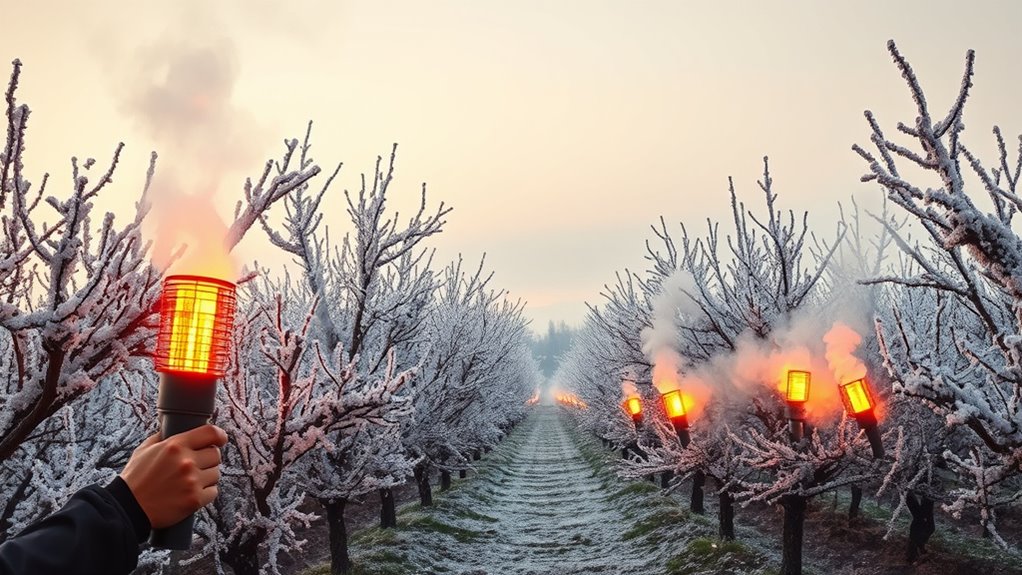
As winter approaches, orchard growers face the essential challenge of protecting their crops from frost damage. Frost can seriously harm your fruit trees, reducing yields and compromising the quality of your harvest. To guarantee your orchard stays healthy, you need effective strategies for fruit tree protection and frost damage prevention. By taking proactive steps, you can minimize the risk of frost harming your valuable crops.
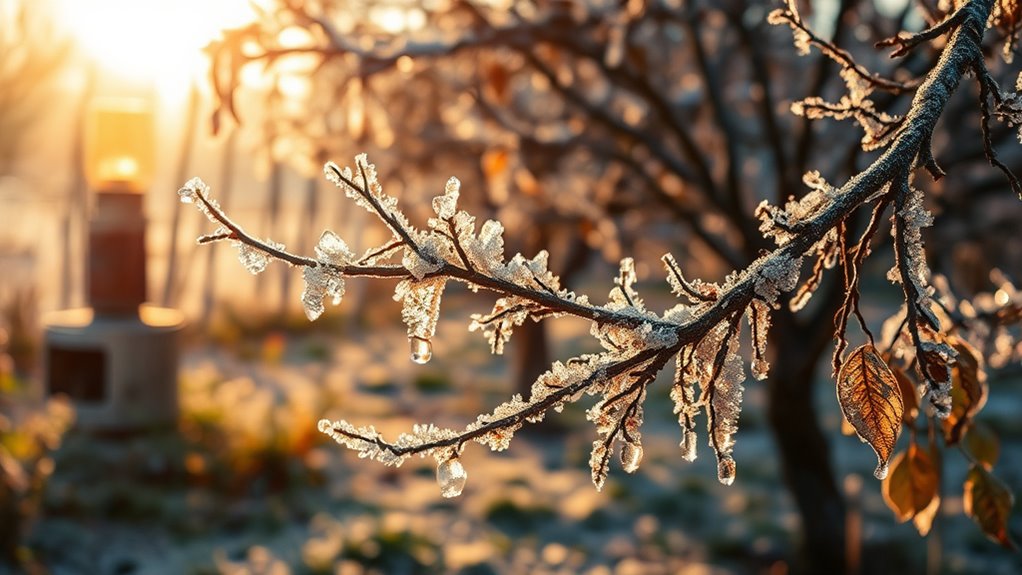
One of the most practical ways to safeguard your orchard is to use heaters designed specifically for frost protection. These heaters generate warmth and create a bubble of slightly warmer air around your trees. When properly positioned, they can considerably reduce the temperature drop during cold nights. It’s important to place heaters strategically, focusing on the most vulnerable sections of your orchard, such as areas with low-lying terrain where cold air tends to settle. Regular monitoring of temperatures with reliable thermometers helps you determine when to activate heaters, guaranteeing you’re not wasting energy but providing adequate frost protection when it’s needed most.
In addition to heaters, wind machines are an excellent tool for frost damage prevention. These devices work by mixing the warmer air above with the colder air near the ground, effectively raising the temperature around your trees. When used in combination with heaters, wind machines can create a more stable microclimate, especially during nights with calm winds where frost is more likely to settle. Using these methods together enhances the overall effectiveness of your frost protection strategy.
Another essential aspect of fruit tree protection is employing frost cloths or blankets during the coldest nights. Covering your trees creates a physical barrier that traps heat and shields delicate buds and blossoms from freezing temperatures. Be sure to secure the covers well, but avoid damaging the trees or blocking airflow. These lightweight covers are especially useful for young or particularly sensitive trees, providing an extra layer of frost damage prevention.
Timing is vital. You should start implementing frost protection measures before the forecast predicts a cold snap. Keep a close eye on weather reports, and be prepared to take action as soon as temperatures dip near the critical threshold for your specific fruit varieties. The combination of heaters, wind machines, and protective covers can help you maintain a stable environment and prevent frost from causing irreversible damage. With careful planning and prompt action, you can effectively defend your orchard and ensure a healthy, bountiful harvest despite winter’s chill.
Frequently Asked Questions
How Energy-Efficient Are Orchard Frost Fights and Heaters?
Frost fights and heaters are quite energy-efficient when used correctly, helping you save on costs. They typically have a favorable cost comparison to other frost protection methods because they consume less energy while effectively maintaining suitable temperatures. You’ll notice lower energy consumption, especially if you target specific areas instead of whole orchards. Proper usage and maintenance guarantee maximum efficiency, reducing your overall energy costs and protecting your crops reliably.
Can These Heaters Be Used Outdoors Safely?
You can absolutely use orchard frost fighters and heaters outdoors, but you need to keep safety in mind. Think of it as playing with fire—portable safety and weather resistance are key. Make sure your heater is specifically designed for outdoor use, with proper weather resistance, and always follow the manufacturer’s instructions. This way, you’ll stay warm and safe, even when the weather throws a wrench in your plans.
What Is the Typical Lifespan of Orchard Frost Fights?
You can expect orchard frost fights to last around 5 to 10 years with proper winter protection. Their lifespan depends on factors like usage, maintenance, and exposure to harsh weather, which helps prevent frost damage. Regular checks and timely repairs ensure they stay effective. Investing in quality equipment and safeguarding them during winter can extend their life, giving you reliable frost protection season after season.
Are There Eco-Friendly Options Available Within These Heaters?
Yes, eco-friendly options are available in orchard frost fight heaters. You can choose solar-powered models that harness renewable energy, reducing environmental impact. Additionally, some heaters are made with biodegradable materials, making them safer for the environment and easier to dispose of responsibly. These options help you protect your orchard while minimizing your carbon footprint, offering sustainable solutions that align with eco-conscious farming practices.
How Do I Properly Maintain and Clean These Heating Units?
To properly maintain and clean your heating units, regularly inspect and wipe down filters and vents to prevent dust buildup. Follow heater safety tips by turning off the unit before cleaning and avoiding water contact. To prevent frost damage, drain any water from the system during cold months. Consistent maintenance guarantees efficiency, extends lifespan, and keeps your space warm and safe.
Conclusion
As you prepare for orchard frosts, remember that heaters are your trusty shield against nature’s icy grip. With a little effort, you’ll turn your orchard into a warm haven, protecting your crops like a knight guarding treasure. Keep a close eye on the weather, and don’t let frost catch you off guard. When you master these tools, you’ll see your orchard thrive through the cold, proving that with the right strategy, frost is just a fleeting visitor.